Whether it’s no water or too much water, our resilience will be measured by how well we prepared, responded and received critical information when we needed it.
If this season were a hotel booking, it would be a twin room: one bed for drought, the other for cyclones. No cancellation policy, no upgrade option, and hope of checking out early. Fiji’s cyclone season began on November 1, and we enter it facing two opposing threats. The same strong El Niño suppressing rainfall is also influencing where cyclones are likely to form and track. It is the Pacific’s harshest paradox: too little water, or far too much, packed into the same six-month window.
The stakes are far higher than they were just a few years ago. July delivered the highest visitor arrivals ever recorded in Fiji. August and September followed. And all indications suggest October has joined the record books as well. That success is more than a tourism statistic. It means more jobs, supply chains spreading further, more small businesses and more households now depend on Fiji navigating the months ahead successfully.
Tourism does not stop at hotel gates or airport terminals. It pays wages in Nadi, buys vegetables from Sigatoka, fills taxis in Suva, keeps inter-island boats moving, and supports families in communities far beyond the tourism hotspots. Every dollar earned by a busy tourism worker circulates through the country, reaching households and businesses nationwide.
That is why a poorly managed cyclone season is not just a tourism problem. The consequences are felt across the economy, from farms and transport operators to shops, schools and homes. When tourism slows, the impact travels well beyond the hotspots.
Let’s start with cyclones. Fiji Met is forecasting a near-normal season, with two to three tropical cyclones expected to pass through Fiji’s Exclusive Economic Zone and one to two potentially reaching severe Category 3 to 5 strength. A strong El Niño, expected to peak in November and December, is likely to influence cyclone tracks, as it has in previous years, with systems tending to approach from the north and east. That places the Northern and Eastern Divisions at greater risk.
But named cyclones are only part of the story. Tropical disturbances and depressions can still bring destructive flooding and widespread damage. Fiji Met stresses these forecasts are indicative, not guarantees, and that impacts are not measured by direct hits alone. Fiji has learned the hard way that a cyclone does not need to make landfall to leave a lasting mark.
Then there is the drought risk. Fiji Met is forecasting below-normal rainfall through to February 2027, with the greatest drying expected across the Western and Central divisions, home to many of Fiji’s resorts, farms, towns and critical infrastructure. If you have driven through our dusty western towns lately, you will see the deepening browns of the vegetation and the increasing blackened remains of burnt forests, shrubbery and cane farms.
The water authority has already activated its dry-weather contingency plans and urged hotels and resorts to review their water use. FHTA did the same months ago, warning members as early as June to prepare and implement water-saving measures before conditions deteriorated. But caution cuts both ways. Every El Niño is different. The strong 2023-24 event did not deliver the severe drought many anticipated, reminding us that climate forecasts are probabilities, not certainties.
Drought is, therefore, a significant risk this season, not a foregone conclusion. Yet the consequences of being unprepared are far greater than the cost of readiness. That is why we have encouraged industry stakeholders to plan for the drought we hope never arrives, but that is making its uncomfortable presence felt with each passing day.
This is where the twin hazards converge. Drought and cyclones may seem like opposite problems, but they share the same pressure point: water.
Low water storage entering the wettest, most unpredictable months of the year is a vulnerability. Rain can break a drought, but storms can just as easily disrupt or contaminate supply. We saw that with Cyclone Urmil in March. It never made landfall, yet its rainbands flooded water intakes and reduced production in Tavua, Ba, Lautoka and Sigatoka. Whether the challenge is scarcity or disruption, the response requires one water strategy, not two.
That reality extends far beyond tourism. Households, villages, businesses and resorts all depend on the same catchments and infrastructure. The actions are simple but important: use water wisely, fix leaks, store safe drinking water and pay attention to water authority advisories.
For tourism operators, preparation means scaling up those same principles.
FHTA is encouraging members to review water consumption, storage capacity, recycling and irrigation practices, and to ask a critical question: how would we operate if our water supply was interrupted tomorrow?
The same mindset applies to emergency preparedness. Cyclone and business continuity plans should not sit on a shelf waiting for a crisis.
Staff should know their roles, contingency arrangements should be understood, and plans should be tested before they are needed. Every business is different, but every business must be ready.
How we talk about these conditions matters almost as much as the conditions themselves.
Fiji is not one place facing one problem. Geography matters. A cyclone watch in the North does not mean Fiji is closed for business, just as a water advisory in the West is not a reason to cancel a holiday. Y
et broad, imprecise messaging too often blurs these distinctions under a “better safe than sorry” approach.
In the age of instant communication, perceptions can travel faster than storms. A poorly framed headline, an unchecked social media post or a sloppy advisory can influence visitor decisions, investment confidence and business sentiment long before the facts catch up.
That is why clear, accurate and consistent communication is critical. Operators, Tourism Fiji, government agencies and the Tourism Ministry all have a role to play in ensuring travel partners and visitors receive timely information that reflects actual conditions on the ground.
Trust is built through transparency, not silence and not spin. Being honest about disruptions, available services and local conditions gives visitors confidence to make informed decisions.
Blanket reassurances can undermine credibility, but so can limited or delayed communication. The goal is simple: provide the right information to the right people, at the right time.
As always, preparation is a shared responsibility.
From government and its agencies, industry needs one thing above all else: early, coordinated and reliable information. Water restrictions, power outages and infrastructure disruptions affect business continuity long before they become headlines.
And because no power often means no water, operators cannot afford to learn about critical disruptions second-hand. Effective coordination between Fiji Met, the Water Authority of Fiji, Energy Fiji Ltd, Fiji Roads, the National Disaster Relief Management Office and businesses will be essential in the months ahead.
For its part, FHTA will continue to circulate official weather and advisory updates throughout the season, helping ensure that information reaches operators directly from its source, quickly and accurately.
The timing matters. January and February are traditionally Fiji’s peak cyclone months, while the dry outlook extends through the same period. That makes the next 10 weeks the most valuable preparation window of the season. Readiness is always cheapest before it is needed. A water tank inspected in November costs almost nothing. The same tank discovered empty in January can cost a business, a household or a community far more.
Ultimately, this season is about more than cyclones, droughts or weather forecasts. It is a test of preparedness, coordination and communication. It will test whether we can turn warnings into action, plans into readiness, and information into confidence.
Because when the next disruption comes, whether from too little water or too much, Fiji’s resilience will not be measured by the forecast. It will be measured by how well we prepared, how well we responded, and whether the people who needed accurate information most received it in time.
A community, an isolated island resort and a family planning a holiday may face different decisions, but they all depend on the same thing: timely, trusted information.
FANTASHA LOCKINGTON is the CEO of Fiji Hotel and Tourism Association. The views expressed are not necessarily those of The Fiji Times. To share a comment or thoughts on the article, please send email to info@fhta.com.fj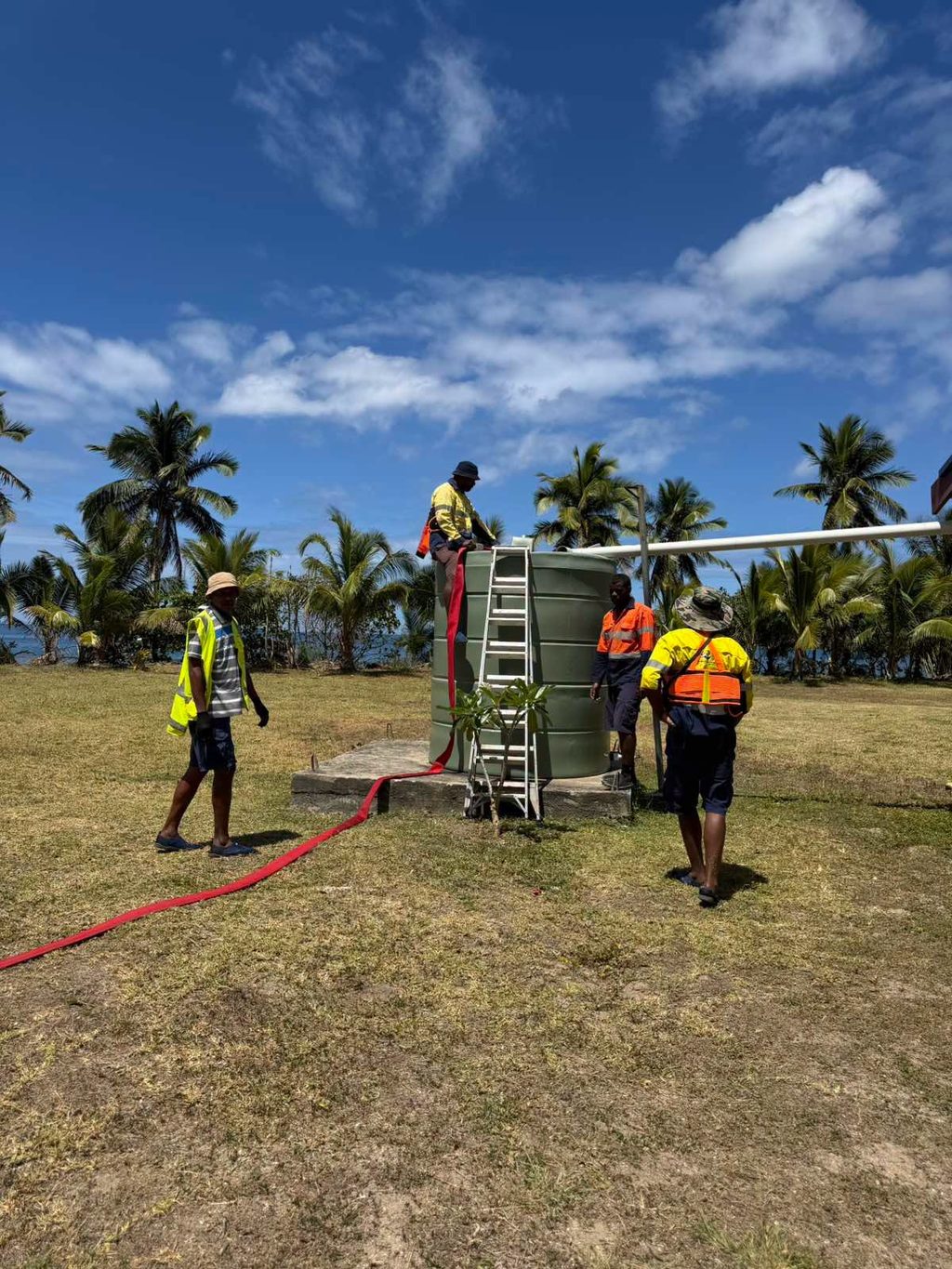
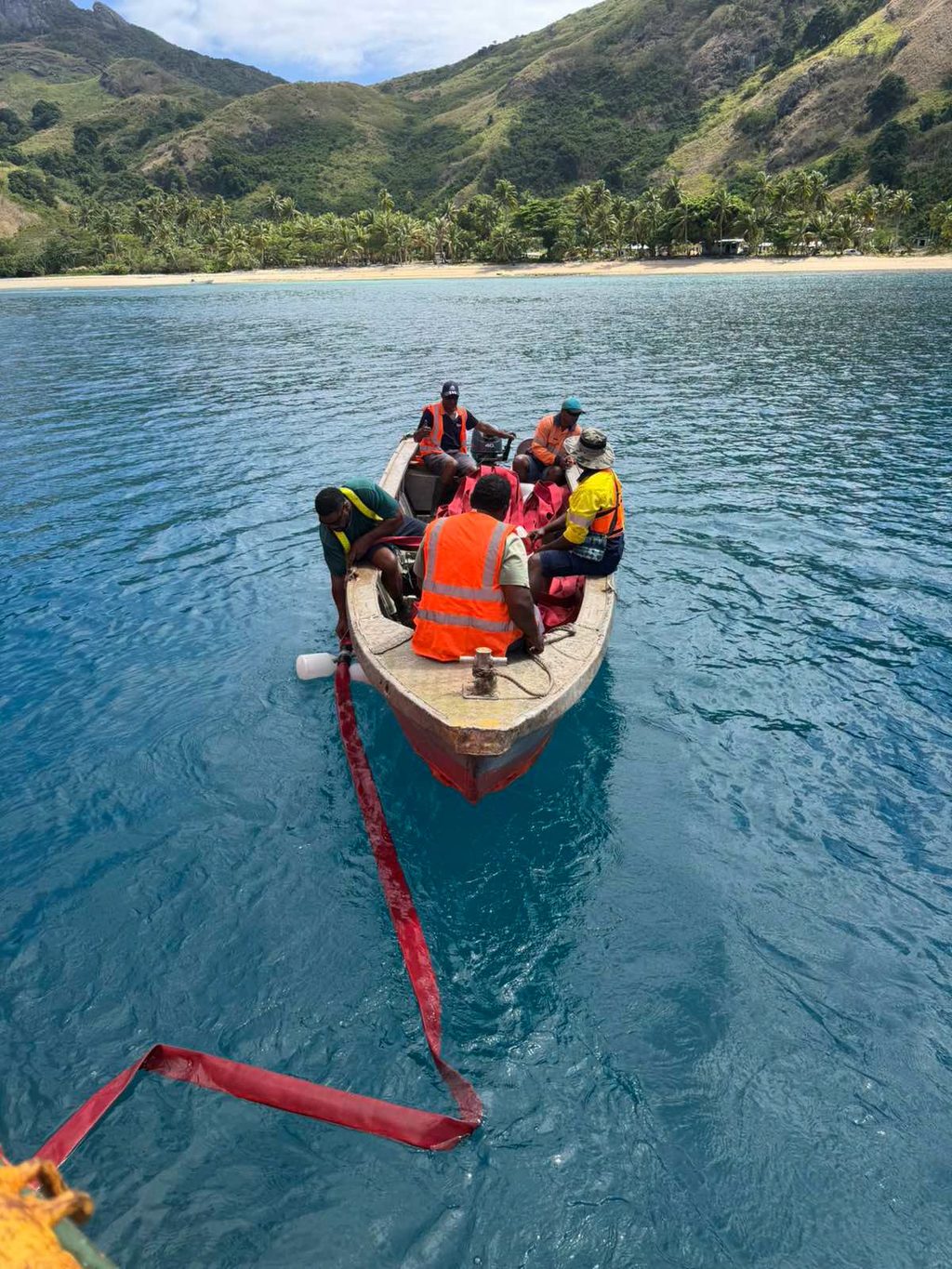
WAF and NDMO workers filling a tank in a village in Yasawa early this month as part of the El Niño Emergency Response efforts. Picture: WAF