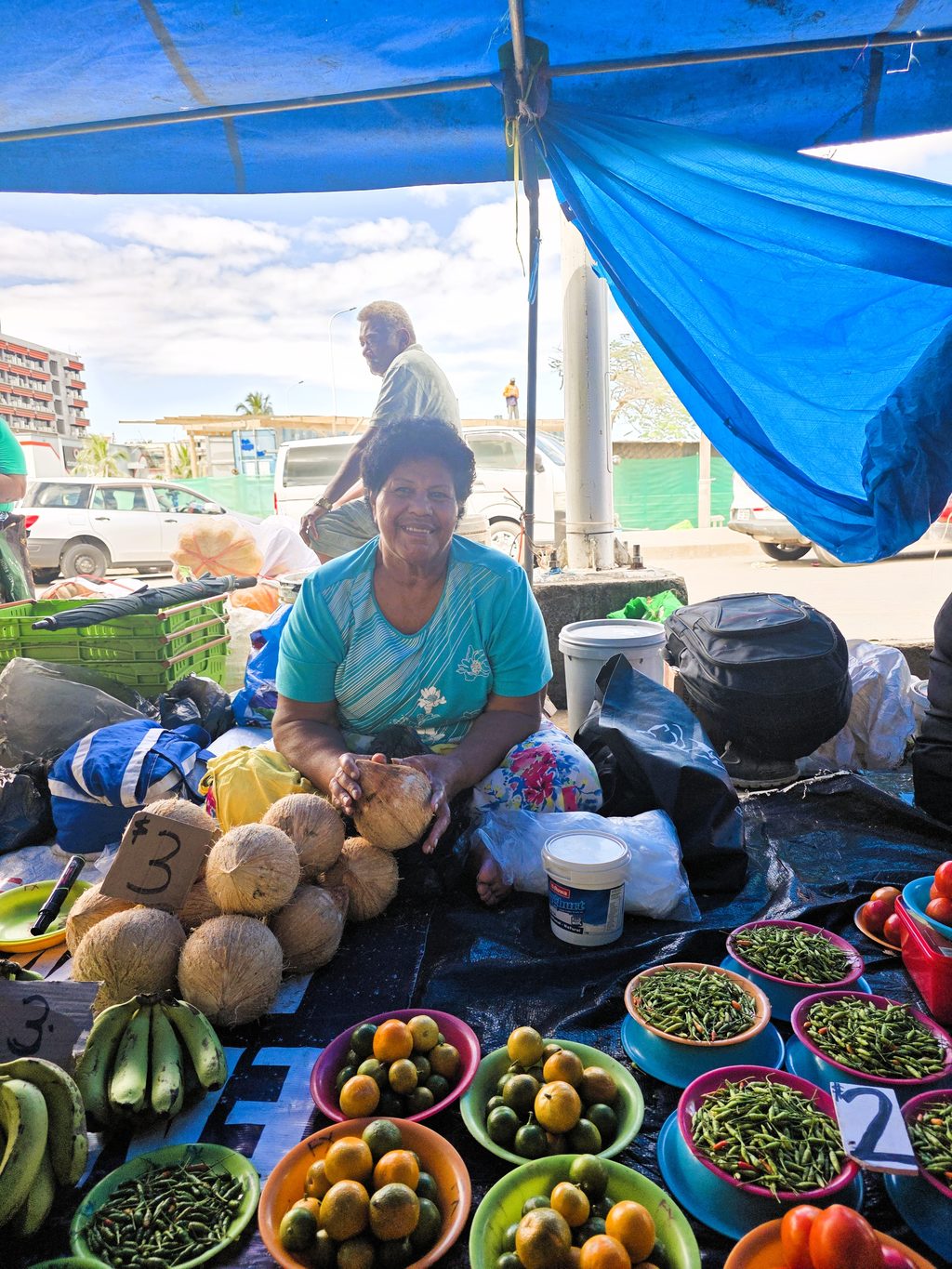
For more than 30 years, 68 year old Joana Bonowai has made the journey from her village of Bureiwai in Nakorotubu, Ra, to Suva, carrying fresh produce and the determination to earn an honest living.
A familiar face among the market vendors, Joana travels to the capital almost every Thursdays, leaving her home as early as 6am with vegetables and fruits harvested from her village farm.
Despite being widowed, Joana continues to work hard, making the most of what her land provides.
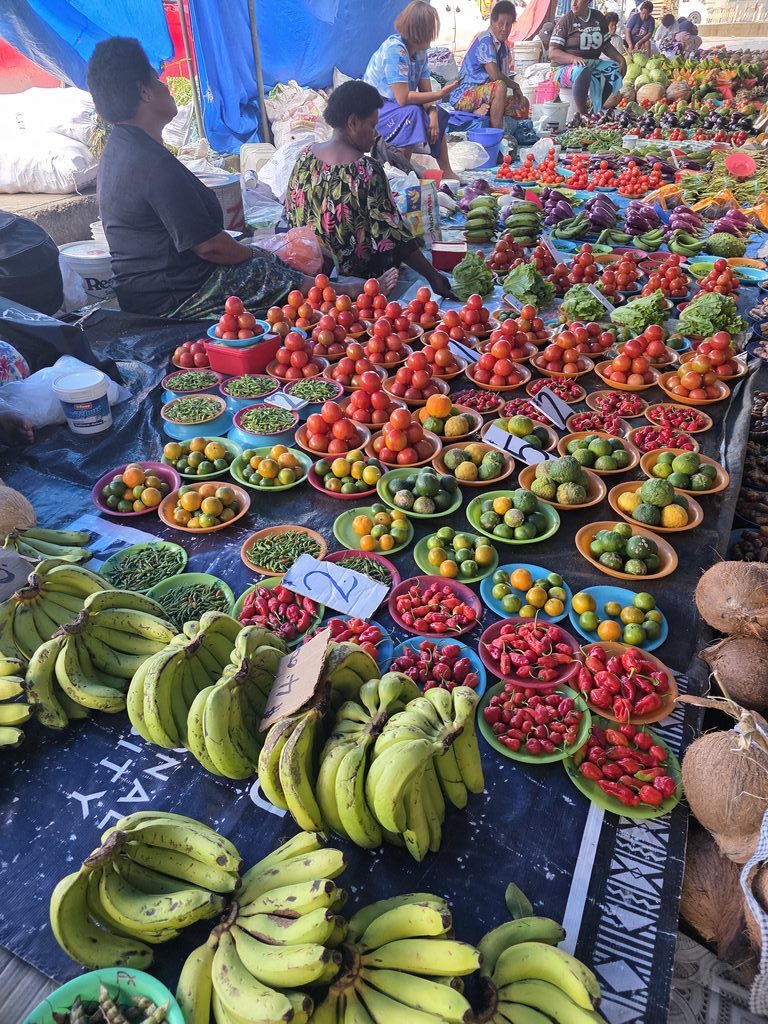
“We bring coconuts, lime, kumquats, chillies, young coconuts (bu) and bananas. These are the things we plant in our village and bring to the market to sell,” she said.
To add variety to her stall, she also buys produce such as tomatoes and cucumbers from other farmers to sell alongside her village-grown goods.
However, the journey from Bureiwai to Suva is not always easy.
Joana said the decision to travel each week depended largely on the weather, particularly because of the long distance and the challenges that came with travelling during the rainy season.
“One of the challenges we face is travelling during heavy rain because there is usually flooding, and it stops everything for us to come across,” she said.
The weather affects their livelihoods, both at home and in the city. Heavy rainfall can damage crops, disrupt harvesting and makes selling conditions uncomfortable.
“When there is heavy rain, we cannot do much about it, but we try our best to harvest the matured crops as early as possible,” she said.
Joana also highlighted the difficulties faced by elderly vendors who cannot afford tables and make do with plastic pallets to protect their produce from rainwater.
“Some of us cannot afford to book tables, and we are old. We cannot be standing all the time because our knees will hurt.”
The cost of transportation is another concern, with vendors having to pay not only for their own fares but also for the sacks of produce.
Upon arriving in Suva, additional expenses arise when hiring wheelbarrows to transport their produce from the bus stand to their selling spots.
The more produce they bring, the more wheelbarrows they need, adding to their daily expenses.
Despite these challenges, Joana prefers selling in Suva because of the steady flow of customers.
“I prefer coming to the city because it has a lot of customers and people every day,” she said.
When she arrives in Suva, she stays with her daughters, who live in the city.
Market day also provides an opportunity to connect with other women vendors from different villages.
They spend time walking around the market, sharing tea and exchanging stories before returning to their stalls.
Every trip to Suva is an opportunity to earn an income through years of hard work, patience and determination, despite the rising costs and unpredictable weather.