A complete tailspin on our journey to recovery has driven us back to square one with recent developments around COVID-19.
Exactly a year into what seemed to have been a complete containment of the COVID-19 virus on our shores, has been disrupted with the current situation resulting in the triggering of the largest surge of the COVID-19 virus in Fiji.
What was mostly news on TV channels and seemed to be miles away from us with its impacts on economies and societies, has made its way on to our land and has changed the norms of everyday living.
Fiji was known to be the island paradise that was famous for its pristine beaches, friendly people and an escape that people paid thousands of dollars to come and experience.
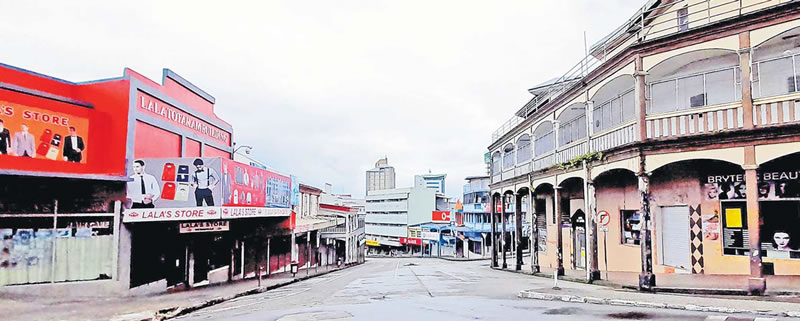
In a matter of a few weeks and months, Fiji’s largest revenue earner crashed with the closure of borders that disrupted travel and hindered the plans of many.
As a result, unemployment rose drastically with a lot of families left begging for answers, as to how would the next meal come about.
The developments around COVID-19 on a nation such as Fiji has seen quite inevitable circumstances, the forced closure of borders that has resulted in the loss of so much revenue, loss of jobs and even to the extent that most businesses that support the tourism sector are now also feeling the challenges of not being able to survive the ongoing uncertainties.
Micro, small, medium enterprises (MSMEs) that were interviewed as part of a rapid assessment conducted by the Fiji Commerce & Employers Federation (FCEF) indicated that up to 50 per cent of these businesses would face closure within a month or two given the circumstances during that time.
In realising this FCEF being the national private sector organisation pulled its resources and networks in assisting businesses at all levels.
Through its business accelerator program that had been established in 2019, FCEF through its program partners, the Market Development Facility (MDF) were able to provide assistance to MSMEs through a webinar program that was conducted free of charge.
MSMEs were given access to four local business coaches and the programs international master trainer, who was based in Australia.
It was evident that people were now venturing into entrepreneurship as a means of living, most of whom had little or no business experience, while those that were already running small businesses were being faced with new challenges of the new norms.
Traditional business practices were slowly being outgrown, with the COVID-19 pandemic bringing new challenges that required innovative ideas to deal with these issues.
Now with the current lockdown and separation through containment zones, MSMEs and small businesses are being faced with more issues, such as not being able to operate if they fall outside of the category of essential businesses.
This affects the business’ cashflow and revenue with added costs because of the new requirements for businesses to ensure COVID-19 safe protocols are being practised.
The other challenge that is being faced is the separation from the market and business clients.
Moreover, this creates the biggest uncertainties which has become the biggest challenge for MSMEs and businesses that are unable to effectively plan ahead with the current situations that is creating a lot of unknowns for them.
How then do you create an enabling environment for your business in these trying times or what steps can we now take to address these issues at hand?
A few things that entrepreneurs can now do is to put their time to evaluating their businesses and see potential areas of opportunity that they can diversify into.
One needs to be innovative and address the opportunities that have presented themselves due to the current lockdown.
Businesses can also reach out to all their clients and gather information data that should allow them to develop plans for the near future. The quest on the new journey is one that will require new ways of operating.
It is thus important for businesses to start developing new ways of operation by thinking outside the box.
One has to also refer to examples of companies abroad, that have adapted to the new norms and have contextualised their businesses.
This is important so businesses understand how they can locally do the same to ensure revenue is sustained.
Incorporating new methods of payment such as the use of electronic systems will allow for businesses to incur less cost in terms of human resources.
Something that is becoming quite common is the collaborations between small businesses which is the key for moving forward.
While in the past competition drove businesses, it is becoming apparent that the dynamics have changed with business collaboration presenting itself as the new root to success.
It is key that during these times when businesses are shutdown, that business owners and entrepreneurs refocus their resources to effective planning in order to mitigate issues that may prevail.
The need for data and understanding trends is quite significant and MSMEs need to realise that the world of business has changed and having knowledge of global trends will allow them to become a stepping stone in the new world of business.