Reserve Bank of Fiji Governor Ariff Ali has said that Fiji is caught in an economic “trap” of decelerating growth and rising public debt, warning that monetary policy alone cannot solve the nation’s structural challenges.
The central bank chief confirmed that Fiji’s post-pandemic growth momentum had sharply faded, with expansion projected to fall below 2 per cent this year and drop further next year.
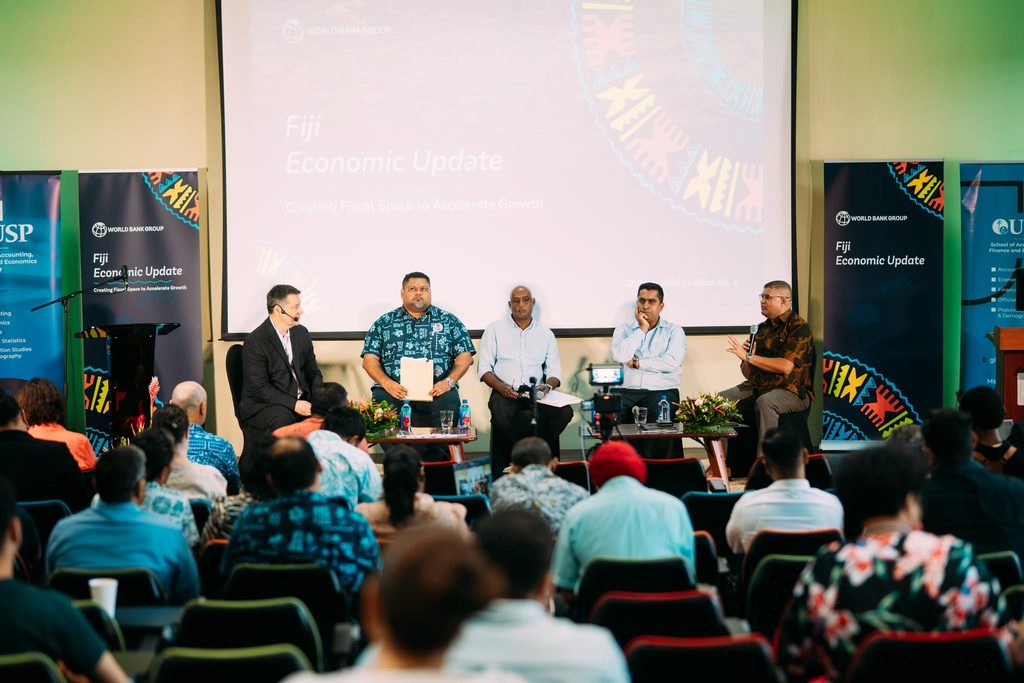
“First of all, let me be very clear. Monetary policy does not solve all the problems of the country. Monetary policy’s role is to stabilise the economy so that there is a smooth economic growth. Or at least making sure that output does not go out of line, inflation does not shoot up or down,” Mr Ali said during a panel discussion at the launch of Fiji’s inaugural economic update by the World Bank Group.
Mr Ali defended the RBF’s decision to keep monetary conditions accommodative over the past five years, defying advice from the International Monetary Fund (IMF).
He argued that because inflation was driven by external factors like fuel and shipping, raising rates would have crippled growth and inflated government debt costs.
“Immediately after COVID, we had very strong growth… And then growth has come down,” Mr Ali said.
“We are in this challenge phase, or I call it a trap, where our debt levels are rising, and growth is decelerating.”
To break out of the stagnation, the Governor stressed that lifting organic growth was the only viable option.
However, he warned that uncoordinated state deficit spending threatened to create “fiscal dominance”, undermining monetary policy and pressuring Fiji’s balance of payments.
“We must ensure that fiscal dominance does not create a problem for monetary policy,” he said. “And this is where I think the fiscal-monetary policy coordination is very important. Part of the challenge of balance of payment is because of high government expenditure.”
Mr Ali outlined a macro-critical checklist for the state, demanding an immediate structural pivot toward fiscal discipline.
“Therefore, we must reduce deficit levels. We must focus on efficiency and productivity to lift growth. We must make the private sector the engine of growth.
“We first need to agree that we have a problem. If we don’t, and if we have difference of view in terms of our status quo, where we are, then we won’t reach the solution.”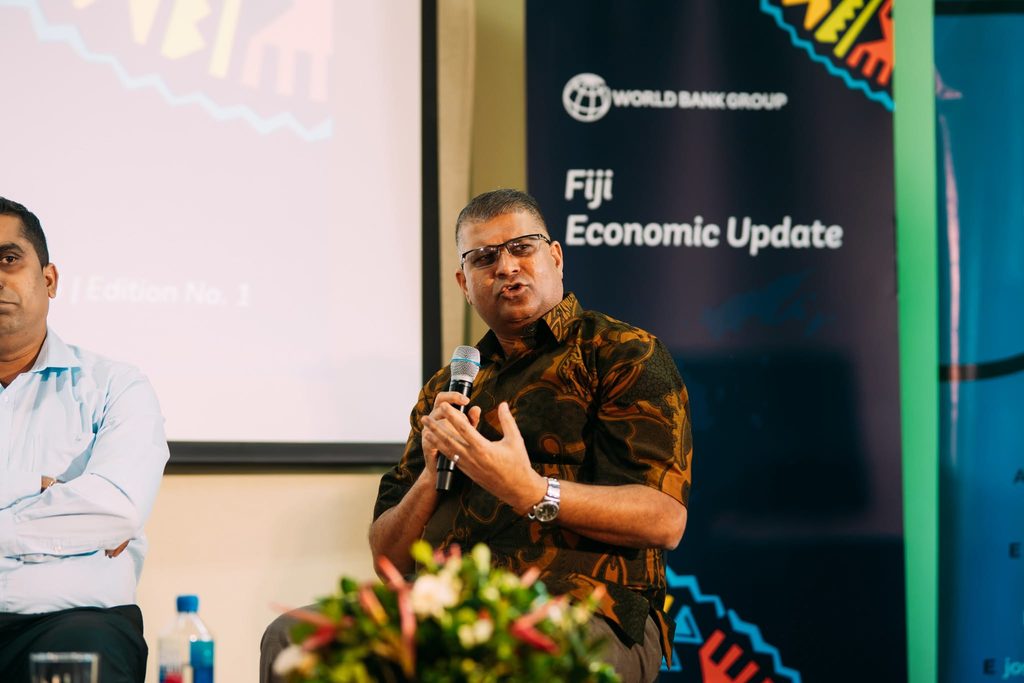
RBF governor Ariff Ali shares a point during the inaugural World Bank Group’s Fiji Economic Update panel discussion at the USP in Suva early this week. Picture: SUPPLIED/WORLD BANK