
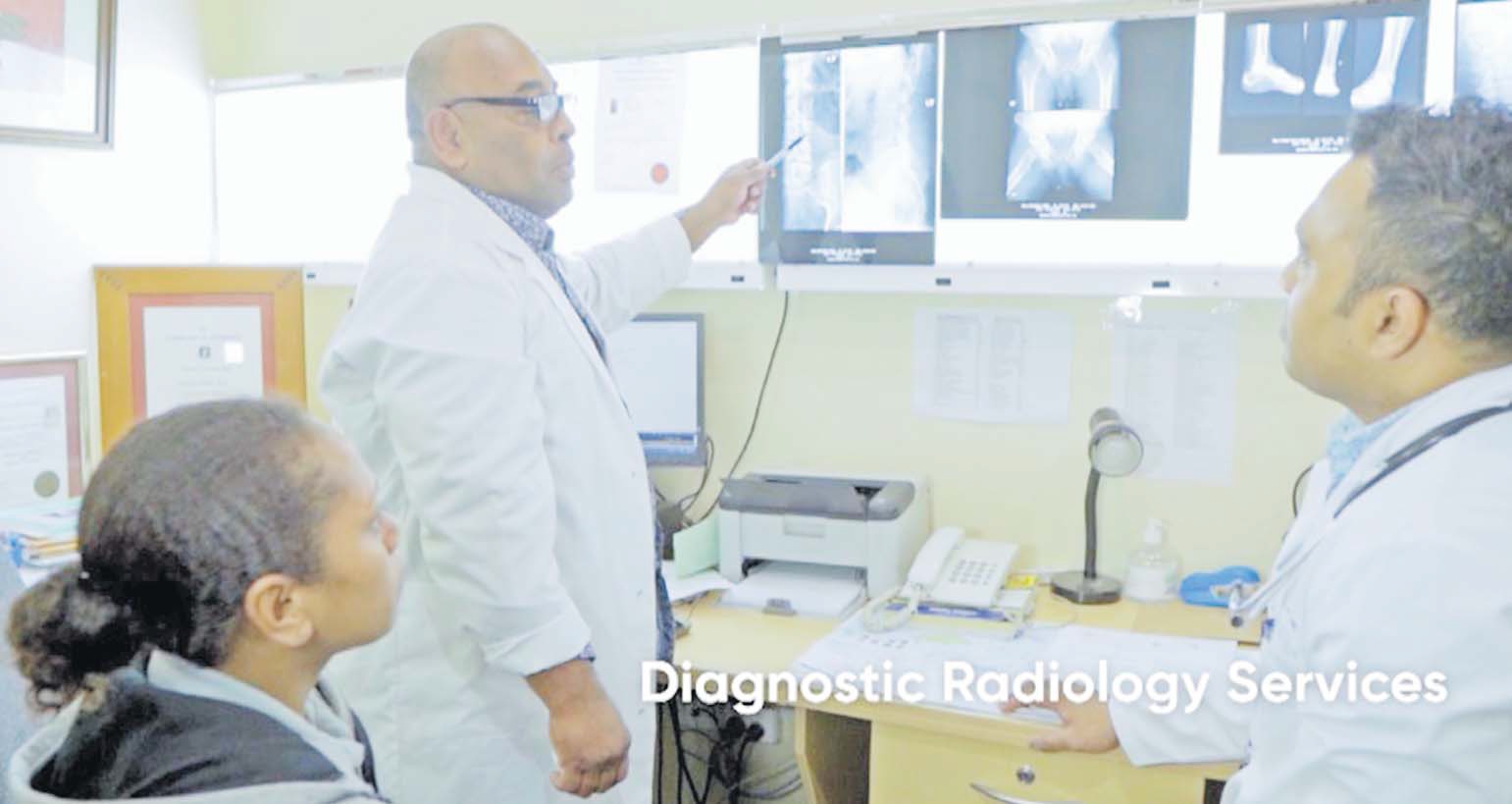
RADIOLOGY is a branch of medicine that uses imaging technology to diagnose and treat disease.
Since its discovery, diagnostic imaging has evolved and advanced in such a way that it has become an indispensable component of patient diagnosis, management and, in certain cases, treatment.
During the couple of past years, techniques in radiology have greatly developed which address these important issues while providing clinicians with higher quality images, and which it is hoped will ultimately lead to better patient care.
Radiology has undergone significant changes over the past 20 years or so as technology has changed both within the field and in areas such as advances in telecommunications.
Within radiology, not only has the technology changed, but the expectations of the public in response to those changes have changed as well, in part, leading to the increased sub-specialisation of radiologists.
The demand for diagnostic and image interpretation services in radiology is growing rapidly all over the world especially in Fiji.
This has highlighted two issues: the non-availability or in most cases, the absence of specialised personnel for the job and the growing demand for diagnostic imaging across the country and generally, across the globe.
To some extent, these problems can be overcome by utilising robust communication and image transfer systems to draw on the expertise of distantly located radiologists.
This process whereby images are transferred to distant locations for the purpose of interpretation and diagnosis is termed teleradiology.
Teleradiology, a branch of telemedicine, is a broad term encompassing methods where the doctor–patient interaction is not on-site and some form of telecommunication is used to transmit radiological images from one location to another.
Interpretation of all noninvasive imaging studies, such as digitised X-rays, CT, MRI, ultrasound, and nuclear medicine studies, can be carried out in this manner.
According to the “Teleradiology: The Indian Perspective” publication, the earliest attempt in teleradiology dates back to 1929, when dental X-rays were transferred with the help of telegraph to a distant location.
An early attempt at using the Web in an emergency medical situation describes the use of digital cameras to take clinical photographs and scanners to scan radiographs, conversion of the resulting digital images to a JPEG format, and then transmission via the internet.
Today, digitised images are transmitted around the globe via high-speed telecommunication links on a daily basis.
The introduction of the internet has enabled telemedicine, specifically teleradiology to expand its reach across every medical specialty.
Consequently, state-of-the-art teleradiography systems do more than just assist the radiologist in providing diagnoses from a comfortable home setting.
First, a teleradiography display connected to a PACS archive has the ability to allow the radiologist on call to look at the current study, as well as previous studies and appropriate comparison studies.
This important feature is always available.
Second, modern teleradiography systems allow a radiology practice to extend full diagnostic service coverage beyond the normal working hours.
Two of the major concerns have been whether radiologists would accept softcopy review of images on computer workstation screens versus the traditional hard copy, and whether the accuracy of interpretation was enough to justify implementation of the use of clinical teleradiology.
Both questions have now been answered to variable degrees with the fact that radiologists have readily adapted to computer viewing to the point that many departments are using it not only for teleradiology cases but also for routine work.
At Oceania Hospitals, substantially all modalities, including plain radiography, fluoroscopy, CT, ultrasound, are routinely acquired, viewed, interpreted, and managed in a digital electronic environment.
In most cases, hardcopy films are no longer printed, and there is a growing consensus that in many applications the ability to optimise image contrast and intensity greatly facilitates the radiologist’s practice.
An in-house specialist/interventional radiologist at the Oceania Hospitals, Dr Jonetani Kama (MBBS, MMed-MelbUni, DRANZCR) is one of the first radiologists in the country to have access to digital radiology in all aspects of diagnosis, both when he is at work or when he is needed to report on a case during non-official hours.
The progress has enabled Dr Kama to report on emergency cases from the comfort of his home on weekends/public holidays etc.
This is the beauty of teleradiology.
Advancement in technology and the introduction of new radiology modalities to Oceania Hospitals has prompted a recruitment of a specialised CT radiologists from India to report on CT scans done at Oceania Hospitals on a daily basis.
OHPL maintains a turn-around-time (TAT) of 24 hours for CT-teleradiology reports for routine cases and five-six hours for emergency cases.
CT-teleradiolody services at OHPL is provided by Dr Arangasamy Anbarasu (MBBS, MD, DNB, DMRE, DMRD, Fellowship Boston) who works as a director at Aran Diagnostic Imaging Pt Ltd, Coimbatore, India and a full-time chief radiologist of CT/MRI have been reporting on CT cases on a regular basis with little to no disruption to the services.
This shows how advanced and how rapidly teleradiology has grown to developing countries such as Fiji and how this will contribute to efficient reporting services at flexible hours, the accessibility of specialised personnel for reporting and second opinion and basically the advancement brings in digitised copies available for back up, reference etc.
In conclusion, teleradiology enhances the quality of radiology reporting by bringing the images of a patient in a small country to the most specialised radiologist who is best qualified to interpret the particular radiology X-ray/scan etc.
This, in my opinion, will be beneficial for most small clinics around Fiji that do not have the required specialisation and is basically a good representation of the future in healthcare.
• Maria Vatunilagi is a senior radiographer/CT scan technician at Oceania Hospitals Pte Ltd. The views expressed are the author’s and does not necessarily reflect the views of this newspaper.

