
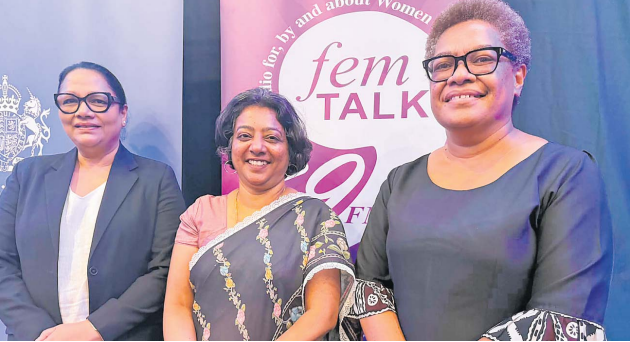
Women leaders say they are often required to step out of their comfort zones and adjust to male-dominated fields in order to participate in politics and succeed.
Speaking during a panel discussion at a BBC media action training on gender sensitivity in Suva, former cabinet minister Mereseini Rakuita said the problem went beyond formal systems.
“Invisible systems work against women because they were built by men for men,” she said.
She explained that social spaces, often central to networking and influence, were not always accessible to women.
She pointed to late night community visits and informal spaces where relationships were built and decisions shaped.
“The late night visits to communities are not OK for women to be doing, especially not on their own.”
Ms Rakuita said kava sessions remained a key part of political networking but were not always accessible to women. She said women were often expected to adjust themselves in order to fit into these spaces.
“I was a woman who had to take on kava. I hated kava before politics, but going into that field I had to find a way to connect with men because I knew that’s where decision-making power came.”
She said adapting to these expectations could be difficult but sometimes necessary.
Ms Rakuita said unless these cultural barriers were addressed, women would continue to face challenges entering and succeeding in politics, especially ahead of the 2026 election.
“Unless and until we fix the underlying systems, correct it, make it truly equal, women will keep going through these hoops.”

