
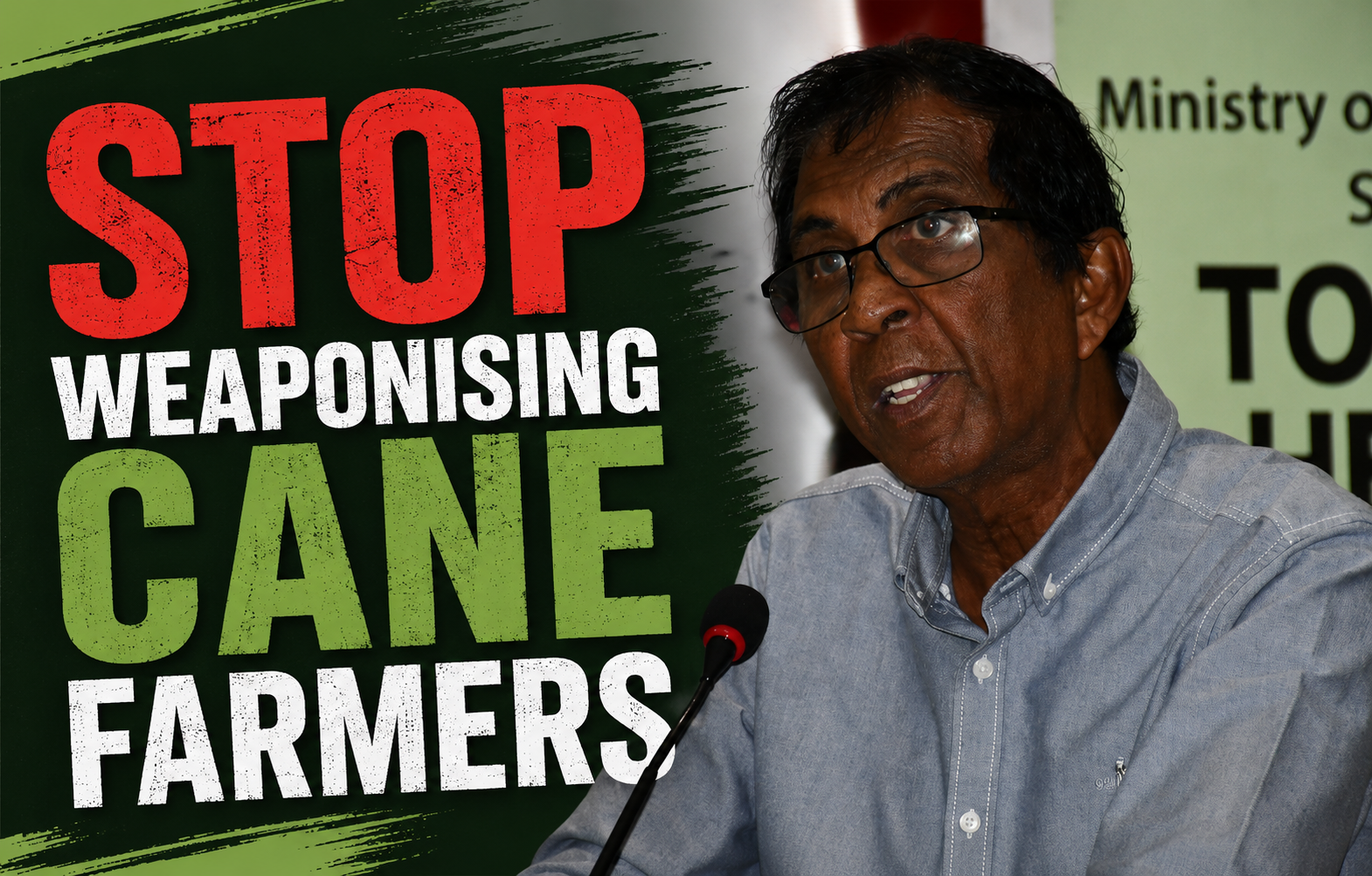
Fiji Sugar Corporation Chairman Nitya Reddy has accused critics of politically weaponising cane farmers ahead of the expected national elections, warning that the sugar industry risks becoming a casualty of political confrontation rather than constructive reform.
In a statement posted on social media, Reddy said recent meetings held by National Farmers Union General Secretary Mahendra Chaudhry had evolved from industry discussions into what he described as a campaign against FSC and the Government.
“Amongst the many reasons why these issues have not been resolved until now is the habitual political weaponization of cane farmers,” Reddy said.
“Given the likelihood of national elections this year, there will be even more exploitation of them.”
Reddy said FSC had exercised restraint in responding to repeated allegations made against the corporation, its board and management since the September 2025 fire at the Rarawai Mill.
“Since the highly unfortunate fire incident at the Rarawai sugar mill, Mr. M.P. Chaudhry has made countless unfounded claims against FSC management, Board and its employees.”
“They have been accused of incompetence, mismanagement, corruption and many more things.”
The FSC chairman said the corporation had refrained from engaging in personal attacks out of respect for Chaudhry’s former role as Prime Minister.
“However, it appears that he misinterprets our basic decency as a sign of weakness and a licence to hurl insults with impunity.”
Reddy claimed the tone of recent meetings with farmers had become increasingly confrontational and could have damaging consequences for the industry.
“The series of farmers meetings that he has been holding in the cane districts have turned into a full-scale declaration of war against FSC and the government.”
“Instead of helping to find some meaningful, practical and sustainable solutions, he has now embarked on a posture of strident belligerence and confrontation.”
Reddy warned that any boycott action would ultimately hurt the very people it was intended to support.
“The biggest victim of this boycott action will be the farmers, their families and the many thousands associated with the industry.”
While acknowledging the significant contribution of the sugar industry to Fiji’s development and the financial hardships facing growers, Reddy said the sector’s challenges were long-standing and could not be blamed on a single event or administration.
“The deep fault lines in the industry have not arisen overnight. They have been blindingly obvious for at least the last two decades.”
He called on industry leaders to provide farmers with a balanced assessment of both the benefits and risks of any proposed action.
“Every leader has a moral responsibility to be honest with the people who have entrusted them with their livelihoods.”
“They owe it to them to explain the reasonableness of their demands, the likelihood of success, and most importantly, the losses that could result if those demands are not met.”
Reddy said the industry needed responsible leadership and practical solutions rather than political confrontation.
“There is a very clear difference between responsible leadership and opportunistic self-serving demagoguery,” he said.

