
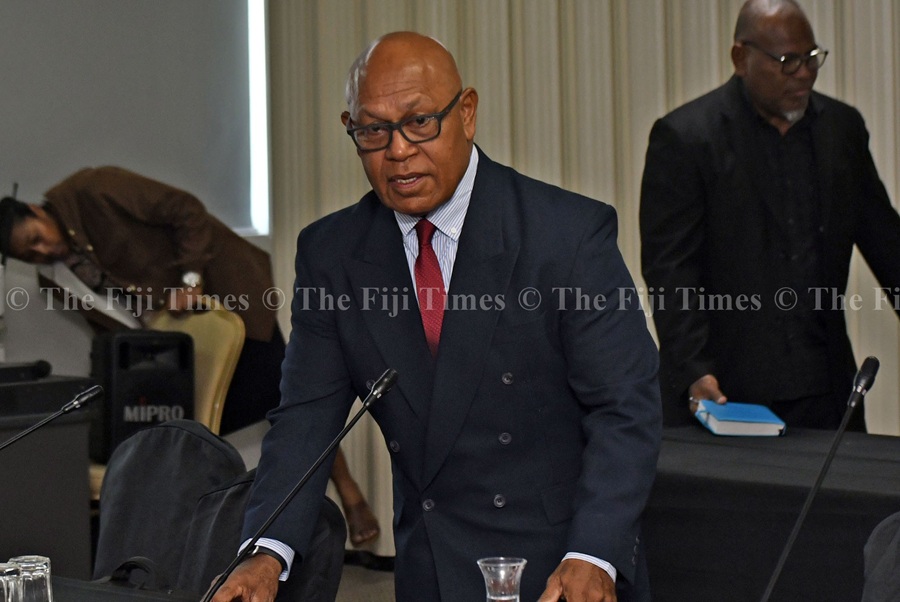
George Speight says his 24 years in prison taught him that inmates often develop a deeper understanding of the law than many law-abiding citizens, as they seek to understand the legal system that governs their lives.
Making his submission to the Constitution Review Commission on Thursday, Mr Speight said imprisonment had changed the way he and many other inmates viewed legislation and constitutional law.
“As I said, in Maximum (prison facility), I have the distinction of being the criminal of all criminals, enemy of the State number one, all the labels of the last 24 years,” he said.
“No problem. I deserve it, and I accepted it.”
He said before entering prison, most people paid little attention to legislation or constitutional documents.
“It is not a common thing for a citizen to ask for a piece of legislation and then go study it. We just don’t.
“But when you land in prison, I tell you, there is a great interest in understanding the law, especially if you’re contesting your conviction.”
Drawing on conversations with fellow inmates, Mr Speight claimed many prisoners viewed the 2013 Constitution as inequitable.
“The general agreement in prison about this document is unfair, straight out — a common word, ‘unfair’, ‘not right’.
“They say it gives you all these rights, yeah, but it’s just unfair, because if I come in for something minor, why should (other) people get away with something major? It’s just not fair.”
He said those perceptions had contributed to broader public unease over the 2013 Constitution.
“So, we have this black cloud hanging over our nation with regard to documents like this that are imposed, and then which contain things which are unfair, grossly unfair.”

