
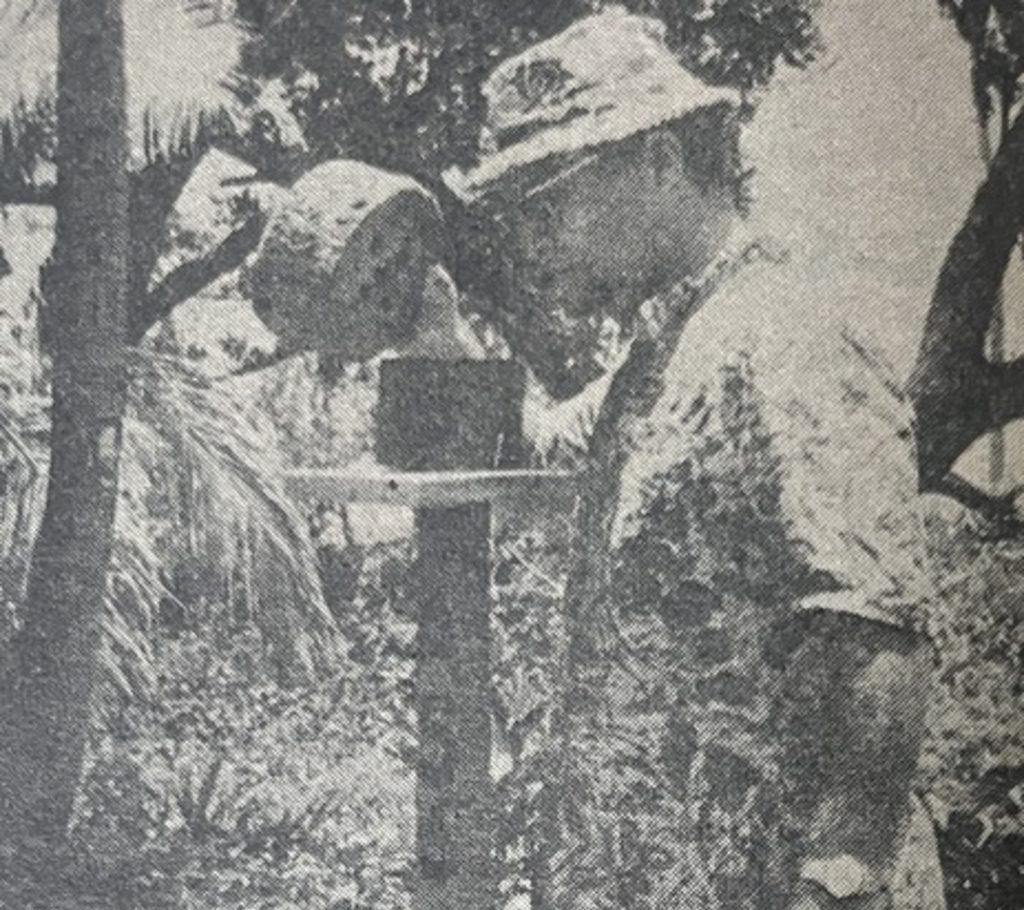
AN experiment aimed at eradicating the rhinoceros beetle pestilence in Fiji and elsewhere in the South Pacific is underway at Vomo Island near Lautoka.
The article on the project was published by this newspaper on Thursday June 14, 1973. A French entomologist from the South Pacific Commission in Noumea, Paul Cochereau had visited Vomo to inspect the project’s results.
He said 500 traps containing a chemical lure had been effective in reducing the adult beetle population on the island.
A research team from the SPC and the United Nations, based at Koronivia Agricultural Station near Suva and headed by Geoffrey Bedford, coordinated the work.
The traps consist of a tin on top of a pole from 5ft to 5ft off the ground.
Placed over the tin is a 6-inch-wide section of a coconut log with five holes drilled in it. The rhinoceros beetles are nocturnal creatures.
As they fly at night, the smell attracts them. They enter the holes in the coconut log and drop into the tin. Workers at the island inspect the tins every two days and gather the beetles captured for shipment to Koronivia for study.
When the program began in November 1971, the workers were capturing between 30 and 100 adult beetles each day.
But the rate had dropped to about 10 to 20 taken from the traps each week indicating the success of the project. Mr Cochereau said Hurricane Bee might have affected statistical data about rhinoceros beetles.
About 25 per cent of the island’s coconut-bearing trees fell to the furry of the hurricane’s winds.
Mr Cochereau pointed to fallen logs rotting on the ground and said these were ideal breeding places for the beetle grubs.
He kicked one of the logs open and found a slimy, whitish grub he said would spawn more of the pests.
Mr Cochereau urges the clearing and burning of such logs from all plantations to reduce possible breeding places.
He said a possible effective enemy of the rhinoceros beetle was a virus injected into live beetles.

