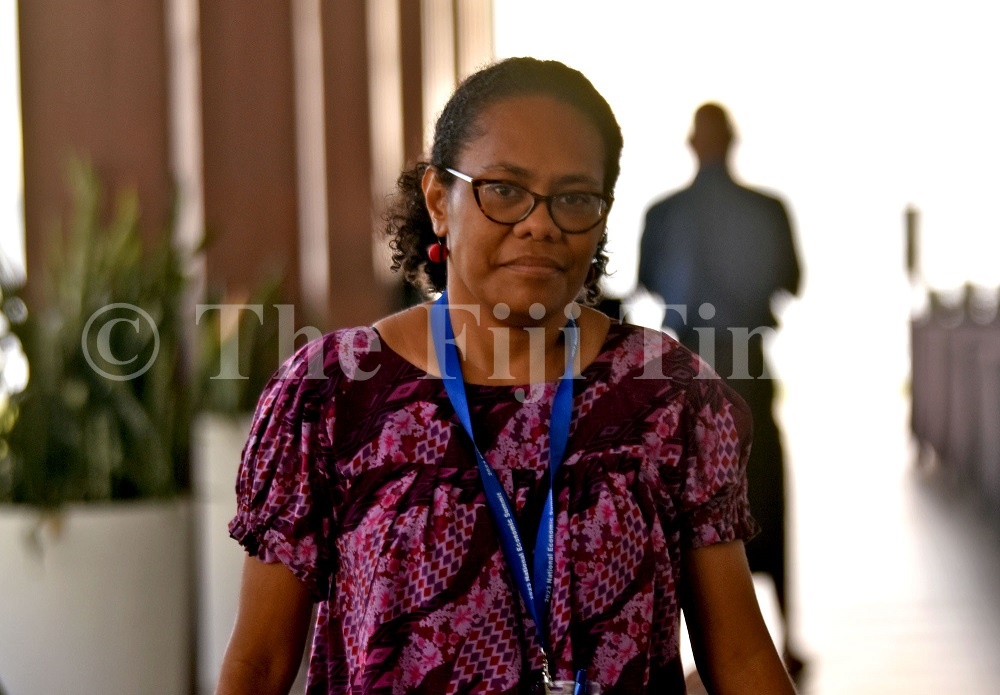
Fiji Council of Social Services (FCOSS) executive director Vani Catanasiga says the development of a national relocation standard operating procedures (SOPs) is a step in the right direction.
She highlighted this during the launch of SOPs for planned relocation in Fiji while sharing the case of Cogea Village in Wainunu, Bua, this week.
Ms Catanasiga said the SOPs were clear and provided guidelines to navigating the sensitivities of tenure-ship, equal participation in decision making, community trauma because of impacts of disaster and safety in its fullest sense.
She said much of what they did through the project Cokonaki Cogea was built from lessons learnt from government initiatives and also from what civil society organisations did to document the experiences of impacted communities and people.
Ms Catanasiga thanked their partners — Pacific Conference of Churches, Climate Tok, Transcend Oceania, Social Education and Empowerment Program (SEEP) and ADRA Fiji for the work they have been doing in that space.
She also thanked the Finance Ministry and GIZ who ensured the continued revision of the proposed SOP over the last few years.
Ms Catanasiga said the stories and experiences on the relocation of villages such as Vunidogoloa and Tukuraki would not go down well with government representatives but needed to be shared to prevent further harm to those who had suffered so much loss already.
“Our goal was to ensure that the safeguards that are applied in any development should be applied as well in relocation,” she said.
“This is challenging when you consider that past relocations have often taken place or prioritised in the context of disaster recovery.
“This meant that relocations were done with high levels of urgency and in that context, human rights-based approaches and ‘do no harm’ were sparingly applied.”
She said they learnt through the Cogea experience that communities have solutions that could make what was an emotionally and physically arduous process a lot more effective.
“We have had to confront a prevailing attitude in this CCA space that communities are ignorant and need to be spoon-fed, proded and given solutions that they themselves cannot contribute to.
“That’s been the most challenging for us as a local NGO that has worked in Fiji for 65 years, witnessing just how much that sort of attitude and approach has impacted the morale of climate impacted communities.
“Climate Tok, PCC are two NGOs that have worked to document these stories and I hope our government leaders will take time to look these video stories up online.
“There is much capacity building to be done in government if we are going to relocate communities without doing further harm in the future.
“We thank our German partners, the Bread for the World, our partner in the relocation of Cogea for believing in and investing in the concept of a community-led relocation.”
Ms Catanasiga said she hoped the SOPs would reduce miscommunication and territoriality and the failure to uphold safeguarding measures and industry standards for risk informed construction that plagued previous relocations.
“We, along with our regional umbrella body, the Pacific Islands Association of NGOs have started to test aspects of the SOP in the works done so far and we will be happy to share lessons we are learning with you all as we have been doing with the Ministry of Rural Development, the iTaukei Affairs Board and the Ministry of Lands.”
Deputy Prime Minister Manoa Kamikamica said climate change had forced communities to relocate and the challenge was the intrinsic link between the iTaukei people and their land. Six communities have been relocated because of climate change, with another 42 on the hot list yet to be relocated.
Mr Kamikamica said the SOPs would assist the transition of affected communities to their new homes as smoothly and efficiently as possible.