AS Fiji braces for worsening drought conditions under the El Niño weather pattern, rainwater harvesting is emerging as an important alternative for rural communities facing uncertainty over their water supply.
For the people of Naisausau Village in Namara, Tailevu, a newly commissioned rainwater harvesting project is providing an additional source of water at a time when the country is being warned to prepare for prolonged dry conditions.
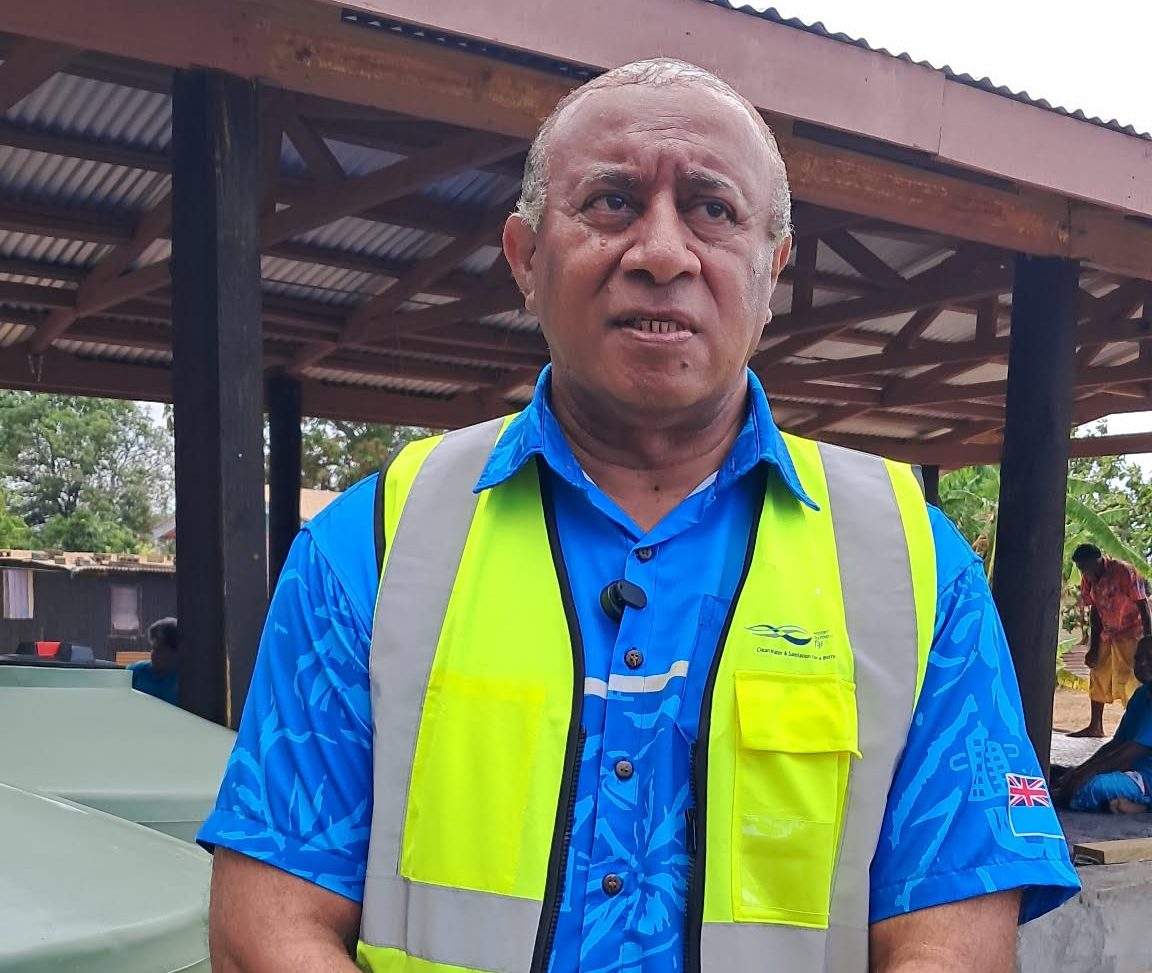
Assistant Minister for Public Works, Meteorological Services and Transport Naisa Tuinaceva said the project demonstrated how communities could capture and store rainfall to reduce their dependence on traditional water sources.
Speaking during the commissioning of the project last Thursday, Mr Tuinaceva said the initiative came at a critical time when communities across Fiji were experiencing the effects of drought.
“Today (Thursday) is a special day, especially when Fiji is in the middle of this drought and the El Niño, which is bothering everybody in this country,” he said.
“We are all experiencing some very tough times here in Fiji right now. But here in Naisausau, they are celebrating, because we have just commissioned their Rainwater Harvest Project.”
The system, developed over about a year, collects rainwater from various rooftops before directing it into a large concrete storage tank.
The water is then pumped to another tank situated on a slope, from where it is distributed to households in the village.
Mr Tuinaceva said the system allowed even small amounts of rainfall to be captured and stored for later use.
“The good thing about it, because this side of the country, as we all know, the rain comes regularly, and any small rain that will come, captured by these roofs will be collected into the tank and pumped up to those water tanks up on the slope, and from there, it is distributed to the houses.”
He said the village also relied on creek water, which was captured and stored in tanks for use.
However, he cautioned that rainfall and creek water could not always be relied upon, particularly during prolonged dry periods.
“Rain is not there always, creeks sometimes dry up, and in places like Naisausau, I think they can use more.”
Mr Tuinaceva described the project as the first of its kind in the Namara district, highlighting Government’s efforts to improve water access in rural communities through the Water Authority of Fiji.
He said similar projects were being implemented in other parts of the country as authorities worked on both temporary and long-term solutions.
“This project may not provide a complete answer to every challenge faced by the community, but it provides an important helping hand now while the Government continues to work towards a more permanent and sustainable solution in the years to come.”
The commissioning comes as the Government warns that Fiji’s water situation could deteriorate significantly if El Niño-driven dry conditions continue.
In Parliament, Minister for Public Works, Meteorological Services and Transport Ro Filipe Tuisawau revealed that the Water Authority of Fiji’s projections showed the proportion of the country’s 44 water sources classified as critical could increase from 43 per cent to 59 per cent in the second half of November.
That figure could rise to 75 per cent by the end of November and 82 per cent by January 2027 if dry conditions persist.
By January, only two sources nationally — Matovo in Sigatoka and Natua in Seaqaqa — are projected to remain at normal levels.
The Western Division is expected to face significant pressure, with 11 of its 13 water sources projected to be critical by the end of November.
In the Northern Division, 12 of 16 sources could be critical by late November, increasing to 15 by January.
The Central and Eastern divisions could also see six sources reaching critical levels by late November and January 10 to 15.
Mr Tuisawau said Government was working with development partners to explore additional water supply options, including groundwater services, expanded borehole networks, rainwater harvesting, water recycling and mobile desalination plants.
He also appealed to households, businesses, schools and communities to conserve water, warning that every litre saved would help sustain supplies in the coming weeks.
“Every litre saved today is a litre that stays in our dams and rivers for the weeks ahead,” Ro Filipe told Parliament.
He urged people to avoid washing vehicles and watering gardens, repair leaking taps, toilets and pipes, and store drinking water safely in covered containers.
Opposition Member of Parliament Jone Usamate said public awareness about water conservation needed to be strengthened, warning that the effects of the drought could extend beyond household water shortages.
“I think the message has not gone out strongly enough,” Mr Usamate said.
He said Parliament and the wider community needed to demonstrate responsible water use, adding that the impact on agriculture could continue until the middle of next year.
He also warned of possible economic and public health consequences arising from inadequate access to water and proper sanitation.
“I think all of us need to work together.”
The Naisausau project highlights the growing importance of community-level water storage as Fiji prepares for potentially prolonged dry conditions.
While rainwater harvesting cannot completely replace reliable and sustainable water infrastructure, it provides rural households with another source of supply and an opportunity to better prepare for periods when rainfall becomes scarce.