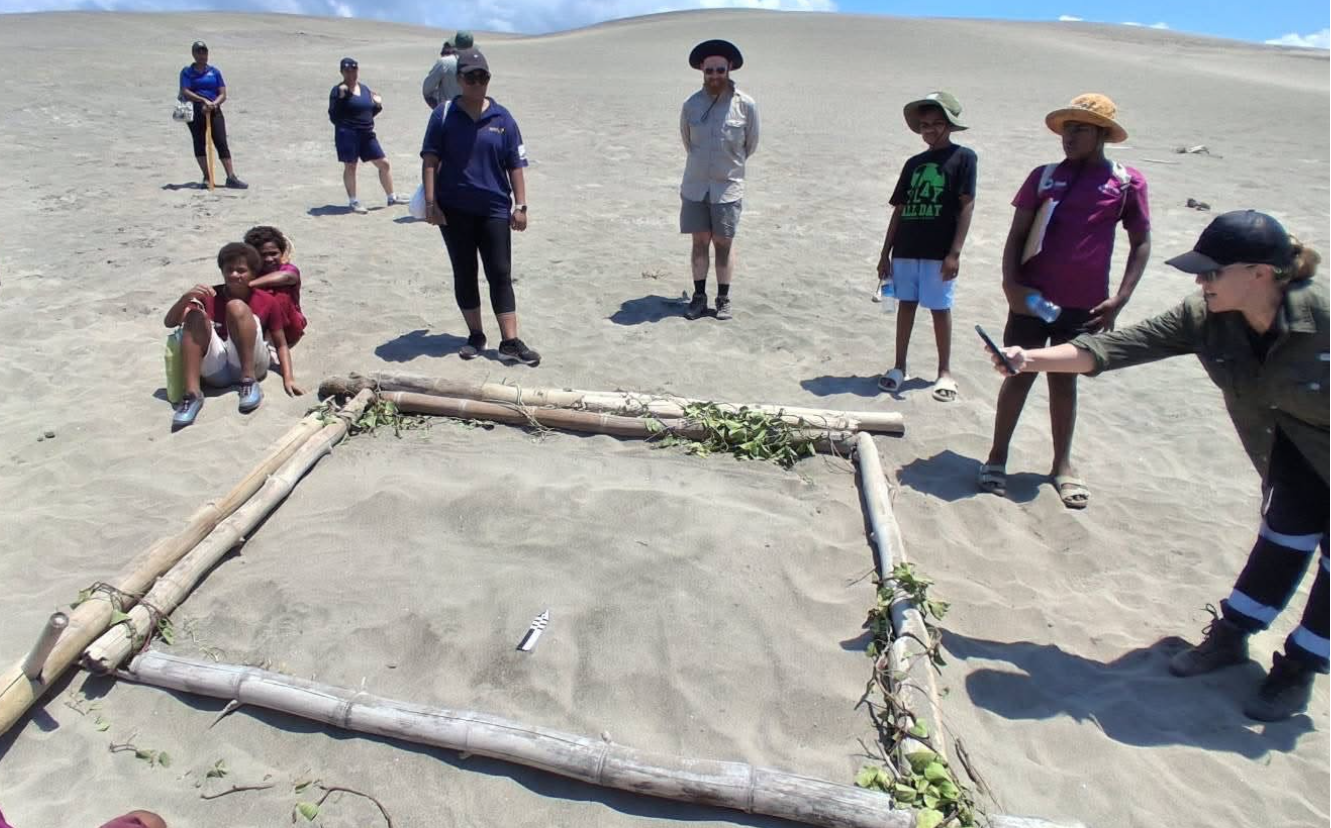
Visitors to the Sigatoka Sand Dunes National Park are being urged to follow a simple message — “See it. Leave it. Report it” — to help protect Fiji’s archaeological heritage and ancient burial sites.
The appeal follows the recent discovery of ancient human remains exposed by naturally shifting sands at the national park.
The remains were respectfully reburied last week by a team from the Fiji Museum and National Trust of Fiji rangers after the burial site became exposed a few weeks ago.
“Beneath the sand are traces of Fiji’s past, including ancient pottery, archaeological sites and burials that connect us to people who lived here generations ago,” the national park said in a statement.
“As the dunes naturally shift and change, archaeological material and burial remains can sometimes become exposed.”
Visitors, who encounter pottery fragments, bones, burial remains or other objects of potential archaeological significance, have been urged not to touch, move or collect them.
Instead, they should leave the objects undisturbed and immediately report their discoveries to a National Trust of Fiji ranger.
“Something that may look like a small piece of pottery or an unusual object in the sand could be part of a much bigger story. Leaving it where it was found helps protect that story and the archaeological context around it.”
The rangers will notify the Fiji Museum for an appropriate archaeological response.
The national park said following the simple message would help preserve Fiji’s cultural heritage for future generations while respecting those buried beneath the dunes.