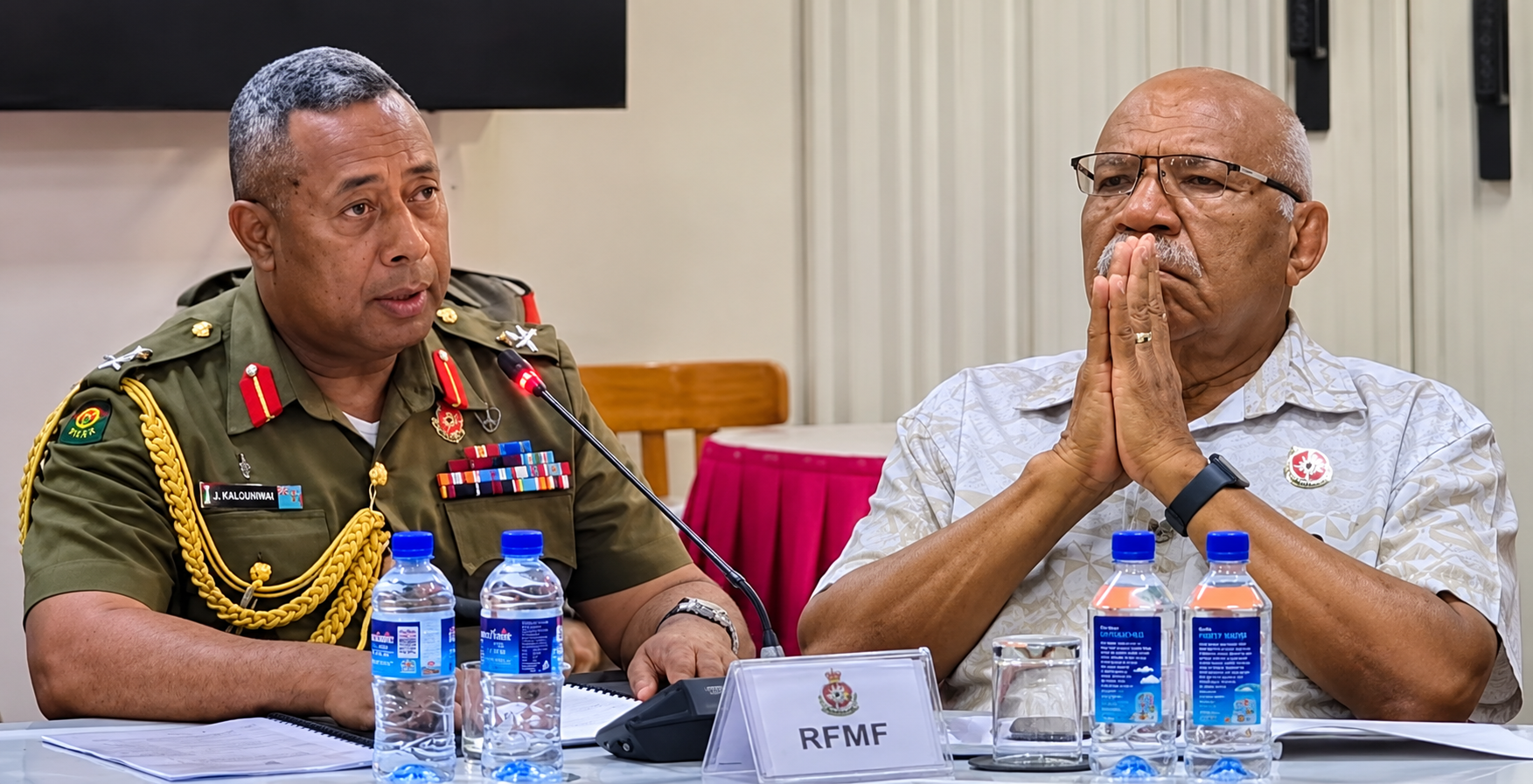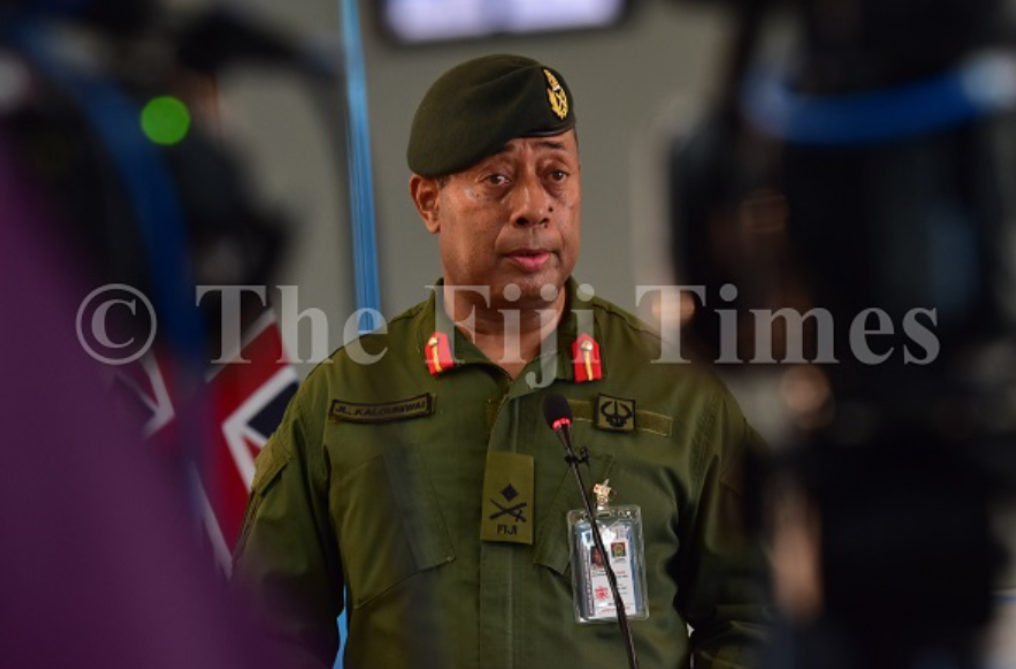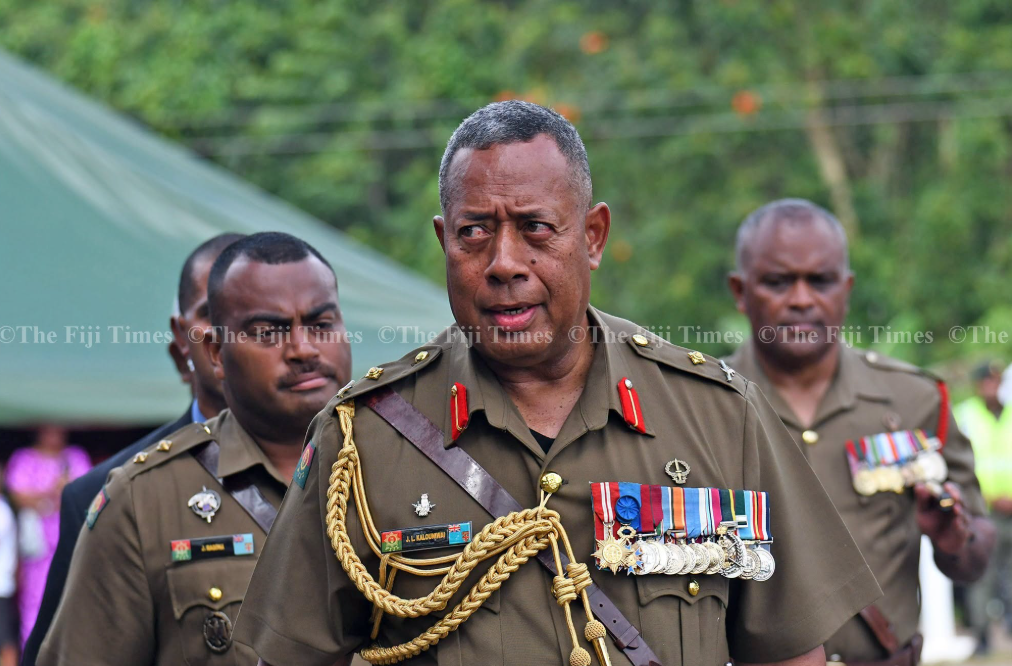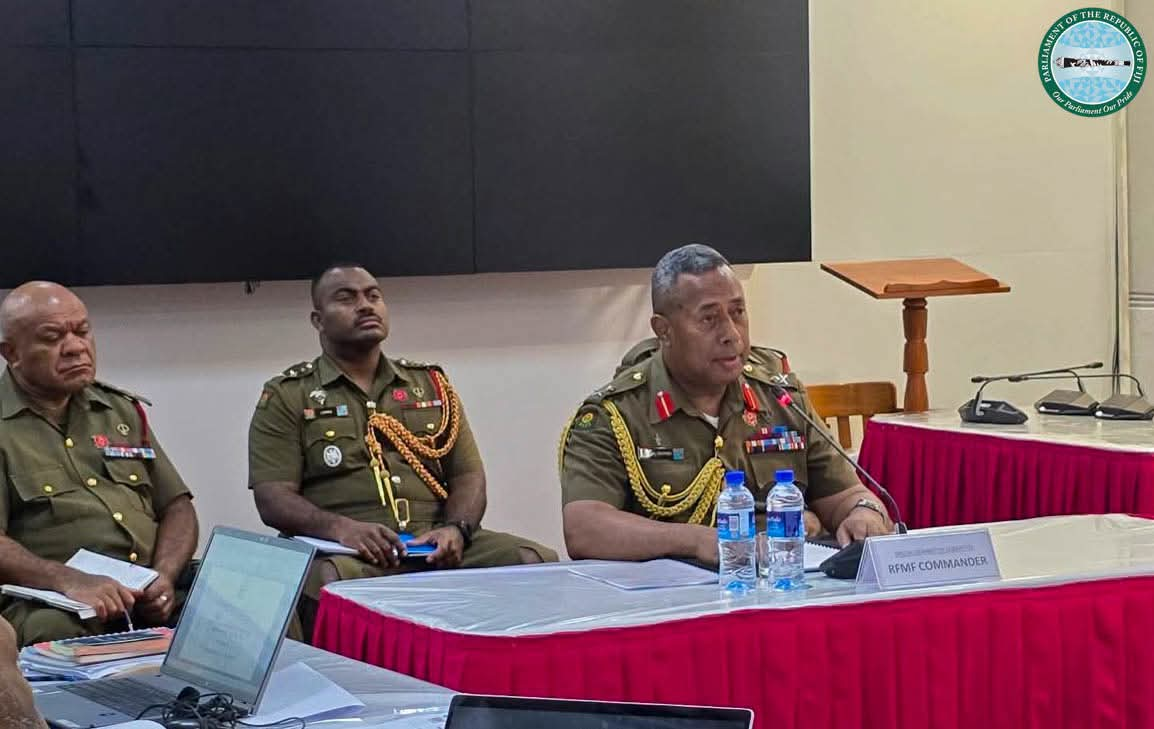
Republic of Fiji Military Forces (RFMF) Commander Major General Jone Kalouniwai has warned that provisions granting permanent immunity under the proposed Constitution Amendment Bill could leave future generations carrying the burden of impunity.
In a submission to the Parliamentary Committee considering the Constitution (Amendment) Bill 2026, Major General Kalouniwai urged lawmakers to carefully consider the long-term consequences of the proposed constitutional changes.
“Some of the choices before this Committee cannot be undone,” he warned.
“Once this Bill passes its third reading, section 207 would make its immunity permanent and place it beyond the reach of the courts, for generations not yet born.”
The Commander said Fiji had an opportunity to break from its troubled constitutional history by allowing the people to determine the country’s supreme law through democratic means.
“For the first time, the people of Fiji may be asked to approve their own supreme law. We can show our children that Fiji can change its highest law through the ballot box and not the barrel of a gun.”
However, he cautioned that failing to address the immunity provisions could perpetuate the cycle of impunity.
“If we fail to choose rightly now, our grandchildren will inherit the same mark of impunity we inherited, and the cycle will turn again.”
Major General Kalouniwai called for Chapter 14 of the proposed Constitution to be replaced with provisions establishing a Truth, Accountability and Reconciliation Commission.
Under the RFMF’s proposal, protection from prosecution would only be available to individuals who made full disclosures, while those responsible for the gravest crimes would not qualify.
The Commander also recommended safeguards against the extension of Parliament’s term without a two-thirds majority and measures to prevent constitutional provisions from taking effect during an election.
He called for stronger protection of peaceful assembly, including a constitutional obligation for soldiers to refuse manifestly unlawful orders and parliamentary oversight of internal military deployments.
Other recommendations included removing the chastisement proviso to strengthen children’s rights, improving protections for persons with disabilities, retaining the Fiji Independent Commission Against Corruption and safeguarding judicial independence.
Major General Kalouniwai welcomed provisions strengthening civilian direction of the military and restoring the Office of the Ombudsman.
He stressed that the RFMF was not seeking special privileges or protections for itself.
“We ask nothing for ourselves, Mr Chairman. We ask only that the law stand above every person, including us.”
The Commander said the Bill’s stated commitment to establishing a supreme law that could not be abrogated or suspended must be reflected in its substantive provisions.
He urged the Committee to make the necessary changes before Parliament’s final consideration of the legislation.
“The window to choose otherwise is open today. It rests, Mr Chairman, in your hands.”