
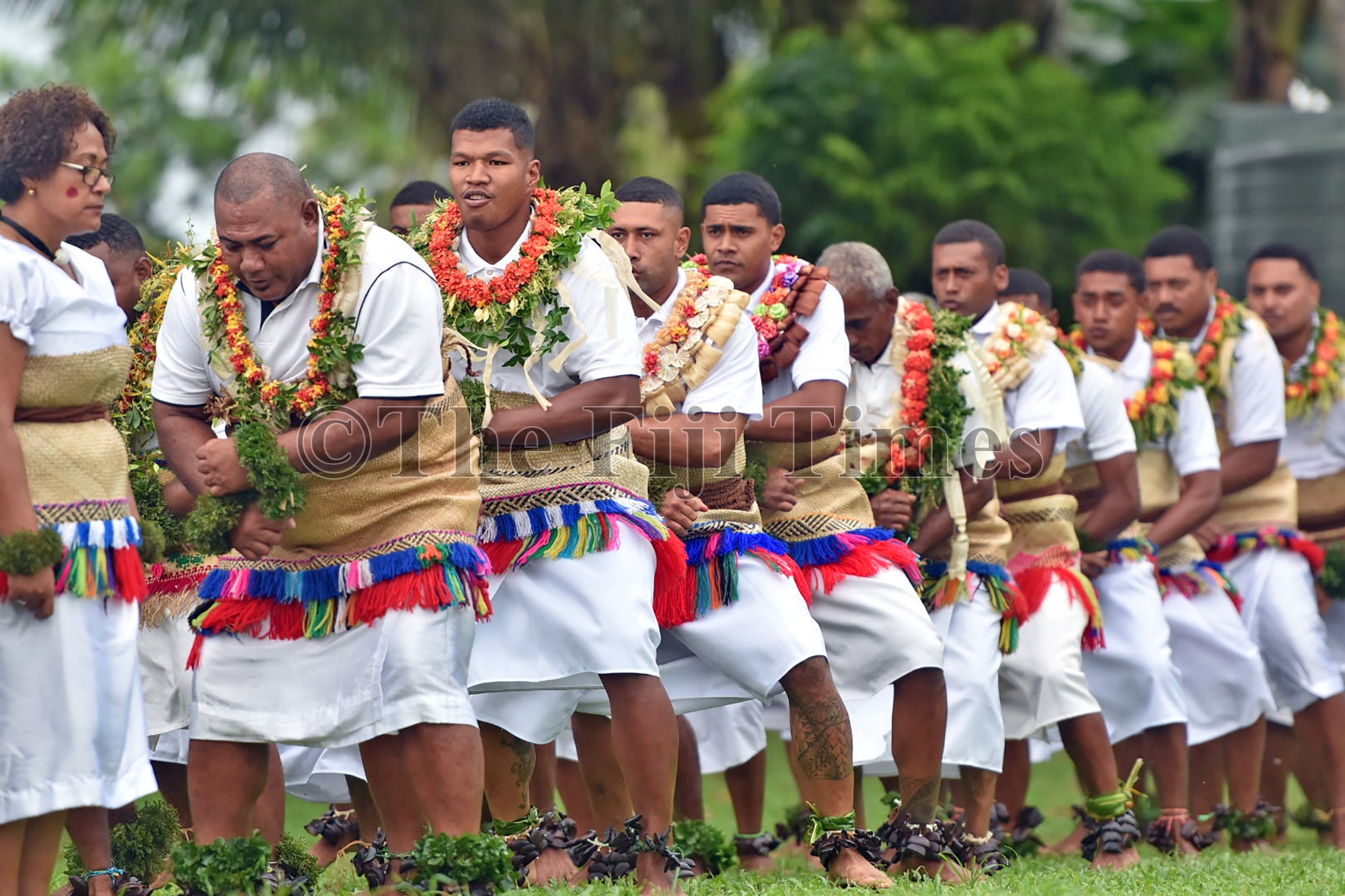
The reconvening of the Great Council of Chiefs on Bau Island after a lapse of 16 years was accompanied by the return of traditional and cultural performances not seen in years.
The colour and splendor of the solevu during the (closing) ceremony brought a fitting end to the historic two-day meeting, and it was apt that the lakalaka performed by the people of Ono-i-Lau wrapped up the historic occasion.
From the swaying bodies of 300 Ono-i-Lau men and women performing the lakalaka to the nearly 2000 people who cheered them on, it was evident the event was a resounding success.
The lakalaka
It is a distinct traditional dance of Tongan origin usually performed by the people of Lau. The dance involves an equal number of men and women dancing in a straight line, with the women taking up positions on the men’s right flank.
The lakalaka is said to be a blend of choreography, oratory and vocal and instrumental polyphony, which in the country of origin means to “to step briskly or carefully”. Because of the close ties between the kingdom of Tonga and the people of Lau, the dance has been widely performed by the people of Lau.
At the invitation of the Turaga Bale na Vunivalu of Bau, Na Tui Kaba Ratu Epenisa Cakobau, the Tui Ono and the vanua ko Ono accepted a request to perform the dance at the closing of the council meeting on May 25.
It was memorable day as the last lakalaka is believed to have been performed eight years ago — in 2015 — during the Bau youths soli day.
According to Inoke Luveni, the orchestrator of the historic performance on Bau, it featured two distinct songs.
“The two lakalaka pieces depict the historical relationship between Ono-i-Lau and Bau, and how the first settlers arrived on Ono-i- Lau,” said Mr Luveni, adding they included a lakalaka performed in the Tongan language.
“These songs that we chose to perform are not commonly used, which is why I selected them. Both songs carry deep meanings.”
Mr Luveni said all the performers were from Ono-i-Lau, with some travelling from the West and overseas to join the dance troupe. “We practiced for a month and arrived on Bau with a group of more than 300 people.
“And I am delighted at the way the audience thoroughly enjoyed themselves. They even joined in swaying with our dancers.” Ono-i-Lau was the only group to perform on the final day before the solevu ceremony.
Bau and Ono-I-lau.
The invitation by the Vunivalu was a perfect opportunity to rekindle ancient ties that the vanua ko Ono shares with Bau, and that the acceptance of the invitation was based purely on their veiwekani vakaturaga (ancient traditional ties).
According to legend, Niumataiwalu, a chief of Vuanirewa, was renowned for his ferociousness in battle and for being handsome. This attracted the attention of a noble woman of Bau.
It resulted in an illicit affair and, eventually, to his demise.
The woman was Adi Davila of Nairai, the Radi Levuka, wife of the Vunivalu, the paramount chief of the Kubuna Confederacy.
The adulterous affair did not come to light until Adi Davila realised she was pregnant. Although she and her child, Banuve Baleivavalagi, were not harmed, the Vunivalu, Buinivuaka Nailatikau, bided his time and planned revenge on Roko Niumataiwalu.
He sought the support of two Ono-i-Lau chiefs, Saunikalou and Radua, who were visiting Bau at the time and were subjects of Niumataiwalu. He presented them with a tabua made of black stone and requested the death of their overlord.
In time, Niumataiwalu visited Matokano Village on Ono-i-Lau and a welcoming feast was prepared for him.
This was also an occasion the two conspiring chiefs saw as an opportunity to exact the earlier instructions of the Vunivalu.
As all weapons were forbidden in the area where the yaqona ceremony was to take place, Saunikalou hid a war club in a hollowed out banana stem and instructed his young son to play with it as a toy where the ceremony occurred.
As the first kava bowl was being given to Niumataiwalu, he unsuspectingly lowered his head to drink. It was then that Saunikalou grabbed the hidden weapon and struck him.
The first blow did not kill Niumataiwalu, instead he fl ed towards the beach in the hope of gaining aid from his men, but he was overpowered by Saunikalou and his men and clubbed to death.
Legend has it that the area where Niumataiwalu was killed is cursed for the spilling of his noble blood. The vegetation in this area is called cuga.
It still retains a whitish tinge amidst a surrounding area of deep green, as it is believed by locals to be cursed.
Because of its tragic history, this area is the only place on the island that does not belong to the people of Ono-i-Lau because it traditionally belonged to the Vuanirewa and remains so today.
In the 20th century, the Vuanirewa descendants of Niumataiwalu made attempts to retrieve his remains for reburial at Tubou on Lakeba.
Because of the tragic incident, the people of Bau and Ono-i-Lau have maintained the relationship of veitabani in which they’re always trying to outdo each other in every aspect of life.

