The Coalition Government is facing mounting pressure on multiple fronts, with disagreements over constitutional reform, uncertainty surrounding the election date and shifting political alliances exposing deeper divisions within the governing partnership.
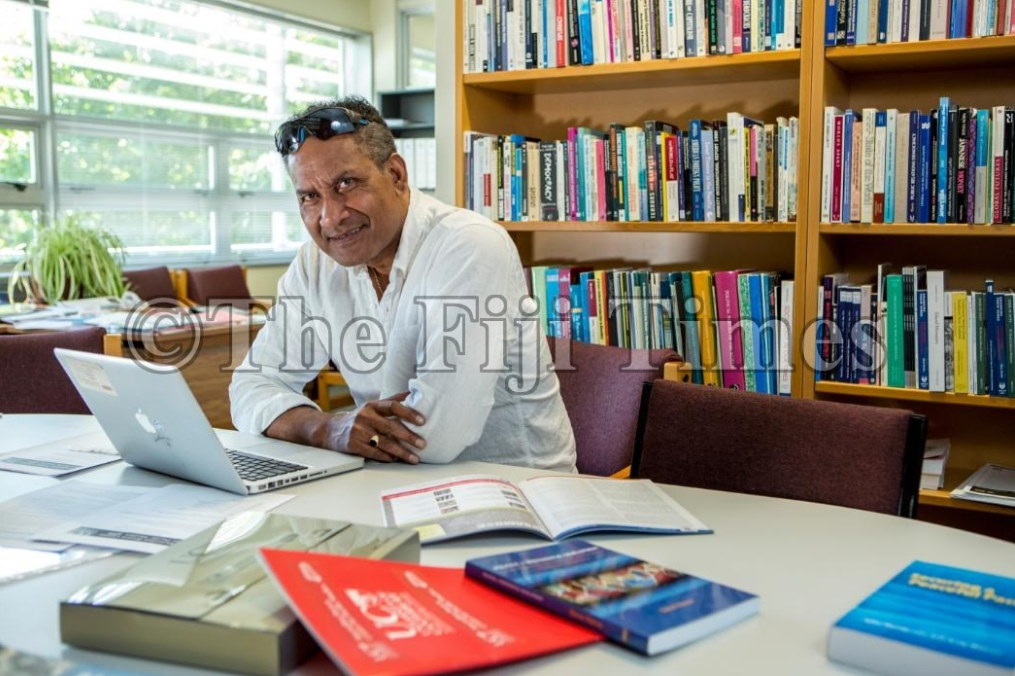
University of Canterbury distinguished professor and political sociologist Steven Ratuva says efforts to contain tensions through public assurances of unity are becoming increasingly difficult as fundamental differences between coalition partners emerge.
“Now we’ve reached a stage where the tension has flared up quite significantly and is no longer containable through publicly assuring narratives of unity, as layers of fundamental differences unfold,” he said.
Prof Ratuva identified frustration over the pace and direction of constitutional reform, alongside uncertainty surrounding the election timetable, as key sources of tension.
He said the accumulated challenges risked clouding the Government’s strategic direction, while coalition partners SODELPA and the National Federation Party (NFP) appeared increasingly interested in distancing themselves from contentious issues as they prepared their own platforms for the next election.
He said the constitutional amendment process presents a critical test of those relationships. In addition he said The People’s Alliance could potentially rely on the NFP and the Group of 11 independents to secure the necessary parliamentary support if SODELPA withdraws its backing for the Constitution (Amendment) Bill.
However, Mr Ratuva said the outcome would depend on parliamentary numbers, individual MPs’ voting positions and how the two-thirds majority requirement was interpreted.
With Parliament comprising 53 members, the threshold is central to determining whether the Bill can proceed. Mr Ratuva said the Government’s estimated support of 35 MPs could leave it needing an additional vote, depending on the method used to calculate the required majority. He also pointed to possible divisions within the NFP that could further complicate the Government’s efforts to secure the numbers.
The implications extend beyond constitutional reform. Mr Ratuva warned that failure to obtain the required votes could have serious consequences for both the Bill and the coalition itself.
Meanwhile, he cautioned against assuming the next general election would automatically deliver the political and economic transformation many Fijians hope for.
Although a newly elected government would have an opportunity to reconsider constitutional reform and address concerns about the current process, he said Fiji’s history showed that electoral change did not always translate into meaningful policy transformation.