
A BUSINESS should not have to repeatedly prove that it is a good business.
Yet, across Fiji, businesses with established compliance records continue to face lengthy and repetitive approval processes involving multiple ministries and agencies.
A business registration may depend on several approvals being completed within different time frames.
A work permit can take between three and six months.
A liquor licence may take up to three and a half months.
Business licence renewals can require companies to return to multiple agencies to provide information that Government may already hold.
These delays cost businesses time and money.
They can postpone investments, prevent businesses from opening, delay the recruitment of essential workers and increase the cost of doing business.
Private sector forum as a start to the solution
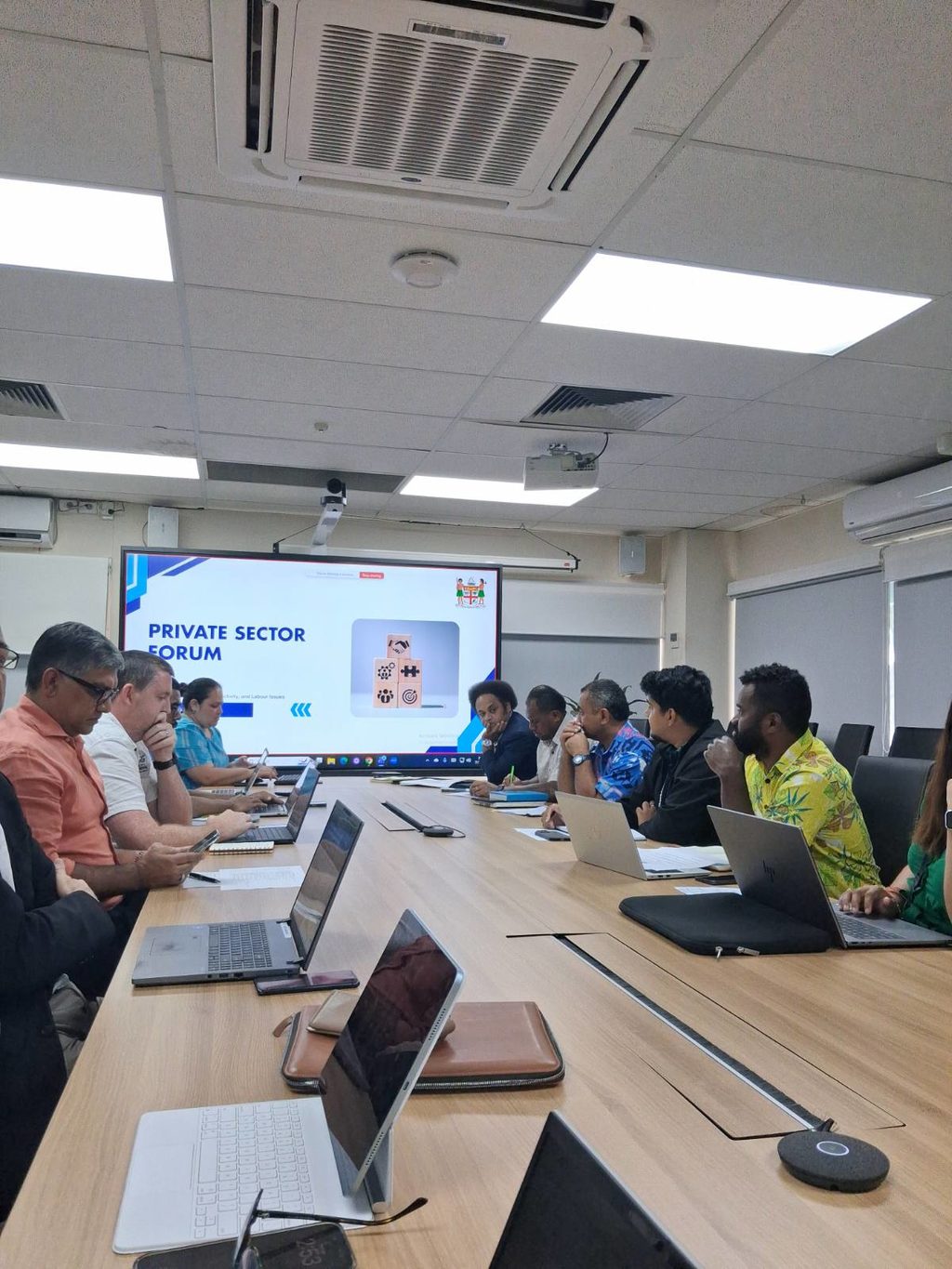
On Friday July 24, 2026, the Permanent Secretary for Commerce and Business Development, Dr Radika Kumar convened the Private Sector Forum at Civic Tower in Suva.
The forum brought together the Minister for Finance, Commerce and Business Development, Esrom Immanuel and representatives from the Office of the Prime Minister, the Civil Service, Employment, Immigration, the Office of the Solicitor-General, the Reserve Bank of Fiji, Foreign Affairs and External Trade, Health, Immigration and the relevant business reform, Digital Government and trade standards agencies.
“The forum aims to create a multistakeholder approach to addressing issues affecting the private sector,” PS Kumar said.
“It was important to have both the businesses experiencing the challenges and the government agencies with the mandate to address them in the same room.
“Issues such as approval delays, skills shortages, immigration processes, inconsistent regulatory requirements and gaps in digital systems cut across several agencies and cannot be resolved effectively by one Ministry working in isolation.”
Private sector needed to drive growth
The private sector has a central role in lifting Fiji’s annual economic growth towards the four to five per cent target under the National Development Plan 2025–2029.
This priority is further reinforced by the 2026–2030 National Budget, which supports business growth, investment, entrepreneurship, MSMEs and wider private-sector development.
Businesses create jobs, invest in skills, generate tax revenue, introduce innovation and provide the goods and services used by communities across Fiji.
However, asking businesses to lead economic growth must be matched by an operating environment that allows them to invest, expand and compete.
Fiji Commerce & Employers Federation (FCEF) president Eldon Eastgate acknowledged that Government is operating within limited fiscal space, but noted that many barriers faced by businesses do not necessarily require significant new expenditure to resolve.
“The private sector recognises both the opportunity and responsibility placed on businesses to drive sustained economic growth,” he said.
“To deliver on that expectation, we must work together to address the specific challenges preventing businesses from investing, expanding and creating employment.”
Coordinating approvals across government
One of the most consistent concerns raised during the forum was the lack of coordination between ministries and agencies.
Businesses rarely deal with only one government institution. Establishing or expanding a business can require approvals relating to registration, fire safety, building permits, health, employment, immigration, taxation and local government.
Each agency may be following its own requirements. However, businesses experience them as one government system.
A delay within one agency can prevent an entire application from progressing, even when the business has met all other requirements.
An example is the BusinessNOW portal, which provides businesses with a 14-day compliance window.
However, this does not always align with the processing times of participating agencies.
If an approval takes longer than the portal allows, the application may lapse and the business may be required to restart the process and repay fees.
There is also no clear or simple way for businesses to track where an application is, which agency is responsible for the delay or whether further information is required.
Immigration processes present similar challenges. Employers can wait between three and six months for work permits, even where a position cannot be filled locally.
This is particularly concerning when the National Skills Gap Assessment has identified 95 occupations that employers are finding difficult to fill with local workers.
Businesses prefer to employ and develop local workers. However, where specific skills are unavailable, employers must be able to recruit the expertise needed to maintain operations, complete projects and transfer knowledge to Fijian employees.
Reward businesses that comply
The Fiji Revenue and Customs Service (FRCS) has a premium reward program called Gold Card Services. Established in 2012, the program recognises businesses with strong tax and customs compliance records by providing them with priority services.
The program already operates through partnerships with agencies including the Fiji Immigration Department, Fiji Airports, the Biosecurity Authority of Fiji and the Land Transport Authority.
Why can’t this approach be applied more widely?
Businesses with a proven compliance record could qualify for coordinated and faster processing of work permits and visas, liquor licences, business licence renewals and other regulatory approvals.
This risk-based approach recognises and rewards businesses that consistently meet their regulatory obligations.
Businesses with strong records of compliance across taxation, employment, immigration, health and safety should not be subjected to the same level of scrutiny as high-risk or repeat non-compliant applicants each time they seek an approval.
Government already holds much of this information. Better information-sharing and a common compliance status across participating agencies could reduce duplication, improve processing times and allow officials to focus more attention on higher-risk cases.
FCEF welcomes this approach. The first forum successfully brought the right institutions into one room and established a strong foundation for coordinated reform. Government agencies outlined work already underway, while businesses provided direct evidence of where systems continue to create delays, costs and barriers to progress.
Some challenges will require policy or legislative reform. Others are low-hanging fruits that can be addressed through clearer service standards, application tracking, aligned processing times, better information-sharing and private sector testing of new government systems.
The priority now is to translate this constructive dialogue into an agreed program of action – with clear responsibilities, realistic timelines and measurable improvements in the business operating environment.
FCEF acknowledges Minister Immanuel, PS Radika Kumar and the Ministry of Commerce and Business Development team for organising and facilitating the forum.
We stand ready to continue this work together, to improve the ease of doing business in Fiji.
“When Government and the private sector work from shared evidence and shared accountability, we can reduce the cost of doing business, strengthen confidence and create better conditions for investment, productivity and employment”. – PS Radika Kumar.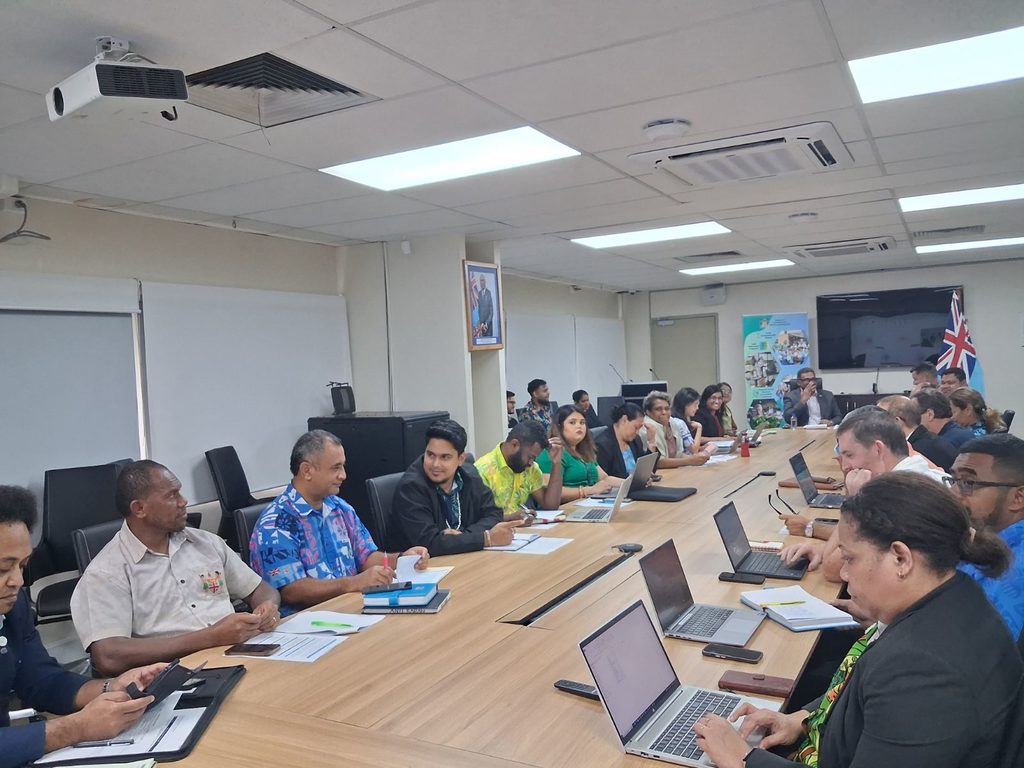
Representatives of the Ministry of Finance, Commerce and Business Development, statutory bodies and the private sector at the Private Sector Forum on July 24, 2026 at Civic Tower Building in Suva. Picture: FCEF/SUPPLIED

