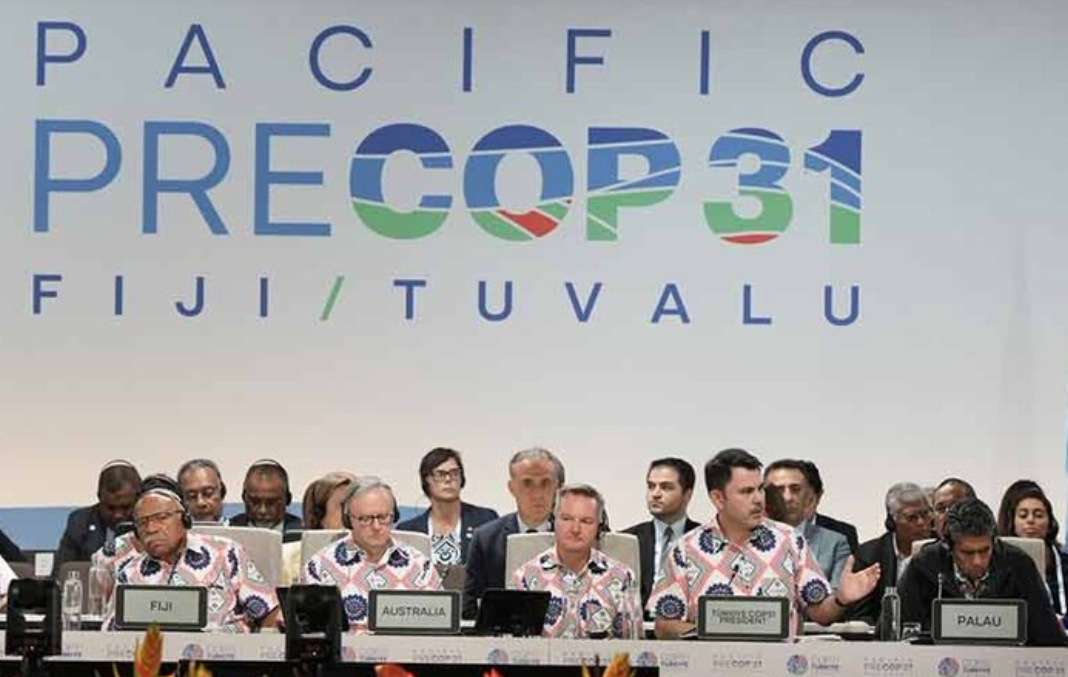
The contracted cost of Australia’s pre-COP31 climate summit, held in Fiji and Tuvalu earlier this month, has reached approximately $54.8 million (A$34.6 million), nearly $23.8 million (A$15 million) more than the figure previously cited by the Australian Government.
The figures were disclosed during a Senate Environment and Communications Legislation Committee hearing on Monday.
David Higgins, head of the Department of Climate Change’s International Climate and Energy Division, confirmed that the $31.7 million (A$20 million) event management contract represented only part of the overall expenditure.
“To date, we have contracted commitments associated with pre-COP delivery of $34.6 million,” Mr Higgins told the committee, referring to Australian dollars.
“That constitutes the significant majority of costs associated with the pre-COP.”
However, he said the final expenditure was expected to be lower, as several contracts were based on actual usage and some costs could be recovered.
“The final acquittal amounts will be somewhat less than that, we expect, but the acquittal processes, the reconciliation processes are ongoing,” he said.
Department Secretary Mike Kaiser acknowledged that the previously reported $31.7 million (A$20 million) figure related specifically to event management.
He said the figure should not have been interpreted as the total cost of the summit.
Mr Higgins explained that the event management contract covered venue construction and fit-outs, security, translation services, audiovisual equipment and technical production facilities for events in Fiji and Tuvalu.
The overall contracted commitments also included approximately $3.2 million (A$2 million) for host broadcasting services to make summit proceedings publicly accessible.
The cost disclosures have renewed scrutiny of the Australian Government’s spending on the international climate gathering.
The Albanese Government had promoted the summit as an opportunity to draw international attention to climate challenges facing Pacific island nations.
The event, led by Climate Change and Energy Minister Chris Bowen, reportedly attracted approximately 4,000 participants from 100 countries.