
THERE is perhaps no crueller trick in life than the way its brightest moments can quietly stand beside the beginnings of decline.
Last week, we left Delanasau during what seemed to be its finest years.
Under the management of LNA and the steady hand of his wife Hilda, Delanasau seemed almost untouched by the troubles of the wider world.
But as we say in Fiji. Even the good times must come to an end.
Because while life at Lekutu still carried music, laughter and the comforts of home, forces far beyond the plantation were already beginning to shift.
In The View from Delanasau: The Life and Times of Leslie Norman Anderson (LNA), James Norman Stevenson describes this next chapter as one where the pressures came not in one sudden collapse, but in waves. Eventually, another world war.
By 1930 the global collapse in demand for copra was devastating Fiji’s plantation economy.
Prices weakened. Buyers became cautious. And for plantations dependent on shipping and exports, the future suddenly looked fragile.
There were other problems too.
According to Stevenson some of the partners showed little interest in replanting programs to replace ageing coconut trees first planted years earlier under Holmes.
Holmes, for those who’ve forgotten, was the earlier planter from whom LNA had first taken over Delanasau back in 1912.
Anyways, coconut trees, unlike quick crops, demanded patience.
Seven years could pass before a young tree was mature enough to bear.
At the same time, Delanasau’s infrastructure was beginning to age. Buildings required repairs. Machinery needed attention. Finding labour for the endless demands of plantation life became harder and harder.
Stevenson explains that what was needed now was energetic, hands-on management.
But LNA’s health was no longer what it once had been.
The illness that nearly claimed his life years earlier had left its mark. Though he remained determined, there were limits to what he could physically do.
Then nature itself began changing the plantation’s connection to the outside world.
Over time, the entrance into the Lekutu River slowly silted up.
Where larger vessels once approached more easily, passage was now limited mainly to launches towing long boats.
The inter-island ships, first the John Forrest and later the Adi Rewa, could no longer properly enter and instead anchored further out in Bua Bay.
This created difficult and costly work.
Copra now had to be loaded from the wharf into whale boats, often during awkward tides, before being towed out across the water and transferred again onto waiting ships offshore.
It was labour done with skill and experience, but it added expense to an industry already under pressure.
And yet, even during those harder years, Delanasau still carried moments of warmth.
Perhaps that is what makes Stevenson’s account so human.
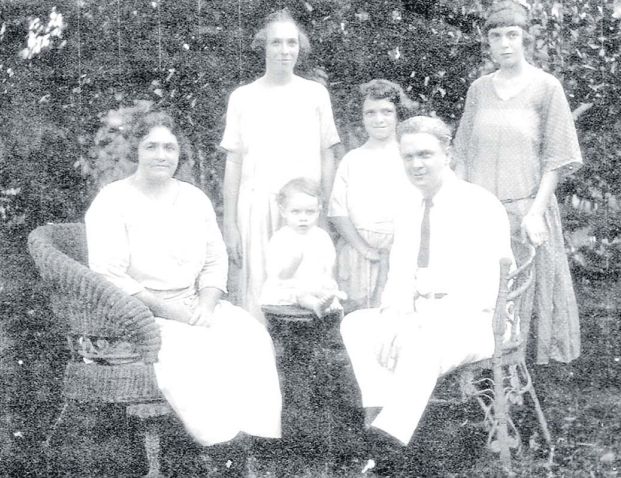
Because while the plantation economy weakened outside, inside the Anderson home there were still evenings filled with music, laughter and family.
When everyone happened to be together, the house would come alive under the glow of kerosene lamps.
Hilda sat at the piano she treasured so deeply, playing with the confidence of someone long practiced at it.
Jean joined with her violin and sometimes the piano as well.
Una, LNA’s eldest, sang.
And LNA, together with the younger children, listened as an appreciative audience while the sounds drifted softly into the Bua night.
However, suddenly, from the great mango tree outside the office, Stevenson says chaos emerged.
Dozens upon dozens of sleeping myna birds would erupt into noisy squawking after one unfortunate bird lost its footing and tumbled from a branch, setting off a chain reaction among the others.
Then, almost as quickly as it began, the noise would fade.
One by one the birds settled again. And silence returned.
“This was indeed Home,” Stevenson writes.
But time, as it always does, carried the family in different directions.
The three Anderson girls moved toward nursing.
Una completed her training, married, and left the islands for a time before eventually returning to Delanasau with her two children after the marriage failed.
Jean’s health prevented her from completing her own nursing training, and she later moved to Nadi where she married into the Kennedy family.
Lesley completed her nursing certificate and worked at the Colonial War Memorial Hospital in Suva before later continuing her career in Australia.
Meanwhile, Don, born during Delanasau’s more hopeful years in 1921, attended Suva Boys Grammar School before later working across Suva, Nadi and Lautoka.
Eventually he joined the Fiji Military, later working at Emperor Gold Mines in Vatukoula before moving on to New Zealand.
As the children slowly built lives elsewhere, Delanasau became quieter.
LNA and Hilda still travelled from time to time to visit family on Viti Levu, and Stevenson describes these journeys almost as small respites from what was becoming an increasingly isolated existence.
One of the plantation tractors, Bert, had broken down.
Trips around the islands and reefs of Bua Bay became less frequent.
The world seemed to be narrowing.
And then, beyond Fiji once more, larger events began moving toward the Pacific.
Through the copra trade, Stevenson notes that many planters viewed the giant English company “Lever Brothers” with deep resentment.
The company dominated the market and effectively controlled pricing throughout the industry.
But even that growing frustration would soon be overshadowed by something far larger.
War
The First World War had brought Count Felix von Luckner to Fiji.
The Second World War would bring the Americans.
At first, the conflict still felt distant. Europe and North Africa were half a world away.
But Fiji, as part of the Empire, answered the call of Britain.
Young men enlisted through the Empire Air Training Scheme and entered the Royal Air Force.
Others joined Australian and New Zealand military units.
Militia and Home Guard formations appeared across the colony in towns like Lautoka and Ba, often trained by veterans of the previous war.
Stevenson recounts with some humour how managers inducted as ordinary privates suddenly found themselves being ordered around by sergeants who, only days earlier, had been their office clerks.
The bars of the MacDonald and Garrick hotels reportedly filled with stories and laughter over which company managers marched the worst on parade grounds.
And still, life in Fiji continued in strange contrast.
Passenger liners from neutral America still visited Suva.
Warships entering harbour drew large crowds.
None more so than HMNZS Achilles, the New Zealand cruiser famous for battling the German pocket battleship Admiral Graf Spee near South America.
Stevenson briefly pauses the Delanasau story here to reflect on his own later journey to Buenos Aires years afterward, recalling how his ship passed near the very waters where the Graf Spee had been scuttled.
Standing there, he remembered being a schoolboy in Suva collecting autographs from sailors who had survived that famous battle.
“There are indeed many twists and turns in this universe,” he writes.
Back in Fiji, wartime patriotism spread across the colony.
There were parades, speeches, military drills and songs sung proudly across towns and schools.
But beneath the ceremony, the situation was becoming serious.
One major turning point came with the construction of the Nadi airbase under New Zealand supervision.
What made this especially personal for the Anderson family was that part of the land involved belonged to Jean and her husband Martin Kennedy.
Soon after, New Zealand troops began arriving regularly in Fiji for training before deployment overseas.
According to Stevenson, the Fiji Defence Force was still inexperienced in many ways, limited by outdated colonial thinking coming from London.
But the arrival of New Zealand instructors brought professionalism and direction that would eventually help shape the future Fiji Military.
Then came December 1941. Pearl Harbor.
And suddenly the Pacific war no longer felt distant at all.
Stevenson writes that the colony was stunned.
Blackouts were imposed from dusk until dawn. Police raided Japanese-owned barber shops and businesses amid fears over possible naval links and intelligence concerns.
Schools closed, sending children home, much to the delight of many boarders.
And then the Americans arrived. In Lautoka, residents woke to find hundreds of armed soldiers moving through the wharf area in strange steel helmets while anti-aircraft guns guarded the port.
Military transport ships unloaded supplies rapidly onto waiting trucks bound for Nadi.
Similar scenes unfolded in Suva.
Fiji, once a distant colonial outpost, had suddenly become part of the front line of the Pacific.
Stevenson describes how American energy and urgency shocked many colonial administrators accustomed to slower bureaucracy.
Committees and delayed reports gave way to immediate action.
Airfields expanded rapidly.
Nadi soon hosted fighter aircraft and heavy bombers.
US Navy activity spread across the west, even surrounding the Kennedy property near Nadi, where entry and exit eventually passed through gates guarded by American soldiers.
The Americans even pushed for the words “Defence Force” to be replaced with the more direct and modern “Military.”
And in time, Fiji’s soldiers earned a formidable reputation throughout the Pacific campaign.
Stevenson notes the bravery of Corporal Sefania Sukanaivalu, awarded the Victoria Cross on Bougainville.
The naval service too expanded around the Viti and smaller torpedo craft operating across Pacific waters.
For a while, Fiji seemed transformed.
The old colonial rhythms gave way to something louder, faster and more confident.
The songs of Empire slowly gave way to American swing and wartime jazz. Glenn Miller’s In the Mood echoed through halls and gatherings.
The Andrews Sisters sang Rum and Coca Cola.
Still, beneath all this movement and wartime energy, the old plantation at Lekutu remained vulnerable.
LNA’s health was still failing. The river still continued silting.
And the future of copra remained uncertain.
The war may have briefly pulled Fiji into the centre of world events, but for families like the Andersons, another question was quietly forming in the background.
What would become of Delanasau once the noise of the war finally faded?

