
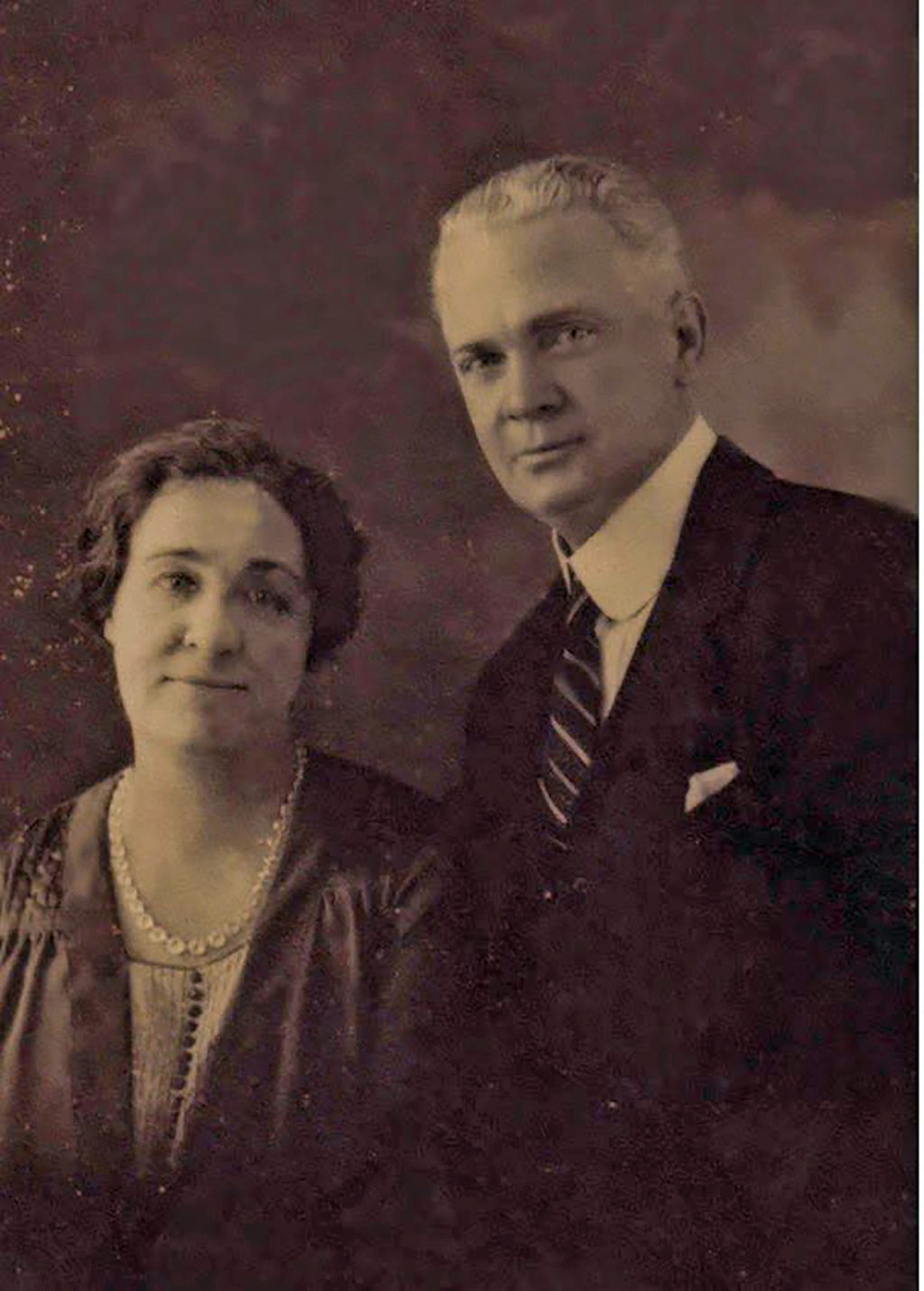
“Old soldiers never die; they simply fade away.” – General Douglas MacArthur
Some endings do not arrive suddenly.
They come quietly, after the long journeys have already been made, after the hardest work has already been done, and after the body slowly begins to surrender to the weight of years once carried without complaint.
For weeks, this series has followed the life of Leslie Norman Anderson through the many worlds that shaped him — Levuka, Delanasau, plantation life, war years, family, hardship and the changing face of Fiji itself.
Apologies to readers for the absence of last week’s edition. But perhaps it is fitting that this chapter returns slowly, because this is not simply the continuation of a story.
It is the beginning of its farewell. After leaving Delanasau, the Andersons arrived in Suva where they spent several days with Hilda’s brother, Teggar Wilson. From there they travelled around Viti Levu to Cawa, arriving in late 1945.
It was there, James Norman Stevenson writes, that the strain of the previous months finally caught up with LNA.
The years of physical labour, isolation and responsibility had exacted their toll. He became seriously ill. Medical assistance in Nadi at the time was limited, particularly for the cardiac condition that now threatened him.
Yet fortune, in one final moment of grace, remained close at hand.
Although much of the American military establishment had already shifted northward in preparation for the planned invasion of the Japanese home islands, a well-equipped medical unit still remained at the old Freeman Martin House known as “The Mount”, less than a kilometre away.
Hearing of LNA’s condition, the Americans readily offered both their facilities and their medical staff.
Stevenson writes that LNA’s recovery was due entirely to the care and skill of a US Army doctor, Major Levy, who attended to him tirelessly for endless hours.
It was another reminder of how deeply the war years had altered Fiji, bringing distant nations, soldiers and lives unexpectedly together.
After a long convalescence, and once he was strong enough to travel again, the Andersons moved to St Anne’s-on-the-Sea, a small resort in Sigatoka.
They remained there until about August 1947.
The property would later pass into family hands when daughter Jean purchased and upgraded the resort, renaming it Sandy Point. But life after Delanasau was never quite the same.
At Cawa, the Andersons found themselves surrounded by a constant flow of visitors, conversation and active children.For two people who had spent decades in the relative isolation of plantation life, the adjustment was considerable.
Yet there were comforts too.
There was care, companionship and the return of lively discussion with widely travelled visitors whose conversations ranged across the world beyond Fiji’s shores.
These were the kinds of exchanges denied to them for many years at Delanasau. For Hilda especially, there were smaller joys.
Stevenson notes that one of her greatest pleasures was once again having access to the movies.
Saturday evenings at the Airport Theatre became something to look forward to, even if many of the films themselves were, as Stevenson gently remarks, “of dubious standard.”
Meanwhile daughter Jean remarried and moved to the sugar town of Labasa.
LNA himself settled into a quieter rhythm of life. He oversaw matters at Cawa, though more through presence than physical participation.
When in Nadi, he travelled little.Instead, Stevenson writes, he occupied himself with sketching, designing hand-drawn Christmas cards, and taking afternoon walks around the property. He was beginning to feel his years.
Then, on the evening of June 12, 1949, shortly after retiring to bed, LNA mentioned that he felt restless and asked Hilda for a cup of tea. When she returned, she found that he had passed away.
The simplicity of the moment stands in sharp contrast to the breadth of the life that had preceded it.
A wide cross-section of the community gathered alongside immediate family to farewell a man regarded as part of an earlier Fiji.
And when news finally reached Lekutu, there was deep mourning among the villagers. For a week, Stevenson writes, the “tagi caka” continued. Distance separated them physically, but not emotionally. For Hilda, the loss weighed heavily.
She remained for a time at Cawa, cared for by a granddaughter. There were brief stays with son Don and daughter-in-law Fran, and a short visit to Queensland where she reunited with daughter Lesley and her sister Phyllis Hall — the first such meeting in many years.
But Stevenson suggests her heart remained firmly in Fiji.
It remained in Nadi, where her beloved LNA now rested.
After only a brief stay abroad, she returned once more to the islands.
Then, quietly and without disturbance, Hilda herself passed away in her sleep during the early months of 1950.
Together now, Leslie Norman and Hilda Ethel Anderson rest side by side at the Kennedy-Watson family cemetery at Wangadra in Nadi.
And with them, Stevenson writes almost silently, faded something larger than one family alone.
This was the fading of “Old Fiji.” Perhaps that is why this story continues to resonate today.
Not because Fiji should long to return to the past unchanged, but because within stories like these are reminders of relationships that once held communities together — respect between people, obligations carried over lifetimes, and the understanding that belonging was built slowly through shared hardship, loyalty and memory.
Modern Fiji moves faster now.
The old plantations have faded, the launch routes have quietened, and many of the worlds LNA once knew exist now only in photographs, fading records and the memories of descendants.
Yet the emotional truths within these stories remain familiar to many Fijians even today — migration, separation, family sacrifice, attachment to vanua, and the ache of watching one generation slowly give way to another.
For weeks this series has followed the visible chapters of LNA’s life. But the story is not yet entirely complete.
Next week, we move beyond the chronology itself and revisit the parts of Leslie Norman Anderson’s life that history left quieter, the details, reflections and even better is Stevenson’s very own reflection is the grandchild of LNA himself.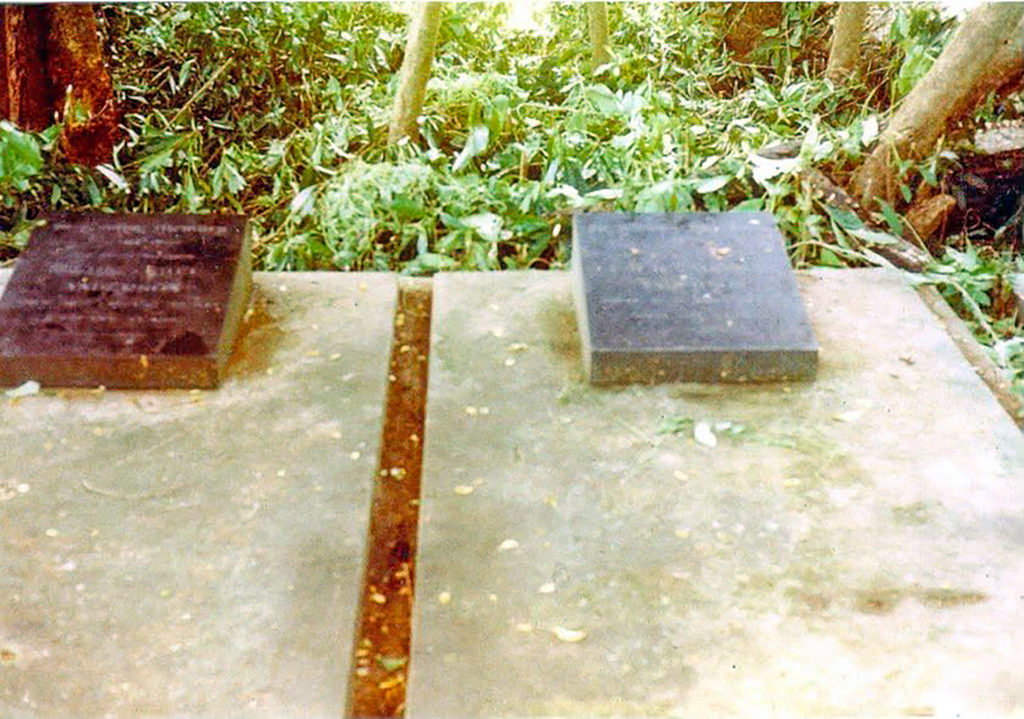
Side by side – as in life lie Leslie Norman and Hilda (nee Wilson) Anderson at the Kennedy-Watson cemetery at Wangadra, Nadi, Fiji. Picture: SUPPLIED

