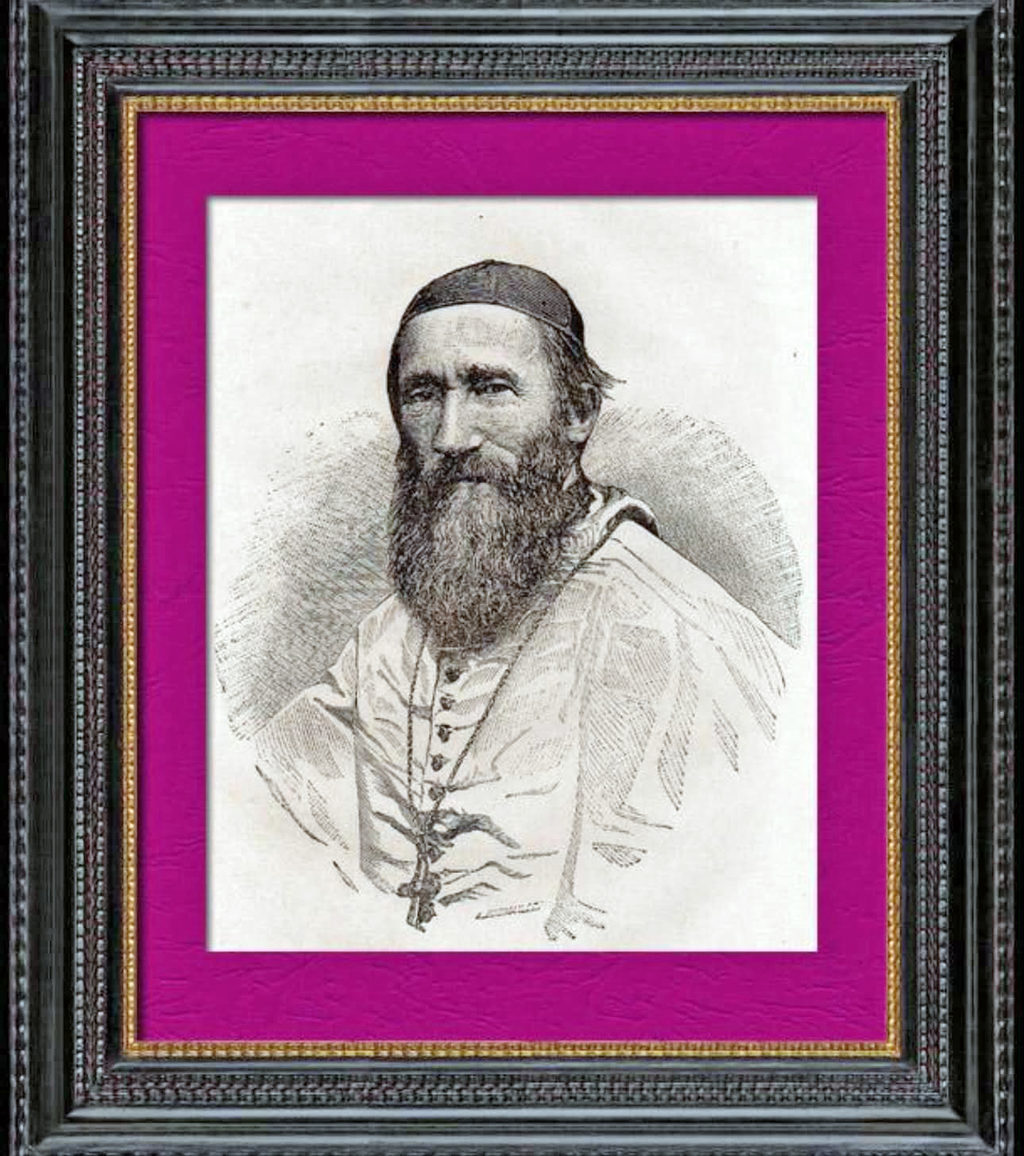
We brought readers 182 years forward in time last week to explore the landmark at Tubou built in honour of Bishop Bataillon, Father Breheret, Father Roulleaux, Brother Perol, and the two Wallisian catechists, alongside Mosese Monatavai.
Today, we travel back in time to the year 1850 when the very piece of land the landmark stands on was a completely different site to what it is today.
According to old Catholic records, as 1850 drew to a close, there were only five baptised Catholics and eight catechumens on Lakeba.
Behind those modest numbers were accounts of difficult encounters, including one incident in which Father Breheret reportedly faced a threat to his life.
The historical account described how a group of armed men approached the priest’s residence intending to kill him.
However, the encounter took an unexpected turn when Father Breheret received them with gentleness and courtesy.
Rather than carrying out their intentions, the men reportedly became his friends and departed with respect for him.
The account attributed the hostility to misinformation and jealousy associated with religious rivalry with the Wesleyans and others at the time.
Although the circumstances are presented through the perspective of the Catholic record, the incident offers more insight on how the task was never close to being an easy one for the missionaries.
Another episode recorded from late 1850 concerned a French Catholic named Martin, who was expelled from a college in Paris, joined the missionaries on Lakeba and whose actions the source portrayed as damaging to the mission.
According to the account, Martin had travelled to Fiji and developed associations with Wesleyan ministers.
He eventually abandoned Catholicism and joined the Wesleyan movement, after which he reportedly spoke against the Catholic Church and its priests.
The record presents his decision as a serious setback for the mission.
Despite these difficulties, the missionaries continued their work, and the arrival of 1851 brought plans for a wider Catholic presence across Fiji.
Plans to move beyond Lakeba
When Bishop Bataillon returned to Lakeba from Wallis in the beginning of the year 1851, he brought additional priests and religious brothers to strengthen the mission.
The group included Fathers Mathieu, Ducretet and Michel, along with Brothers Paschase, Sorlin and Augustin.
Father Favier, who was then on Rotuma, was expected to join them and arrived in Fiji on December 24 that year.
Bishop Bataillon intended to maintain the existing station on Lakeba while establishing new stations in other important chiefly areas.
One was planned for Somosomo on Taveuni which was known as the centre of Cakaudrove.
Another was intended for the Bau area, with a further station proposed for Rewa if circumstances allowed.
These plans marked an important step in the mission’s development.
The choice of Somosomo followed discussions about the area and its people.
According to the Catholic records, Father Breheret explained that a chief from Lakeba had connections there and had previously offered to help the missionaries visit.
After receiving favourable information about Somosomo, Bishop Bataillon decided that Father Breheret would establish the station with Father Michel, assisted by Brother Sorlin.
On Lakeba, Father Roulleaux would remain with Father Ducretet, while Brother Paschase would assist them.
The arrangements divided the missionaries between the existing station and the proposed new centre in Cakaudrove.
Bishop Bataillon then turned his attention towards Bau.
From Bau to Levuka
The circumstances surrounding Bau were complicated by reports of a French vessel being robbed and its crew killed.
According to the historical account, Ratu Cakobau was concerned about the safety of missionaries in his territory.
When Bishop Bataillon approached him about allowing a Catholic missionary to settle on Bau, Ratu Cakobau did not agree to a station on the island.
Instead, he suggested that the missionaries establish themselves at Levuka because of the presence of Europeans on the island.
Levuka was founded around 1820 by European settlers as the first modern town in the Fiji Islands.
It was a meeting point for ships and a place where Europeans gathered, making it a potentially useful base for the mission.
Ratu Cakobau then instructed a messenger to approach the chief of Totogo, a village near Levuka to arrange for land to be given to the Catholic mission.
The chief of Totogo agreed with Ratu Cakobau and Father Mathieu took possession of the site and began establishing a residence.
Thus, the Catholic station at Totogo, also known as Levuka, began in 1851.
But securing land beyond Lakeba did not mean the difficulties were over.
The Catholic records describe Father Mathieu’s early months at Levuka as a period of opposition and suffering the same way it happened when the mission was just starting its roots.
The records report that accusations were made against him by the Wesleyans and others about him strangling unfortunate women whom he had abused.
The accusations were so bad that Father Mathieu was embarrassed about stepping out of his home.
Whenever he stepped out, people threw stones at him and called him names.
Before retuning to Wallis, Father Bataillon told Father Mathieu that if his efforts to establish a mission in Levuka were sterile, he must seek an opportunity in Rewa, an area whose chiefly politics would soon become closely connected to Father Mathieu’s mission.
A conflict and an opportunity in Rewa
Marist records describe how Father Mathieu became acquainted with Roko Bati Vudi, a former chief of Rewa who was living in Levuka.
Roko Bati Vudi had been displaced from his position by his younger brother, Ratu Cokanauto, amid a wider struggle involving Ratu Cakobau and rival chiefly interests.
The account records Roko Bati Vudi’s version of the conflict that had devastated Rewa.
It describes shifting alliances, a plot involving Ratu Cakobau’s brother Ratu Raivalita and the intervention of Ratu Varani, who reportedly informed Ratu Cakobau of the plan.
According to the historical narrative, the conflict escalated into an attack on Rewa, resulting in deaths, the capture of inhabitants and the destruction of settlements.
Roko Bati Vudi survived but lost his position, while Ratu Cokanauto assumed leadership.
Roko Bati Vudi described his brother as “weak”, claiming he retained his position of leadership only by submitting to Ratu Cakobau.
While living in Levuka, Roko Bati Vudi met frequently with Father Mathieu and discussed his circumstances with the priest.
The old Catholic record says Roko Bati Vudi offered Mathieu land, a house, friendship and protection if he agreed to establish a mission in Rewa.
For the missionary, the offer presented an opportunity to carry the Catholic faith into another important chiefly centre.
Roko Bati Vudi, meanwhile, had his own political concerns.
He was awaiting an opportunity to return to Rewa and regain his position, and the support of the people would be essential to his return.
The account states that a representative from Rewa eventually approached him, explaining that the area was again threatened by Ratu Cakobau and asking him to return.
Roko Bati Vudi sought Father Mathieu’s advice before leaving Levuka.
Father Mathieu agreed to go to Rewa when circumstances allowed, while Roko Bati Vudi returned to reclaim his position from his younger brother, who withdrew to the village of Nukui and continued to support Ratu Cakobau.
Before leaving, Roko Bati Vudi reportedly told his people that a Catholic missionary would soon come to live among them.
The relationship between the two men brought the mission and the chiefly politics of Rewa into closer contact.
From the small Catholic presence recorded in Lakeba beginning in 1844, the mission had succesfully established a station at Levuka by 1851.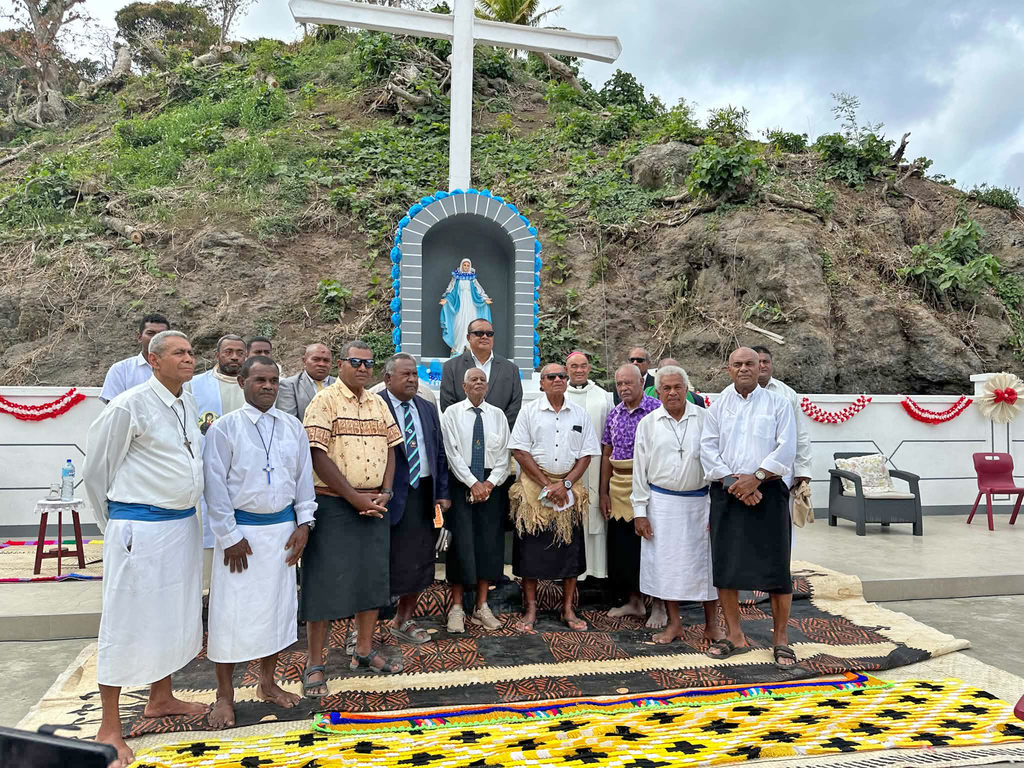
Tui Nayau Ratu Tevita Uluilakeba Mara with men of Tubou during the Catholic community’s jubilee celebrations on Lakeba, Lau, marking 182 years of the Catholic faith in Fiji. Picture: PHYLLIS SIMPSON
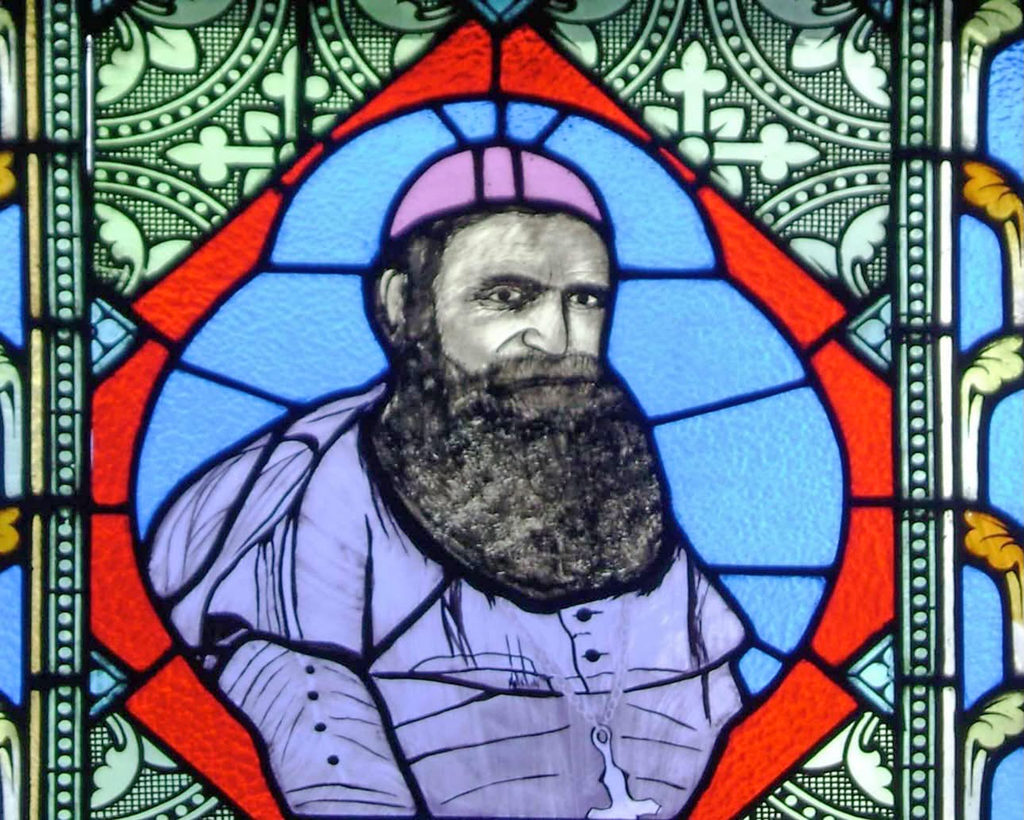
Right: An engraved portrait of Bishop Bataillon, who was a key figure in the early history of the Catholic Church in Fiji. Picture: SUPPLIED