
IT is often said that character is not formed in a moment of crisis. It is revealed.
Some lives are easiest to measure through milestones. Births, marriages, businesses built, lands acquired, and years spent in particular places.
Yet sometimes the truest understanding of a person emerges only after the chronology has ended, when the dates have been recorded and the journeys completed.
It is then that family memory begins its quieter work. Not simply recounting what happened but reflecting upon who someone really was.
For much of this series, the story of Leslie Norman Anderson has been told through places and events, Singleton, Levuka, Delanasau, Cawa, Nadi and the many people whose lives intersected with his own.
But as James Norman Stevenson reflects in his family history, understanding LNA requires looking beyond the visible achievements of his life and into the character that sustained them.
Stevenson begins not in Fiji, but in Australia. He writes that Leslie Norman Anderson endured a difficult and unsettling childhood, marked by circumstances that could easily have left lasting scars.
Yet much of that early trauma was softened through the love and stability provided by his grandmother, Mary Anderson, née Morton.
When she accepted responsibility for raising both Leslie and his sister Mary, Stevenson suggests she provided the foundation upon which the rest of his life would be built.
There were others too. The influence of the Moore family, Stevenson notes, became another source of guidance and reassurance during his formative years.
Throughout his life, LNA never forgot those who had cared for him during those uncertain beginnings. He paid tribute to them often.
Looking back, Stevenson observes that LNA’s life was shaped by a series of major decisions, each carrying considerable personal risk.
The first came when he chose to leave the familiarity and relative security of Singleton for an uncertain future in Fiji. For a young man with opportunities ahead of him in Australia, the decision was far from inevitable.
Yet he made it. Then came Levuka.
There, Stevenson writes, LNA established himself successfully within the business community. He worked in accountancy, a field in which he was trained, respected and increasingly successful.
He gained acceptance among the merchants and businessmen of the old capital and could easily have remained there.
Instead, he chose another challenge. He became planter and partner in the remote and demanding copra enterprise at Delanasau.
The decision altered the course of his life. When the plantation later entered periods of severe difficulty through circumstances beyond his control, Stevenson records that LNA remained steadfast.
Rather than walk away, he stayed and worked to restore the operation to profitability. Within the family there were often discussions about whether both Leslie and Hilda had sacrificed too much for Delanasau.
Stevenson notes that many believed the couple had been “wasted” there. When the Kienzle Alien Property Acquisition Act came into effect during 1916 and 1917, circumstances presented LNA with an opportunity to leave plantation life behind.
Suva was growing rapidly. His professional qualifications remained valuable.
He could have returned to accountancy and re-established himself in the colony’s expanding commercial centre. But he did not.
For reasons perhaps understood only by himself, he remained at Delanasau. Stevenson believed much of that determination came from the qualities inherited through LNA’s Scottish ancestry.
Without drawing attention to himself, he met challenges with quiet resolve. He possessed confidence in his own ability to complete whatever task lay before him.
He respected the concerns of others. And he did so without seeking recognition or praise.
These qualities became particularly evident in the practical demands of plantation life. His background offered little preparation for running a major copra estate.
Yet Stevenson notes that through determination and self-education, LNA taught himself the practical skills necessary to operate one successfully.
It was no small achievement. Over time, he earned a reputation as a good man, respected by those who knew him.
He was well-read, articulate and comfortable in almost any company. Stevenson describes him as charming and consistently well groomed throughout his life.
Photographs from the period reveal a man who carried himself with quiet dignity. As the years passed, the auburn hair of his youth gradually turned silver-grey, a change that only enhanced his appearance.
There were suggestions from some family members that LNA could at times seem somewhat reserved around children. Yet Stevenson recalls at least one memorable contradiction.
During the Andersons’ stay in Auckland in 1943 and 1944, LNA appeared entirely at ease among younger generations.
Christmas Day provided perhaps the best example.
Borrowing a bicycle, much to Hilda’s alarm, he rode repeatedly up and down Castle Street, even performing a “look no hands” stunt for those watching.
Stevenson cannot resist imagining what the people of distant Delanasau might have thought had they witnessed the spectacle. There was another side to LNA that often received less attention.
His artistic abilities. Stevenson argues that much of this talent remained underappreciated.
He possessed considerable skill with a camera and an instinctive eye for composition and subject matter.
Over the years, he received recognition for entries submitted to the annual Fiji Art Show. Many photographic records that now preserve images of early Fiji owe their existence to his efforts.
Unfortunately, Stevenson notes, a number of those images no longer carry his name. His creative interests extended beyond photography.
LNA developed significant skill in pen-and-ink sketching and regularly produced his own Christmas cards.
These often featured island scenes inspired by the landscapes around him. Many were later framed and continue to occupy places of pride in family homes.
All of this was accomplished while simultaneously managing the demanding responsibilities of plantation life. Yet Stevenson is careful to emphasise that none of these achievements occurred in isolation.
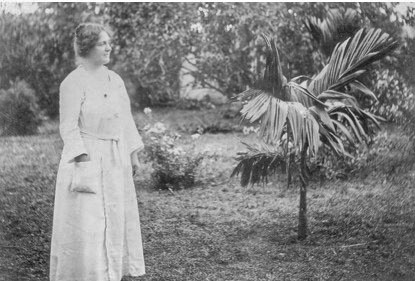
Standing beside LNA throughout every challenge was Hilda Ethel Anderson, née Wilson. She was far more than a wife.
She was companion, confidante and, as Stevenson describes her, his tower of strength. Before marriage, Hilda had studied music and displayed considerable promise as a watercolour artist.
There was every possibility she might have pursued these interests further.
Sydney, where numerous Wilson relatives lived, offered opportunities that could have allowed those talents to flourish.
But circumstances intervened. Her mother’s health concerns required attention and responsibility.
Marriage followed. Other sisters eventually stepped forward to assist with caring for their mother, but by then Hilda’s path had already been set.
That path led not to Sydney’s cultural circles but to one of Fiji’s most isolated plantations.
The move to Delanasau demanded sacrifices that often fell most heavily upon her shoulders. Stevenson notes that a woman’s experience on a plantation depended largely upon her own character and initiative. Hilda was, by nature, practical and hands-on.
She assisted LNA not only emotionally but in the daily realities of plantation life itself.
A significant part of her success came through her genuine understanding of the Fijian people. She approached others with empathy and respect.
In return, the people around Delanasau offered the Andersons loyalty, affection and trust. For Hilda, reading became both recreation and refuge.
She consumed not only the popular literature of the day and the delayed newspapers that eventually reached Delanasau, but also works of history and broader intellectual interest.
The result, Stevenson writes, was a woman capable of discussing a remarkable range of subjects with confidence and authority. In an isolated environment where companionship was limited, that intellectual curiosity enriched both their lives.
It gave dimension to conversations that might otherwise have been constrained by distance and circumstance. Within the wider family, Hilda became known for something else entirely. Strength.
Whenever difficulties arose, she was often the person others turned to. Her common sense, practical judgment and steady character made her the family’s anchor.
Perhaps it is fitting that Stevenson concludes his reflection not with a grand event, but with an ordinary scene.
A moment preserved in memory. He recalls the Andersons seated comfortably in their sitting room at Delanasau.
One positioned on either side of the wireless. Both settled into their favourite planter’s chairs with leg rests.
Hilda absorbed in the latest Georgette Heyer novel. LNA, pipe in hand, studying the unconfirmed reports published in his preferred political paper, The Bulletin.
In the background, orchestral music from the BBC in London drifted softly through the room.
“Lamplight filled the house with warmth. Outside lay the isolation of plantation life,” he says
“Inside sat two people who had spent decades facing its demands together.”
Perhaps that final image tells us more about Leslie and Hilda Anderson than any list of accomplishments ever could.
The opportunities Hilda set aside, the responsibilities she carried, and the quiet strength she brought to her family remain familiar themes even in today’s world, where women continue to balance personal ambitions with expectations of care, sacrifice and support for others.
Next week, in the final chapter of this series, we return to where much of this story truly began — Lekutu

