
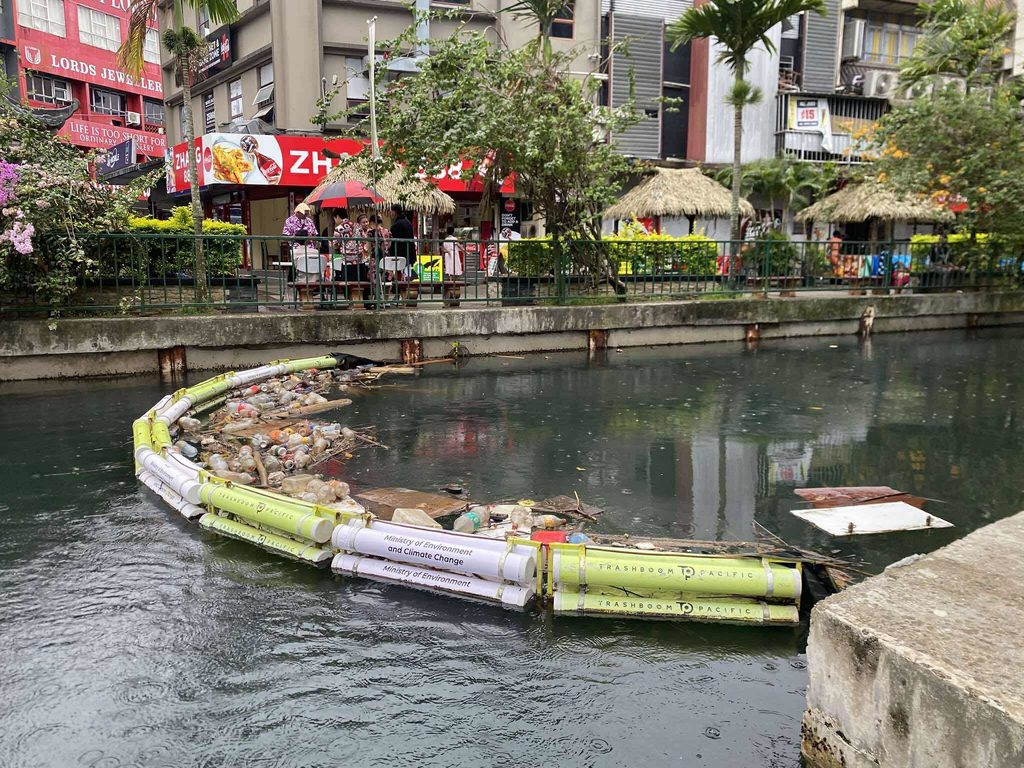
About 13,000kg of plastic waste has been collected from 11 trashbooms across Fiji, exposing the scale of pollution entering waterways.
Minister for Environment and Climate change Lynda Tabuya revealed the figures while launching a new trashboom in Suva Harbour on Tuesday. Ms Tabuya explained that trashbooms acts as floating barriers capturing waste — carried by the current — that are irresponsibly dumped into waterways.
She explained that 11 trashbooms were currently operating around the country, with six funded by the Government and five supported by partners including Fiji Airways and Coca-Cola. Support has also been provided by the Government of Japan and the United Nations Environment Program. Another trashboom that was installed in the Nakasi River on Friday last week has already collected around 10 kilograms of waste, including plastic bottles and aluminium cans.
Ms Tabuya said the initiative aimed to reduce plastic pollution, protect marine life and maintain Fiji’s natural beauty.
“Tourists come to Fiji expecting a beautiful environment so we must protect our rivers and our marine resources.”
She added that Government was also reviewing litter laws and considering increasing spot fines and placing litter enforcement officers on the ground to better monitor littering.
Ms Tabuya said budget submissions would be made to Government to receive more funding for the purpose of trashboom installations.
“Right now, there’s only 11, but we need 11,000 around the country to collect the rubbish.”
She stressed infrastructure alone would not solve the problem.
“We need behavioural change from our people to value our environment and to put their litter in a bin.”

