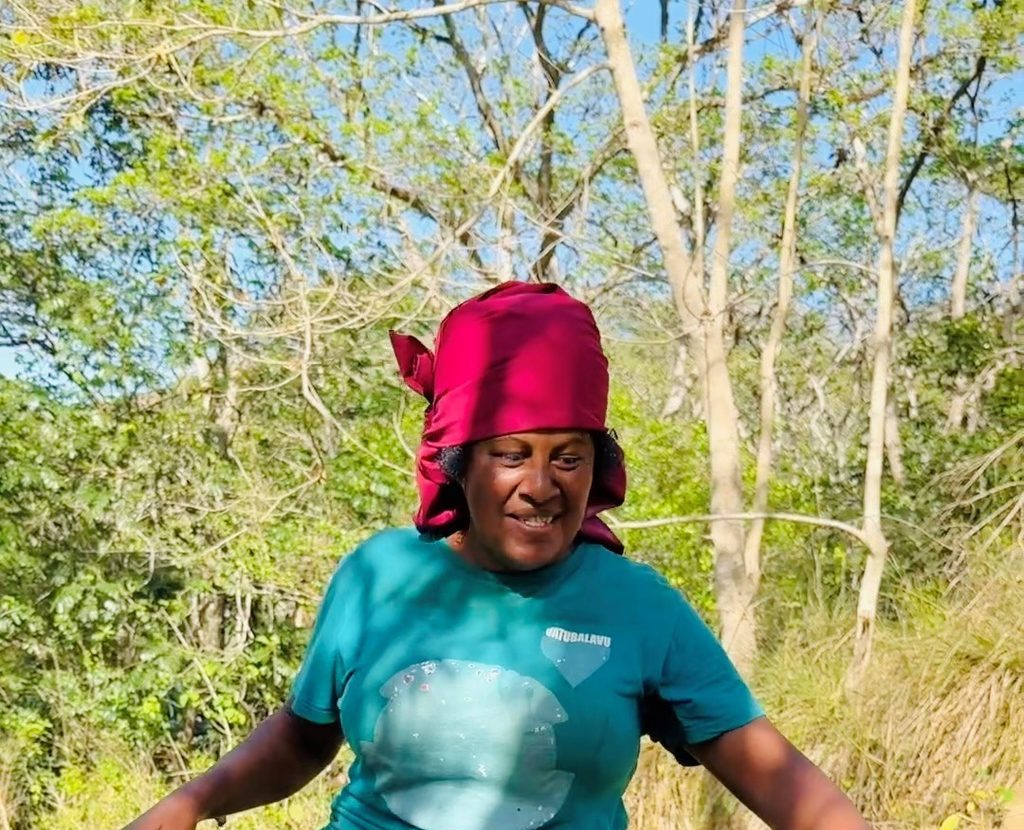
THE journey to the forest begins on horseback for Vasenai Vuniquto, as it does for many people living in the highlands of Noikoro, Navosa.
At 36, Vasenai has been riding horses since she was a little girl.
In an area where horses remain an important mode of transport, she rides to the forest not for leisure but to harvest turmeric and earn an income for her family.
When The Fiji Times team met her, Vasenai was on horseback with her cousin making her way into the forest to harvest turmeric.
For women like Vasenai in Vatubalavu Village, turmeric has become an important source of income.
Vasenai is the third eldest of eight siblings and has maternal links to Vunavesi, Navosa. She has one child.
While families in Vatubalavu also depend on root crops, vegetables, bananas and yaqona, turmeric has become a seasonal crop that provides families with an opportunity to earn an income daily.
Vasenai said harvesting turmeric, which grows abundantly in the forest, was one of the most income-generating activities for people in the village.
Her work begins with a fork.
She digs into the soil to pull out the turmeric, selects the good pieces, cleans them and removes the dirt before placing them into a sack.
Filling a sack is not easy.
In a day she can fill one sack and if she is lucky, two.
Once a sack is full, Vasenai loads it onto her horse and transports it back to the village.
The turmeric is then unloaded near the river, where it is rinsed.
Vasenai can earn about $80 from one bag of turmeric.
But she and other farmers hope the price will increase.
“We hope the price for a kilo can go up to $2 instead of the $1.30 or $1.50,” she said.
For Vasenai, the horse is as much a part of her working life as the fork in her hand.
Today, the same skill carries her through the highlands and into the forest where a day’s work can become a family’s income.