
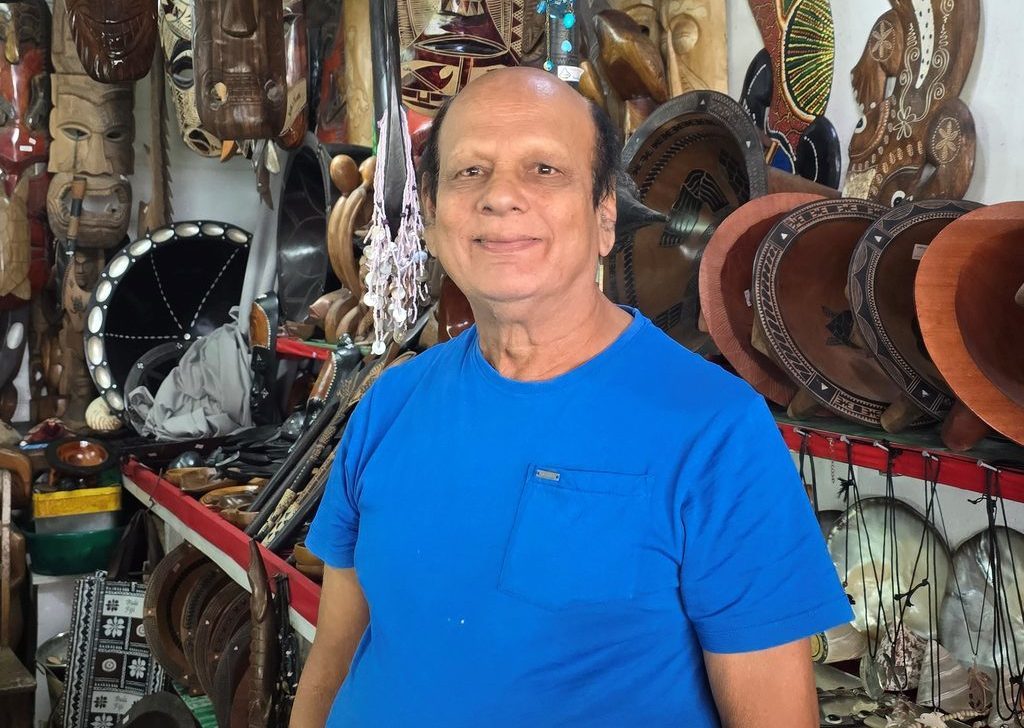
Mahendra Singh has spent more than six decades watching the tides of tourism rise and fall in Suva. From his stall at the Suva Handicraft Centre, he has witnessed the capital transform from a bustling cruise destination into a city where, he believes, too few visitors now venture beyond pre-arranged tours.
At nearly 78 years old, the president of the Suva Handicraft Market Vendors and Manufacturers Association remains a passionate advocate for Fiji’s traditional crafts and the people whose livelihoods depend on them.
Born in 1948 and raised on Lakeba St in Suva, Mr Singh attended Suva Primary School before studying accountancy at the then Fiji Institute of Technology. But finding work was difficult, prompting him to take a different path.
As a 13-year-old accompanying his mother to the old Municipal Market, he noticed the steady stream of tourists arriving from cruise ships and recognised an opportunity. He found work selling handicrafts, beginning a career that would define his life.
For 16 years, he worked under another trader before securing his own stall when vendors relocated to the newly established Suva Handicraft Centre in 1979.
The move, he recalls, came only after lengthy negotiations with the Suva City Council. Vendors insisted that street trading of handicrafts cease so everyone could operate under one roof.
Mr Singh remembers those early years as the centre’s golden era.
Cruise liners, particularly those operated by P&O, arrived regularly, bringing thousands of visitors into the city. Business flourished, allowing artisans to earn an income while showcasing authentic Fijian craftsmanship.
Over the years, he developed his own range of handcrafted wooden artefacts, many of which still fill his stall today. Large tanoa, carved wooden pieces and other traditional items remain on display, each reflecting skills passed down through generations.
“We are not only selling Fijian handicrafts. While we are selling our products here, we are promoting the Fijian culture at the same time.,” he said.
He believes every purchase represents more than a sale. Handmade artefacts, crafted over weeks or even months, preserve traditions that survive in only a handful of communities, particularly Kabara and Fulaga in the Lau Group.
Although age has slowed his own carving, Mr Singh continues to champion the industry. He worries that cruise passengers increasingly bypass Suva’s city centre and that local artisans are missing opportunities to benefit from tourism.
Yet his hope remains unchanged.
He maintains that the Suva Handicraft Centre is more than a marketplace. It is a living showcase of Fiji’s cultural identity, where every handmade artefact tells a story of craftsmanship, heritage and resilience that deserves to endure for generations to come.

