
When you are in school, the world can feel very small, but school is not everything, there is a much bigger world outside.”
This is the lesson Sawako Awazu hopes young people will carry with them, after a journey that took her from rural Japan to classrooms in Hokkaido, and eventually to Fiji as part of the Japan Overseas Cooperation Volunteers (JOCV), which operates under JICA’s technical co-operation framework.
Ms Awazu was born and raised in Shiga prefecture, a rural area in western Japan, where her childhood was shaped by curiosity, outdoor adventures and a growing interest in the wider world.
“As a child, I enjoyed catching insects, playing video games, and spending time outdoors,” she said.
“My parents encouraged me to try different activities, so I took lessons in volleyball, calligraphy, piano, and Girl Scouts.”
Her love for foreign cultures began at home, where her parents often watched international movies on rented VHS tapes and DVDs.
“Watching international films sparked my interest in foreign cultures from a young age.
“At the time, however, English education in Japan only started in junior high school.”
But when English lessons finally began, the subject she had looked forward to became difficult.
“The classes moved very quickly, and I could not understand how the other students seemed to follow everything so easily.”
Things changed when she transferred to another school where English was taught at a slower pace.
“Once I started understanding the lessons, I began to enjoy learning English, and my grades improved very quickly.
“That experience taught me an important lesson: Enjoying what you do is often the best and fastest way to improve your skills.”
Her first overseas trip to Australia became another turning point.
Before then, Ms Awazu believed travelling overseas was something only “special” people could do.
“After experiencing it myself, I realised that overseas travel was much more accessible and achievable than I had imagined.”
That experience deepened her interest in foreign cultures, leading her to study them at university.
After graduating, she worked in real estate in Japan before moving to Canada on a working holiday visa, followed by a shorter stay in Australia.
When she returned to Japan, she moved to Hokkaido and became a high school teacher.
Her goal was to show students that English did not have to be difficult or frightening.
“I wanted to show students that communicating in English is not difficult and can be enjoyable.”
For Ms Awazu, teaching was personal.
She remembered how discouraging it felt when she struggled with English as a child, and believed that experience helped her support students who found learning difficult.
After six years of encouraging students to follow their dreams and challenge themselves, she realised she also needed to take her own advice.
“I began to feel that I should also challenge myself and step outside my comfort zone.”
That decision led her to apply to become a JICA volunteer.
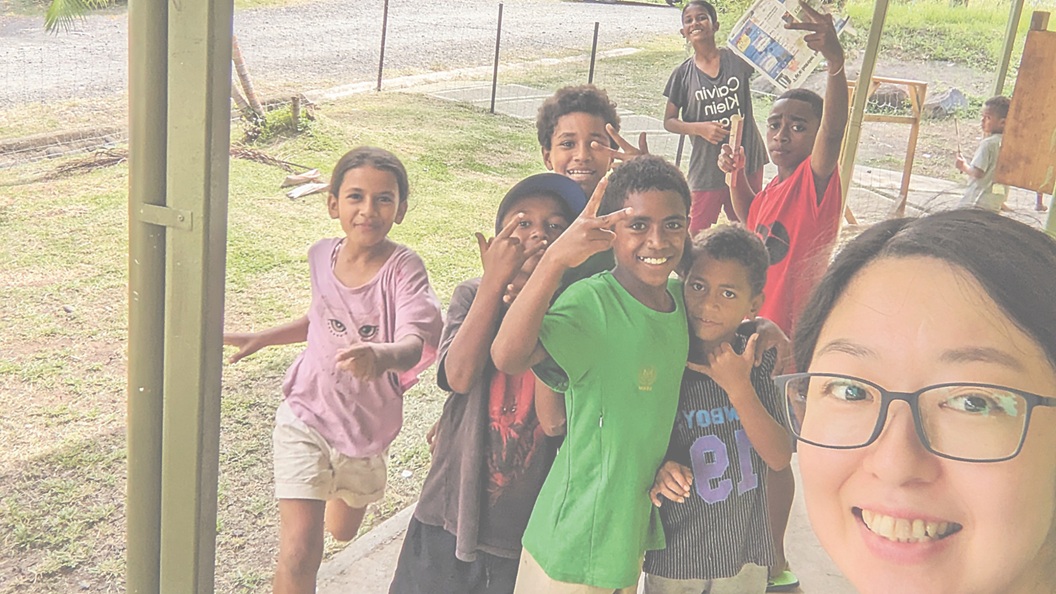
Her first project in Fiji was a literacy program at the Learning Centre in Koroipita.
Before arriving in Fiji, Ms Awazu said she did not realise how many children were struggling with reading and writing in English.
“Since English is used as the main language of instruction from Year 1, literacy skills are extremely important for children’s education and future opportunities.”
Together with her colleagues, she helped identify children who needed support and began providing literacy lessons.
At first, it was not easy because the children’s learning needs were different from what she had experienced in Japan.
However, with support from her colleagues and the children’s willingness to learn, progress slowly began to show.
“Many students began to enjoy the lessons, and some showed clear improvement in their school marks and confidence.
“What made me happiest was seeing the children’s faces light up when they finally understood something or were able to answer questions correctly.”
Ms Awazu said her lowest point came during junior high school, when she struggled to build relationships and often felt lost and isolated.
That experience is now part of the message she wants to share with children.
“When you are in school, the world can feel very small, and it may seem like everything revolves around it.
“However, school is not everything — there is a much bigger world outside.”
Her advice to young people is simple.
“I would tell young people not to rush or panic if they have not yet found their direction in life.
“Sometimes it can feel like everyone around you already knows what they want to do, but many people are still figuring things out little by little.”
Perhaps Ms Awazu’s journey is proof of that — a child once lost in English lessons can one day cross oceans to help other children find confidence in learning.

