
FIJI stands at a critical moment in its response to HIV.
In Parliament last month, Fiji’s Minister for Health confirmed that Fiji is in the midst of a generalised epidemic.
This means that HIV is circulating amongst the general population and is no longer mostly confined to people who engage in high-risk behaviour, including those associated with drug use.
HIV diagnoses are increasing at an alarming rate, placing further pressure on health systems already facing significant challenges.
Fiji is demonstrating leadership in its response to HIV by recognising the seriousness of the challenge and responding with urgency to expand testing, treatment and prevention efforts. Australia is supporting Fiji’s response.
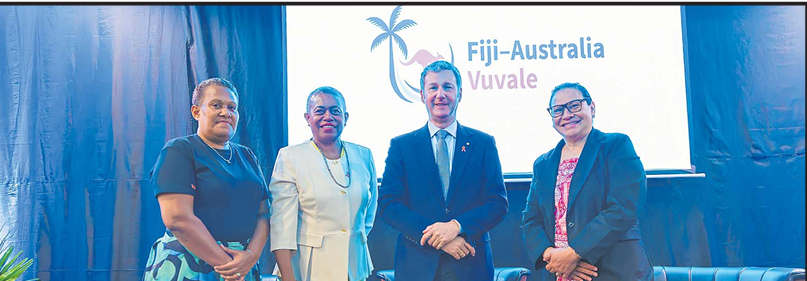
Australian technical experts are working alongside Fiji’s health workers, and we announced an additional $23.5million in August 2026 to support their important work.
During my visit to Fiji last month, I met dedicated health workers and public servants working tirelessly to confront this crisis.
I was also encouraged to see the Great Council of Chiefs, faith-based organisations and civil society groups working together respectfully.
Their commitment reflects the shared responsibility needed to address HIV and provides reason for hope.
Australia has also faced an HIV epidemic and achieved significant success in reducing transmission. One of our key lessons is the value of placing affected communities at the centre of the response.
Community-led and peer-led organisations have played a vital role in building trust, sharing information, encouraging testing and helping people stay connected to care.
The lesson is simple: those most affected by a problem should help shape the solution.
Another clear lesson from decades of responding to HIV is that stigma remains one of the greatest barriers to progress.
Fear and misinformation have discouraged people from seeking testing, treatment and support. When people fear judgement or discrimination, they are more likely to avoid health services altogether.
The result is delayed diagnosis, poorer health outcomes and increased transmission.
Reducing stigma is therefore not only about protecting human rights; it is essential if Fiji is to bring HIV under control.
Trust is one of the most important tools in the fight against HIV. When people know they can access testing and care without fear of judgement or discrimination, they are more likely to seek help early.
This benefits individuals, strengthens communities and gives health authorities a clearer understanding of where action is needed most.
While data is critical to understanding the HIV epidemic, numbers alone cannot capture its impact.
Behind every diagnosis is a person, a family and a community affected by the disease. Fiji cannot afford to wait years for the response to gather pace before acting — action is needed now. Treatment is lifesaving. People need to come forward for testing so HIV can be diagnosed early and treatment can begin as soon as possible.
With effective treatment, which is available free of charge in Fiji, people diagnosed with HIV can live long, healthy and fulfilling lives. Treatment also protects the wider community.
When a person’s viral load is reduced to undetectable levels, HIV cannot be sexually transmitted.
This remains one of the most powerful tools available to control an epidemic.
Prevention must also be accessible and evidence based. Providing sterile injecting equipment to people engaged in high-risk behaviour such as drug use is critical to preventing the sharing of needles and reducing the transmission of HIV.
Evidence from other countries, including Australia, has shown that access to safe injecting equipment does not increase illegal drug use, but it is effective in reducing transmission of HIV and other blood borne viruses.
This helps to protect not just drug users, but also families and communities.
People who are sexually active need access to accurate information and effective prevention options. Oral pre-exposure prophylaxis (PrEP), a daily medicine that helps prevent HIV, is available for free in Fiji.
Together with plans to introduce long-acting injectable prevention options, these advances have the potential to significantly strengthen Fiji’s HIV prevention efforts.
Fiji’s greatest strengths are the values that have sustained communities for generations: family, community, faith, traditional leadership and a strong sense of collective responsibility.
These values can help support people seeking care and ensure that no one is left behind.
The challenge is significant, but it is not beyond reach if decisive action is taken now.
By acting now and acting together, Fijians can prevent far greater social and economic costs in the future.
Fiji has the people, partnerships and the commitment required to change the trajectory of HIV. What is needed now is courageous, coordinated, and collective action.
The time to act is now!

