
Last Sunday, I went to see Baba Bageshwar of Bageshwar Dham in Tokyo. He was here for a two-day program, and because I could not attend on Saturday, I decided to go on Sunday and see for myself what all the fuss was about. I did not go as a cynic looking for something to attack. I am a spiritual person, and I have always believed there is value in keeping that part of the soul alive, especially when life becomes noisy and materialistic. The program was supposed to begin at noon; he arrived around 1.30pm. I found the delay irritating, but I let it go. What came next, however, I could not.
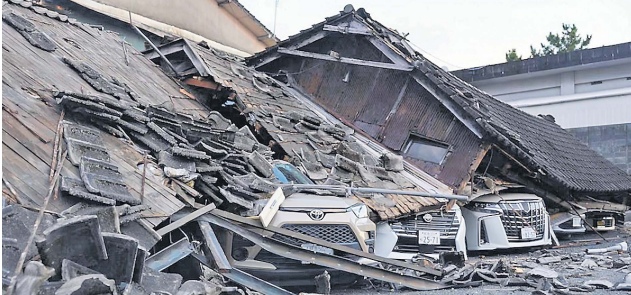
TOKYO had been shaken in the early hours of Sunday by a magnitude 5.9 earthquake. Anyone who has lived in Japan knows the vulnerability of those moments: The phone alert, the movement beneath you, the second when you wonder whether the shaking will stop or become something worse.
Yet, as I heard it, one of the first jokes in the pravachan was that the earthquake was somehow a proclamation from God that Baba Bageshwar was in Japan. People clapped. I sat there wondering what exactly we were applauding. An earthquake is not a stage effect sent from heaven to announce the arrival of a preacher.
Turning fear into proof of one’s spiritual importance did not sound like devotion to me; it sounded like ego dressed in religious language.
Then came the part that disturbed me more. From where I sat, I heard him suggest that those who were not raising their hands or clapping in agreement must be from Pakistan, as though applause had become a test of nationality and Hindu identity.
By then, I was already making my way out. On the way, I heard another line: if someone did not believe what he was saying, they would apparently not get married in their next life.
Perhaps others found these lines humorous. I did not.
Faith that needs mockery, fear, national suspicion and threats about another life to keep an audience compliant is not the kind of faith I recognise.
This is not really an article about one baba in Tokyo. He simply forced me to confront something I have known since childhood in Fiji: We are often taught to respect faith, but not taught clearly enough where faith should end and surrender of judgment should begin. Growing up in Kashmir, Lautoka, how many times did I hear adults suggest going to an ojha when something went wrong?
Someone was repeatedly sick: Perhaps an ojha should be consulted. Money problems appeared: Maybe somebody had “done something”.
A marriage became tense, relatives stopped speaking, jealousy entered a household or trust broke down, and suddenly an invisible curse could become easier to blame than the visible human behaviour sitting in front of us.
That is the danger of blind faith: It gives supernatural explanations to problems that desperately need ordinary courage. A husband and wife may need an honest conversation, not an accusation that a relative has cast something on them. A sick person may need medical attention, not days lost chasing an unseen cause.
A family struggling financially may need a budget, work or difficult decisions, not someone telling them their prosperity has been blocked by another person’s jealousy.
Once fear enters the picture, suspicion spreads quickly. I have seen how easily the words “someone has done something to you” can turn cousins against cousins, siblings against siblings and entire families into detectives searching for an enemy who may not even exist.
To be clear, I am not mocking traditional knowledge, cultural practices or spirituality.
Fiji is a place where inherited traditions, indigenous knowledge and several religions have existed beside one another in complicated ways.
There are forms of traditional healing grounded in generations of knowledge that deserve more intelligence than simply labelling everything superstition.
But there is a difference between cultural knowledge and someone exploiting fear while claiming access to truths nobody else can verify.
The moment a spiritual authority tells you that questioning them makes you impure, disloyal, cursed or less worthy, the relationship has changed. You are no longer being guided. You are being conditioned.
Perhaps my profession makes this contradiction impossible for me to ignore. I spend my working life asking children to inquire, notice patterns, question assumptions, seek evidence and explain their thinking. Imagine teaching a seven-year-old that asking “How do you know?” is a powerful habit in the classroom, then becoming an adult frightened to ask the same question when somebody sits on a religious stage.
We cannot celebrate critical thinking in schools and suspend it the moment a person wears saffron, holds a microphone or accumulates a huge following. Intelligence should not be something we use only for mathematics, work and technology.
It must also enter the spaces where we are most emotionally vulnerable.
For Fiji Indians, this matters for another reason. Our ancestors carried religion, language, songs, stories and rituals through enormous hardship, and faith became one way communities preserved themselves when so much else had been disrupted.
That inheritance deserves respect. But preserving faith does not require preserving every fear attached to it.
We should be capable of keeping the Ramayan without keeping paranoia, prayer without surrendering judgment, and reverence without producing people terrified to challenge religious authority. If our faith survived displacement, poverty and generations of change, surely it is strong enough to survive a question.
What frightened me most in Tokyo was therefore not any one joke. It was the crowd’s response.
The clapping seemed almost automatic, and that is the real power of the godman phenomenon: Not that one individual can speak, but that people can slowly outsource their judgment to him. Charisma is powerful because it feels like certainty.
A person speaks confidently about God, destiny, enemies, marriage, illness or national identity, and uncertainty disappears. But certainty is not the same as truth. Sometimes the most dangerous sentence in a community is not “I don’t know”; it is “baba said so.”
Religion becomes especially dangerous when spiritual belonging is tied to nationality. I am Fiji Indian. I have lived outside Fiji, travelled widely and now live in Japan.
My identity has never depended on whether I clap at the correct moment for the correct religious speaker. Neither should anyone else’s.
A Hindu who questions a baba does not become less Hindu, just as an Indian who refuses a slogan does not magically become Pakistani.
When religious leaders reduce identity to public obedience, they shrink traditions far older, richer and more intellectually diverse than themselves.
I left that Tokyo event disappointed, but perhaps I needed to go. It reminded me that spirituality and scepticism are not enemies. In fact, scepticism may be one of the things that protects spirituality from becoming theatre, commerce, intimidation or personality worship.
Pray. Visit temples. Read scripture. Keep traditions alive. Sit with elders, listen to their stories, sing bhajans and find whatever brings you closer to the divine. But keep your mind switched on while doing it.
That is the conversation I want us to have in Fiji, particularly within families where questioning elders, priests, healers or religious personalities can still be mistaken for disrespect.
Teach children faith if faith matters to your family, but teach them discernment beside it. Tell them that no human being becomes unquestionable simply because people call him baba, guru, pandit, pastor, healer or holy man.
If somebody requires fear to secure your loyalty, examine that loyalty. If somebody tells you your misfortune proves their supernatural explanation, ask for evidence. And if a spiritual leader ever tells you that God needs you to stop thinking, perhaps the most spiritual thing you can do is stand up, walk out and take your mind with you.
ASHNEEL JAYNESH PRASAD is a Fiji-born New Zealand citizen working as a teacher in Shinagawa-ku, Tokyo, Japan. The views expressed herein are his alone.

