As a potentially devastating El Niño drought threatens Fiji’s water supplies, agriculture and food security, serious questions arise about the Government’s priorities and preparedness.
While Rome was burning, Fiji’s Government was fiddling with the Constitution.
For months, the country’s political leadership has been preoccupied with rewriting the Constitution, debating new political institutions and pushing through far-reaching constitutional changes.
Meanwhile, another crisis has been developing, one that could have much more immediate and devastating consequences for ordinary Fijians.
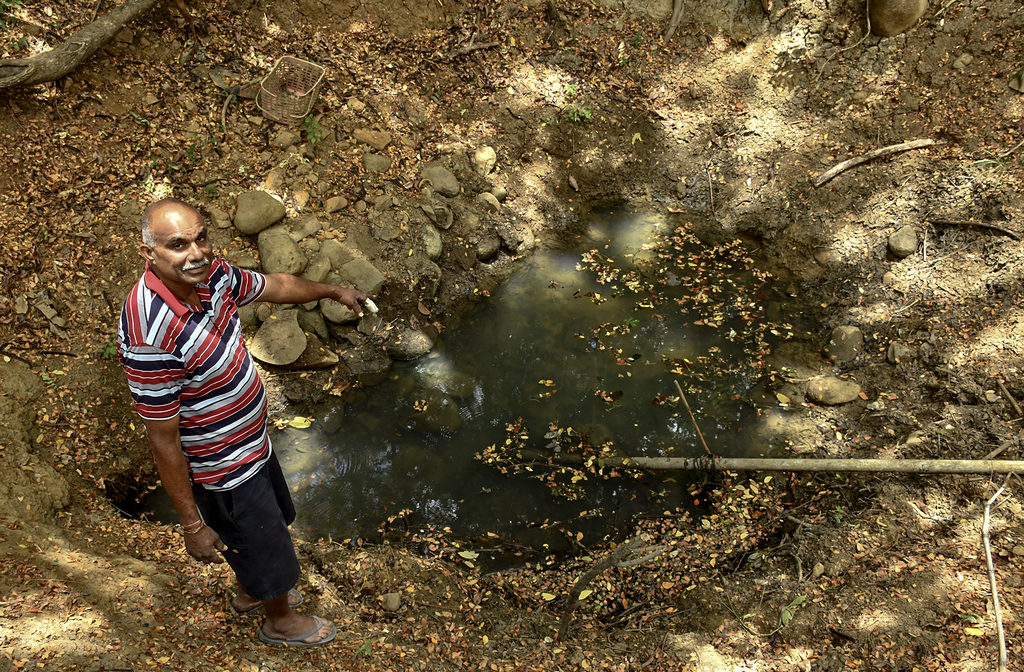
Fiji is facing a potentially severe drought as El Niño conditions strengthen. In the Western and Northern divisions, grasslands are turning brown, water sources are drying up, vegetable farms are struggling, and livestock are increasingly at risk.
And it is only the beginning of November. What we are witnessing is merely the tip of the iceberg. With below-normal rainfall forecast to continue into early 2027, what will Fiji look like by December, January or February?
What happens when vegetable production declines substantially, livestock begin dying, and food prices rise beyond what ordinary families can afford? And most importantly, what has the Government done to prepare for a disaster that scientists warned about months ago?
The warnings were there months ago
This drought did not arrive without warning. As early as March 31, 2026, the Fiji Meteorological Service identified an elevated possibility of El Niño developing between June and August and continuing through at least the end of the year.
By July, forecasts were pointing towards below-normal rainfall extending into January 2027. By August, the outlook indicated the possibility of a strong or very strong El Niño.
The country’s scientists had given policymakers months to prepare. There were inter-agency meetings, contingency plans and warnings to conserve water.
Yet there is little publicly available evidence of a sufficiently large, co-ordinated and fully funded program of anticipatory action during those crucial months.
Was enough actually done to protect farmers, livestock and food supplies before the drought intensified? As recently as August 9, the Ministry of Agriculture’s Permanent Secretary reportedly said no specific assistance had yet been allocated for farmers facing El Niño conditions, and that the ministry would continue monitoring before deciding whether intervention was needed. This raises serious questions about whether Fiji’s response was sufficiently early, co-ordinated and funded for the scale of the threat.
The Government may point to contingency planning, water carting and measures undertaken by individual ministries. But were they anywhere near adequate for the scale of the threat?
When scientists warn of a potentially severe drought months in advance, the appropriate response is not merely to arrange more water trucks after rivers and reservoirs begin running dry. It is to mobilise the machinery of government before the crisis reaches that stage.
The situation is becoming frightening
The figures presented to Parliament on November 3 should alarm every Fijian. As at November 1, of the Water Authority of Fiji’s 44 monitored operational water sources, 19 had reached critical levels, while another seven were approaching critical levels.
Approximately 24,600 people were already experiencing intermittent water supplies or depending on water carting. The Northern Division was facing a water production shortfall of 32.3 per cent, producing only 19.9 million litres daily against a requirement of 29.4 million litres.
Even more concerning, if dry conditions persist, WAF projected that 12 of the Northern Division’s 16 monitored water sources could reach critical levels by late November, increasing to 15 by January 2027.
The Western and Northern divisions have already been placed in the Crisis Response category under the national drought framework.
But drinking water is only part of the problem. Water shortages affecting households attract immediate public attention. The damage occurring on farms may be less visible until it begins appearing in the prices and availability of food. And by then, much of the damage may already have been done.
A looming food security crisis
Agriculture cannot simply be switched off during a drought and restarted when the rains return. Vegetable crops require regular water.
As soil moisture disappears, yields decline and crops eventually die. Even where farmers can maintain production, the additional costs of pumping water, fuel and irrigation can become prohibitive.
Farmers are already reporting losses. On October 30, the Fiji Sun reported that vegetable farmers in Nabaka were struggling as water sources dried up. One farmer reported losing approximately $1300 from each harvest, with 36 farming blocks reportedly affected.
The consequences extend far beyond the farming communities. Fiji depends on domestic agriculture for much of its fresh vegetable supply. As production declines, supplies to markets, supermarkets, hotels and restaurants become constrained.
Prices can rise rapidly. Imagine cabbage selling for $10 or $15 a bundle, or tomatoes, beans and eggplants becoming increasingly unaffordable. These are illustrative scenarios, not price forecasts, but they demonstrate the kind of shock Fiji needs to prevent.
The danger is particularly serious because households are already under substantial financial pressure. According to figures released by the Fiji Bureau of Statistics on November 2, consumer prices in October were 9 per cent higher than in the same month last year, up from annual inflation of 6.8 per cent in September.
The Reserve Bank of Fiji has warned that El Niño conditions could place further pressure on domestic food prices, particularly fresh fruits and vegetables.
For low-income families, pensioners and unemployed people, rising food prices are not simply economic statistics. They mean reducing meals, purchasing cheaper and less nutritious food, or sacrificing other essential expenses.
Livestock could be another major casualty
The situation facing livestock farmers is equally troubling. As grasslands dry up, cattle, goats and other livestock lose access to adequate feed and water.
Animals begin losing weight, milk production declines, and their vulnerability to disease increases. Eventually, farmers may be forced to sell their animals prematurely or watch them die.
The Ministry of Agriculture had already acknowledged reports of livestock being adversely affected by dry conditions in September. In October, FBC News reported that farmers in Tabia, Macuata, were experiencing shrinking pastures, declining animal health and livestock deaths.
Farmers in Vunivacea, Labasa, have also reported cattle deaths amid inadequate water. These are local reports, not a measure of livestock losses nationally. Importantly, livestock losses have consequences long after a drought ends.
A farmer who loses breeding cattle may require years to rebuild a herd. Widespread livestock losses could eventually mean reduced domestic meat and dairy production, higher prices and greater dependence on imports. Fiji cannot afford to allow productive livestock to die for want of timely emergency feed and water.
We have been here before
Fiji has experienced devastating El Niño droughts before. During the 1997–1998 drought, approximately 80,000 people in Fiji’s western sugarcane belt reportedly required assistance. A World Bank study subsequently cited a 1998 UNDAC estimate of approximately US$70 million $F158.27. in crop losses on Viti Levu.
Sugar production suffered, farmers lost income, and the consequences spread throughout the economy. Fiji therefore has both the scientific information and historical experience to understand what a severe El Niño can do. We should not have to learn the same lessons every time drought strikes.
What must be done immediately?
The priority now must be preventing the developing drought from becoming a full-scale food security and humanitarian crisis.
First, establish a properly funded and coordinated national drought response.
On November 3, the Minister responsible for water outlined an emergency operation extending to April 2027, with an indicative cost of $10.46 million subject to funding consideration, including additional water trucks, temporary treatment systems and reverse osmosis units. These measures are necessary, but the response cannot be limited to drinking water. Fiji needs a coordinated national plan covering water security, agriculture, livestock, food supplies, public health and social protection, with clear responsibilities, funding and implementation deadlines.
Second, urgently protect livestock. The Government should identify areas where livestock are most at risk and arrange emergency supplies of hay, silage, supplementary feed and water. Temporary water troughs and mobile storage tanks should be deployed where appropriate, while veterinary teams monitor animal health and advise farmers.
Where feed shortages become unmanageable, voluntary early sale or destocking programs could help farmers recover some value before their animals deteriorate. Priority must be given to protecting breeding animals and preserving farmers’ ability to recover after the drought.
Third, support vegetable farmers to maintain production. In areas where sustainable water sources remain available, farmers should receive assistance with portable pumps, drip irrigation, water storage, fuel and other essential equipment.
Agricultural officers should provide advice on mulching, soil moisture conservation, crop selection and drought management. However, irrigation assistance must be targeted. Installing pumps achieves little where water sources have already disappeared.
The Government should also explore expanding vegetable production in areas where water remains available, supported by seedlings, transport and access to markets.
Fourth, prepare an emergency food security plan. The Government should urgently assess how much agricultural production has already been lost, which crops remain at risk and where shortages are likely to emerge.
Without this information, policymakers will respond to price increases after they occur rather than anticipating them. Targeted supplementary food imports should be prepared where significant supply shortages are expected, while ensuring that imports do not unnecessarily undermine farmers who are still producing.
Temporary reductions in duties on selected essential foods could also be considered, provided benefits reach consumers. Existing consumer protection and competition laws should be used to address hoarding and exploitative market practices.
Fifth, protect vulnerable households. If food prices rise sharply, low-income families will suffer disproportionately. The Government should prepare temporary, targeted assistance through existing social welfare systems.
Where food remains available but becomes unaffordable, cash assistance could help families maintain access. Where supplies are physically unavailable, direct food assistance may be necessary. Children’s nutrition and school attendance should also be monitored, particularly in affected rural communities.
Sixth, conserve, capture and protect existing water supplies.WAF must prioritise major leak repairs, emergency infrastructure maintenance and the protection of drinking water for households, hospitals and other essential services.
The Government should also accelerate assessment and rehabilitation of existing boreholes in drought-prone areas and prioritise new drilling where groundwater studies establish sustainable yields and adequate water quality. Extraction must be managed carefully to avoid aquifer depletion and saltwater intrusion.
More importantly, Fiji needs to rethink how it captures and stores freshwater. During periods of heavy rainfall, enormous volumes of rainwater flow through streams and rivers into the sea.
While these flows are important for maintaining healthy rivers and coastal ecosystems, a portion could be captured and stored for use during droughts.
The Government should introduce a programme to help farmers construct suitable small farm ponds, off-stream reservoirs, properly engineered earth dams and other rainwater-harvesting systems.
This could include technical assistance, subsidised earthmoving equipment, safe engineering designs and grants or concessional financing. Such investments could allow farmers to store a sustainable portion of rainfall runoff during wetter months for irrigation and livestock during dry periods.
Site selection, downstream water needs, environmental flows, flood safety and long-term maintenance must be addressed. Storage built during the present drought may not supply water until sufficient rain returns.
Large desalination plants are not a realistic immediate solution because of their enormous capital costs and construction time. However, small modular systems could assist selected coastal and maritime communities.
The immediate priority is to protect existing water sources and provide emergency supplies. But Fiji must also invest in capturing and storing freshwater.
Where will the money come from?
Government finances are already severely constrained. The International Monetary Fund projected Fiji’s central government debt at approximately 82.5 per cent of GDP in 2026, highlighting limited fiscal space and vulnerability to natural disasters.
But allowing a foreseeable drought to destroy agricultural production and livelihoods could ultimately prove even more expensive.
The Government should urgently review expenditure and identify non-essential or deferrable spending that can be redirected towards drought response.
It should also seek targeted emergency grants and technical assistance from development partners, including Australia, New Zealand, the European Union, India, Japan, the World Bank, Asian Development Bank and United Nations agencies.
This is precisely the kind of crisis where development assistance should be mobilised before the worst consequences materialise.
In June 2026, the Food and Agriculture Organization and World Food Programme launched a joint anticipatory action appeal for 22 high-risk countries, proposing measures including drought-tolerant seeds, livestock protection, water storage and cash assistance.
The appeal provides an international example of mobilising resources before El Niño impacts become a humanitarian crisis; it does not establish that Fiji was included in that appeal. How much effort did Fiji devote to securing comparable assistance during those crucial months?
The Government owes the country answers
The minister’s November 3 statement is an important acknowledgment of the worsening water situation. But the public deserves a comprehensive account of the Government’s preparedness.
What actions were initiated following the early El Niño warnings? When were agricultural and livestock risk assessments undertaken?
How many farmers have been affected, and what assistance has reached them? How much emergency funding has actually been released? What arrangements are in place to protect food supplies through December and January? And what assistance has been requested from development partners?
If substantial preparations have been undertaken, the Government should disclose them and demonstrate their results. A crisis of this magnitude cannot be managed through fragmented ministerial announcements and ad hoc interventions. It requires visible national leadership, coordinated action, adequate resources and transparent reporting.
A crisis of national priorities
Constitutional reform is not unimportant if it is a genuine attempt to strengthen democracy, protect rights and improve governance. But governing requires making choices about what deserves immediate attention.
A Constitution will not feed a family whose crops have failed. A new political institution will not provide water to a farmer whose cattle are dying. A referendum will not restore the income lost when livelihoods are destroyed by drought.
The Government has devoted extraordinary political attention to constitutional change while a serious climatic and economic threat has been gathering strength.
The irony is that the Government is attempting to change Fiji’s governance framework precisely when the effectiveness of its existing governance institutions is being tested by a foreseeable national emergency.
If the drought intensifies, Fiji could face a combination of water shortages, declining agricultural production, livestock losses, food inflation, falling rural incomes and greater pressure on public finances.
And the damage could persist long after the rains return. Fiji still has time to prevent some of the worst consequences. But that window is narrowing rapidly.
The Government must now give this crisis the urgency, political attention and resources it deserves. Because while our leaders have been occupied with deciding what Fiji’s Constitution should look like, a far more immediate question is emerging for thousands of Fijian families: Will they have enough water, enough food and enough income to survive the months ahead?
NILESH LAL is the CEO of the Centre for Democracy & Dialogue and a public policy and governance specialist who writes on social, political and economic issues impacting on the lives of Fijians. The views expressed herein are his alone and not of this newspaper.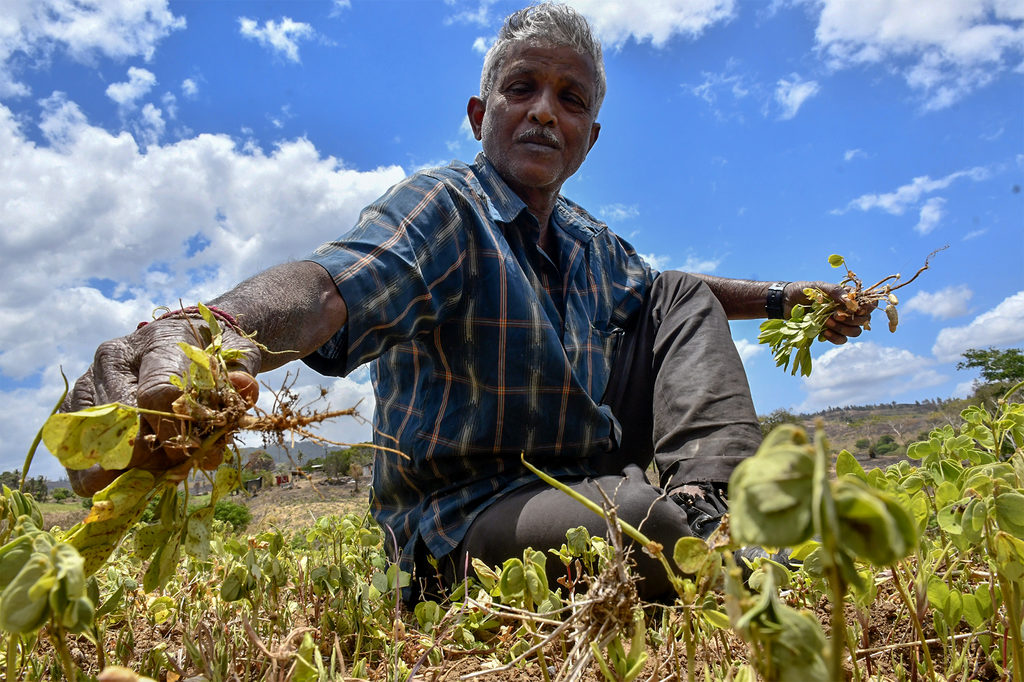
Rakesh Prakash at his peanut farm at Tabataba, Ba. Picture: BALJEET SINGH
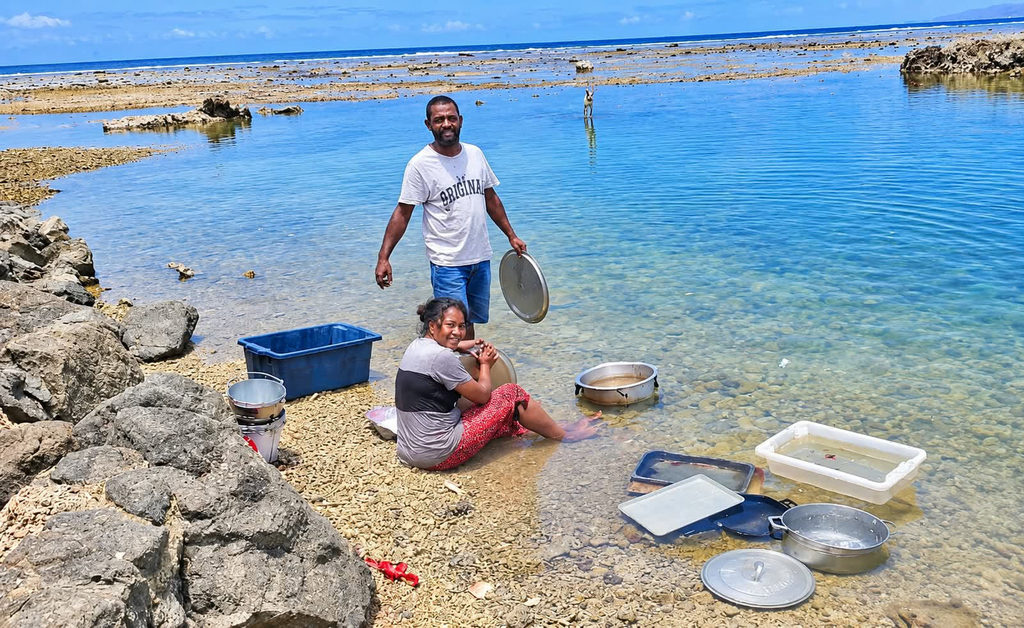
Residents have resorted to using seawater to wash dishes as water shortages worsen across the Northern Division. Picture: SUPPLIED
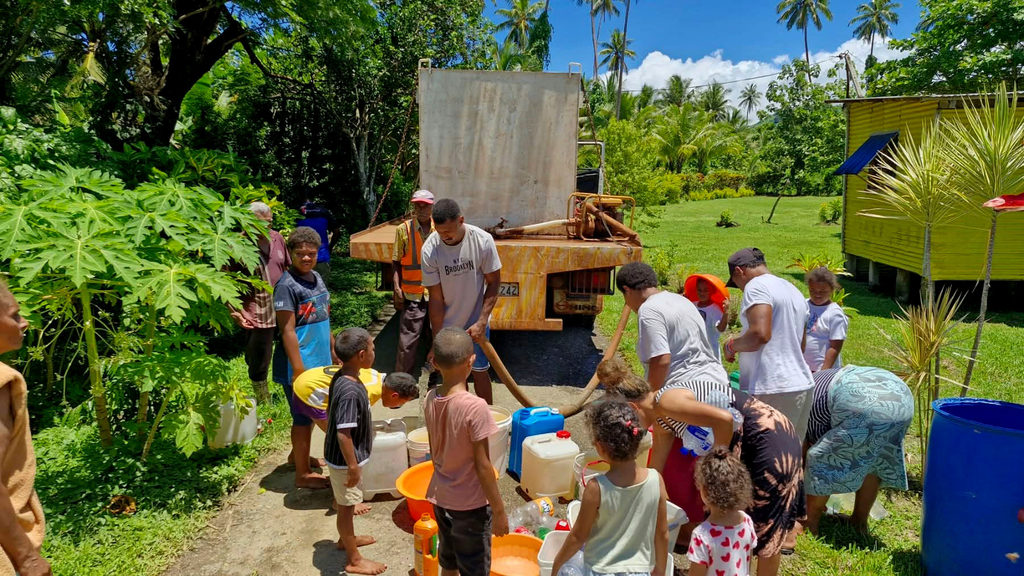
Water is delivered to a village in Savusavu as residents face growing challenges accessing reliable water supply during the dry spell. Picture: Nacanieli Tuilevuka