
THE weather office at Nadi International Airport operated at the intersection of science and aviation economics long before anyone calculated the cost of a headwind knot in dollars. Before a Boeing B747 Jumbo Jet pushed back for Sydney or Auckland, the captain would spread the WINTEM charts across the briefing counter and begin a conversation equal parts meteorology, fuel calculus and operational art.
This writer was on the other side of that counter for years, tracking the subtropical jetstream across the Tasman, pointing to the flight level where a 60-knot tailwind was available and warning where a 200-knot wall of opposing wind would burn reserves faster than any accountant anticipated.
That conversation, between forecaster and flight crew, was worth thousands of litres of saved Jet A-1 on a single sector. Today, with jet fuel having more than doubled in five weeks, the economics of that briefing have never been more consequential. The world’s airlines are burning alive in a fire that started in the Strait of Hormuz on February 28, 2026.
Reading the river of wind
The jetstream is not a meteorological curiosity. It is a river of wind circling the globe between Flight Level 240(24,000 feet) and Flight Level 500 (950,000 feet), driven by the temperature contrast between tropical and polar air masses.
In the southern hemisphere, the subtropical jetstream rides near 30 degrees south while the polar jet oscillates between 50 and 60 degrees south.
Core wind speeds routinely exceed 150 knots and can breach 250 knots in the deep austral winter.
The World Meteorological Organisation (WMO), through ICAO Annex 3, mandates two World Area Forecast Centres – WAFC London operated by the British Meteorological Office and WAFC Washington by the United States National Weather Service – to provide global upper air wind and temperature charts.
These are the WINTEM charts, issued for multiple flight levels and time steps, forming the scientific backbone of every long-haul route plan on earth.
Every B787, A350, A320 and B777 departing Nadi International Airport flies into a sky that a meteorologist has read first.
Riding the tail, dodging the wall
Operational fuel routing is not a computer exercise alone, though the industry has moved heavily toward automated flight management systems.
The task is identifying where the jetstream offers the highest tailwind and where it turns into a liability.
A flight from Nadi to Los Angeles tracking the westerlies versus one fighting the jet on an eastbound return can see fuel consumption differences measured in tonnes across an 11-hour sector.
A 50-knot headwind does not add proportional time. The drag profile changes; engine power settings increase and fuel burn climbs non-linearly.
At cruise, a Boeing 787-9 burns approximately 5.5 to 6.5 tonnes of fuel per hour.
Against a sustained 100-knot headwind at the wrong altitude, that figure surges 20 to 25 per cent.
ICAO flight levels step in 1000-foot increments from FL290 to FL410, and the difference between FL350 and FL390 on a given WINTEM day can save more than 3000 litres on a single transpacific sector.
The forecaster and the Captain
No computer system in 1982 or 1983, during the extraordinary Southwest Pacific cyclone season that produced 19 named systems against a climatological average of nine, handed a jumbo captain a weather briefing and invited dialogue.
In the Nadi weather office, every captain on the Auckland, Sydney, Melbourne and Honolulu sectors arrived for pre-departure consultation.
The conversation covered the timing of the morning fog at Auckland or Sydney’s Kingsford Smith, the height of the temperature inversion and whether it would burn off before arrival.
A captain who departed Nadi 25 minutes early could arrive while the fog still held, enter a holding pattern and burn hundreds of additional kilograms of fuel circling.
The experienced bench forecaster, reading that morning’s radiosonde ascent data against seasonal fog climatology, could advise a 20-minute departure delay and save the fuel equivalent of a small car at 30,000 feet.
That intelligence does not come from a terminal display. It resides in a trained scientist who has read that coastline across seasons.
Jet fuel is not a simple product
The travelling public boards an aircraft with no more thought about jet fuel than a motorist gives to the petrol in a car.
They share a hydrocarbon origin and little else. Jet A-1, governed by the United Kingdom’s Defence Standard 91-091 and ASTM D1655, is a kerosene-based fluid refined to tolerances unrecognisable in any roadside service station. It is a blend of more than 2000 individual chemical compounds, predominantly paraffins, naphthenes and aromatics in the carbon number range C8 to C16.
Its energy density is 43.15 megajoules per kilogram, its freeze point at or below minus 47 degrees Celsius and its flash point above 38 degrees Celsius.
A litre weighs approximately 0.8 kilograms, meaning a fully fuelled Boeing 787 carrying 102 tonnes of fuel carries the equivalent mass of 102 motor vehicles before a single passenger boards.
You cannot put it in a car, a boat or a generator.
Why jet fuel commands its price
The price premium Jet A-1 commands over automotive diesel reflects the extraordinary complexity of its production and handling chain.
At the refinery, crude oil enters fractional distillation where the kerosene fraction, boiling between 150 and 280 degrees Celsius, is drawn off and hydrotreated to remove sulphur, nitrogen and unstable compounds.
Mandatory additives follow: antioxidants to prevent gum formation in storage, static dissipator additives against electrostatic charge during fuelling, thermal stability agents, corrosion inhibitors and anti-icing compounds to prevent the fuel line blockage that would occur if trace water froze at cruise altitude.
Every batch must pass ASTM and UK Defence Standard tests before entering the aviation fuel system.
Storage requires dedicated tanks, separate pipelines, daily water drain checks and continuous filtration.
The supply chain from refinery through pipeline to hydrant pit beneath the apron means Jet A-1 arrives at the aircraft having cleared a quality assurance system of extraordinary rigour.
None of that is cheap, and none of it has a substitute.
The Hormuz trigger
On February 28, 2026, the United States and Israel launched strikes against Iran, triggering the effective closure of the Strait of Hormuz, the 34-kilometre chokepoint through which approximately 20 per cent of the world’s seaborne crude oil and liquefied natural gas exports pass daily.
Brent crude breached $US128 (approx. $F283) a barrel within days.
The shock to jet fuel was disproportionately severe because the closure simultaneously cut finished jet fuel from Gulf refineries and the crude feedstock shipped to refineries across Asia and Europe.
Rystad Energy estimated $US50 billion ($F110.91 billion) in Gulf infrastructure damage; the crack spread surged 80 per cent as refineries scrambled to substitute feedstocks.
A 10-day Israel-Lebanon ceasefire was subsequently announced and Iran’s Foreign Minister Abbas Araghchi confirmed vessel passage would resume on coordinated routes. Oil markets responded: Brent fell 11.5 per cent to $US87.94 (approx. $F195.08) a barrel. President Trump declared the Strait “completely open and ready for business,” while confirming the US naval blockade would remain in force until a formal deal was reached.
The situation remains fluid. Critically, even a permanent resolution cannot restore jet fuel prices overnight — $US50 billion in Gulf refining infrastructure does not rebuild in weeks, and the pipeline from damaged wellhead to aircraft wing tip is measured in months.
Numbers that stagger the industry
The scale of the 2026 jet fuel price shock is without modern peacetime precedent.
IATA’s Jet Fuel Price Monitor, sourced through S&P Global’s Platts platform, recorded the global average refinery price at $US99 (approx. $F219.61) a barrel at end of February 2026.
By March 20, it stood at $US197 (approx. $F$437) a barrel.
By early April 2026 the monitor showed $US209 (approx. $F463) a barrel, a 110 per cent increase in five weeks and 94.4 per cent up year-on-year.
For carriers that abandoned fuel hedging during 2025, when jet fuel averaged $US87 (approx. $F192) to $US91(approx. $F201) a barrel, exposure was total.
UBS revised American Airlines’ 2026 earnings from above $US2 (approx. $F4.44) a share to $US0.43 (approx. $F0.95) in a single revision.
United Airlines chief executive Scott Kirby warned of an annual fuel bill approaching $US11 billion ($F24.40 billion).
Fuel leapt from approximately 26 per cent of airline operating costs to above 40 per cent in weeks.
IATA director-general Willie Walsh warned that with physical Gulf refinery damage factored in, prices will not fall overnight even if the shooting stops.
Airlines breaking under the weight
The global industry’s response has been swift and disruptive. Air New Zealand cut approximately 1100 flights between mid-March and early May 2026, affecting some 44,000 passengers, then announced a further four per cent capacity reduction for May and June.
New Zealand’s Tourism Export Council found 77 per cent of operators reporting cancellations from UK and European markets.
United Airlines removed five per cent of its planned Q2 and Q3 2026 schedule, suspending routes to Dubai and Tel Aviv.
Delta Air Lines stripped all planned Q2 capacity growth.
Cathay Pacific cut two per cent of passenger flight frequencies from mid-May; budget subsidiary HK Express went to six per cent. WestJet of Canada levied a $CA60 (approx. $F96.48) fuel surcharge on companion voucher bookings.
Cebu Pacific raised fares 20 to 26 per cent through May.
Air India imposed international surcharges from April 8.
The Airports Council International Europe warned the European Commission that without meaningful Hormuz passage by end of April 2026, a systemic jet fuel shortage across the European Union would become a reality.
Fiji Airways: Half measures will not hold
Fiji’s government moved to reassure the market. At a Suva tourism conference on March 25, 2026, Tourism and Civil Aviation Minister Viliame Gavoka declared that Fiji Airways had committed to maintaining every route regardless of fuel pressures.
That commitment did not survive the month. From April 25, 2026, Fiji Airways suspends the Saturday night Brisbane services FJ922 and FJ923, reducing eight weekly Brisbane-Nadi services to seven.
Between May 5 and June 16, Tuesday Nadi to Dallas/Fort Worth services are suspended, leaving two weekly flights to the United States.
The invisible pressure is more damaging: substantial fare increases affecting travellers from Australia, New Zealand, Japan, the United States, the United Kingdom and China, Fiji’s primary inbound markets.
Fares to Japan have climbed 15 to 25 per cent year-on-year.
When the price of flying to Fiji rises sharply against competing destinations in Thailand, Indonesia and Vietnam, the traveller does not disappear.
They redirect. Cutting two flights a week is not a strategy the market will respect.
Conservation is a doctrine now
The airline industry has sophisticated fuel conservation tools that are underutilised in high-margin periods and become survival doctrine when margins are being destroyed. Daily meteorological briefings of the kind this writer conducted at Nadi for B747 and B767 captains are a direct operational lever. A route departing 15 minutes later to capture a jetstream shift identified in an updated WINTEM analysis or climbing to FL390 instead of FL370 because the temperature-altitude profile has been correctly read, saves between 1500 and 4000 litres on a transpacific sector.
The Airbus A350-900, which forms the backbone of Fiji Airways’ long-haul fleet, burns approximately 5.5 litres per 100 seat-kilometres, among the most efficient wide-body types in commercial service.
Continuous descent approaches reduced auxiliary power unit ground running, single-engine taxiing and optimised fuel loads compound meaningfully across a monthly schedule.
Fiji Airways should mandate a pre-departure upper air briefing on every international sector, conducted by its Nadi meteorological team, not substituting that discipline with automated output that no qualified forecaster has interrogated.
When you must dump the fuel
There are emergencies in which an aircraft must return to land before reaching its maximum structural landing weight.
For a Boeing 787-9 with a maximum take-off weight of 254 tonnes and a maximum landing weight of 192 tonnes, the 62-tonne gap represents a transpacific fuel load.
A medical emergency or mechanical fault forcing a return within the first two hours means that gap cannot be burned in time.
The aircraft must either make an overweight landing, requiring extensive structural inspection before its next service, or jettison fuel.
The 787’s jettison system dumps through wing trailing-edge nozzles at approximately one tonne per minute above 5000 to 6000 feet, the altitude at which fuel atomises before reaching the ground.
A full dump from a heavily loaded transpacific dispatch can run beyond an hour, costing tens of thousands of dollars at today’s Jet A-1 prices. The Boeing 777 jettisons at 2.5 tonnes per minute.
Narrowbody aircraft, the 737 MAX and A320 family, carry no jettison systems and must burn fuel in holding circuits before landing weight permits.
The tourism domino effect
Tourism accounts for approximately 40 per cent of Fiji’s gross domestic product. Australia provides 46 per cent of visitor arrivals, New Zealand 23 per cent and the United States 11 per cent: the three markets most exposed to the fuel surcharge shock are precisely Fiji’s three largest source markets.
When the pandemic closed Fiji’s borders in 2020, GDP contracted 17 per cent and more than 200,000 Fijians lost employment. Recovery to Fiji’s first one-million-visitor year in 2024 required four years and pushed public debt to approximately 80 per cent of GDP.
The ADB’s Asian Development Outlook, released April 10 2026, forecast growth moderating to 2.9 per cent in 2026 and 2.7 per cent in 2027, citing slowing tourism trends before accounting for any fuel-driven demand collapse.
A 15 to 25 per cent airfare increase, layered on an existing trend of younger travellers redirecting to lower-cost Southeast Asian destinations, threatens the entire downstream chain.
Hotel occupancy, resort wages and rural remittances all sit behind the boarding gate. When fewer passengers clear immigration at Nadi, the signal travels fast.
One basket, one vulnerability
This crisis is not the first time an external shock has exposed Fiji’s dependence on a single economic driver.
The sugar industry, which employed approximately 15 per cent of Fiji’s population at its peak and sustained more than 200,000 livelihoods through the Fiji Sugar Corporation’s three mills at Lautoka, Rarawai and Labasa, has seen production collapse by more than 63 per cent from its 1996 peak.
An estimated 15,000 hectares of cane land now lies idle through lease expiry and farmer withdrawal.
The 2024-25 budget allocated $70.1 million to the sugar sector, including $20 million in fertiliser subsidies, an acknowledgement of urgency without the strategic commitment to match.
A government that moved its economic eggs from the sugar basket to the tourism basket needs to ask whether it has simply exchanged one vulnerability for another.
The cane lands of Lautoka, Ba and Labasa are not colonial relics.
They are insurance against the day that an airstrike closes a 34-kilometre strait and grounds the aircraft that carry 40 per cent of national income.
What the institutions are saying
The international institutions have been consistent in their warnings. ADB Pacific Subregional Office regional director Azusa Sato stated on April 10, 2026 that evolving global and domestic headwinds pose serious threats to Fiji’s progress and development.
ANZ Pacific Research forecast Fiji’s GDP growth at 2.6 per cent in 2026, with stronger performance not expected until 2027.
Coface’s country risk assessment places tourism at 40 per cent of GDP and structural current account deficits at 30 per cent of GDP, noting that remittances at 9.1 per cent of GDP remain insufficient to close the trade gap.
The World Bank has documented that one in every seven dollars of Fiji’s national income is spent on imported oil.
That ratio is about to worsen materially.
IATA has warned that fuel costs will remain a significant headwind throughout 2026, with any recovery contingent on physical restoration of Gulf refining infrastructure.
The Reserve Bank of Fiji Governor has raised the fuel import dependency alarm repeatedly. The Ministerial Building in Suva must now listen with matching urgency.
The jetstream has shifted
More than four decades ago, a young meteorologist stood in the Nadi weather office during the extraordinary 1982-83 Southwest Pacific cyclone season, when we had 19 cyclones –three simultaneously — in the region compared to an average of nine, reading radiosonde ascent data and briefing jumbo jet captains on winds that could not yet be computed but could be read by a scientist who understood the physics.
The jetstream was a river that could be ridden or fought, and the difference between riding and fighting it was measured in thousands of litres on every sector.
The physics has not changed. The jetstream still circles the globe at 250 knots in the deep winter and Jet A-1 still demands 2000 refined chemical compounds no service station can match.
What has changed is the price of getting the decisions wrong. At $US209 a barrel, the margin for complacency is zero.
Fiji Airways, the government that owns it and the nation that depends on both must act with the urgency this moment demands.
The cane fields must be revived. The met briefings must be reinstated on every sector. Fiji has always known how to read the weather.
The question in April 2026 is whether it has the courage to act on the forecast and its anomalies.
Dr Sushil K Sharma BA MA MEng (RMIT) PhD (Melbourne) — World Meteorological Organisation accredited Class 1 Professional Meteorologist with many years of service with the Royal Saudi Air Force and British Aerospace under the Al Yamamah Programme at the King Faisal Air Academy, Riyadh, and with the Bahrain Air Navigation Directorate. Dr Sharma held security clearance to operate on military installations alongside senior Kingdom of Saudi Arabia command staff. The views expressed are those of the author alone and do not represent the views of this newspaper.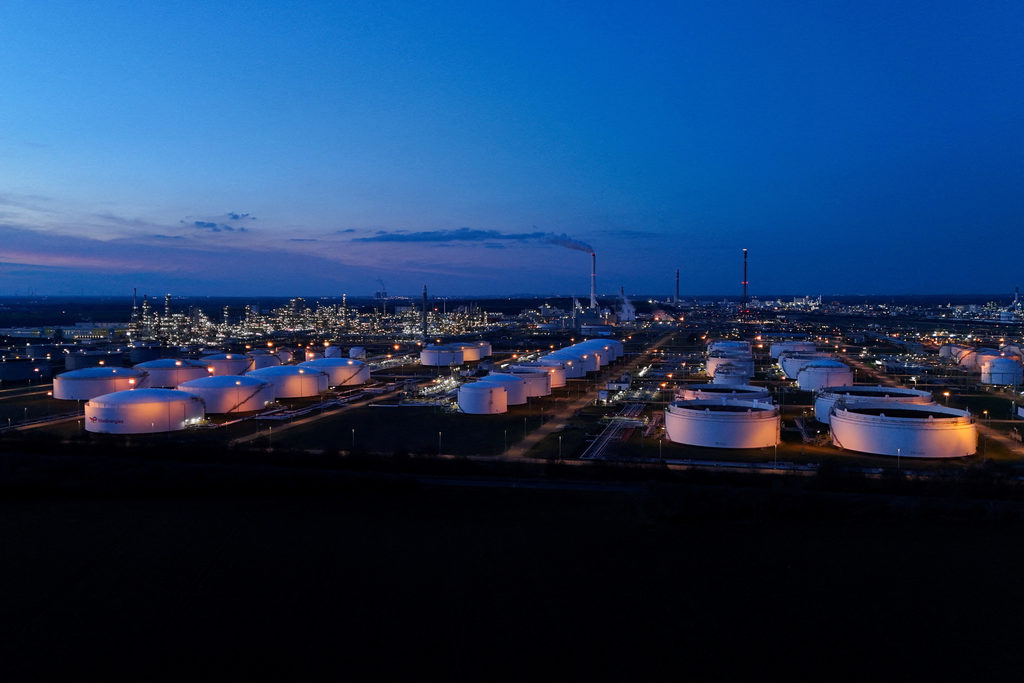
A drone view of oil storage containers and facilities of the TotalEnergies refinery in the Leuna Chemical Complex, in Leuna, Germany, March 17, 2026. Picture: REUTERS/FILE
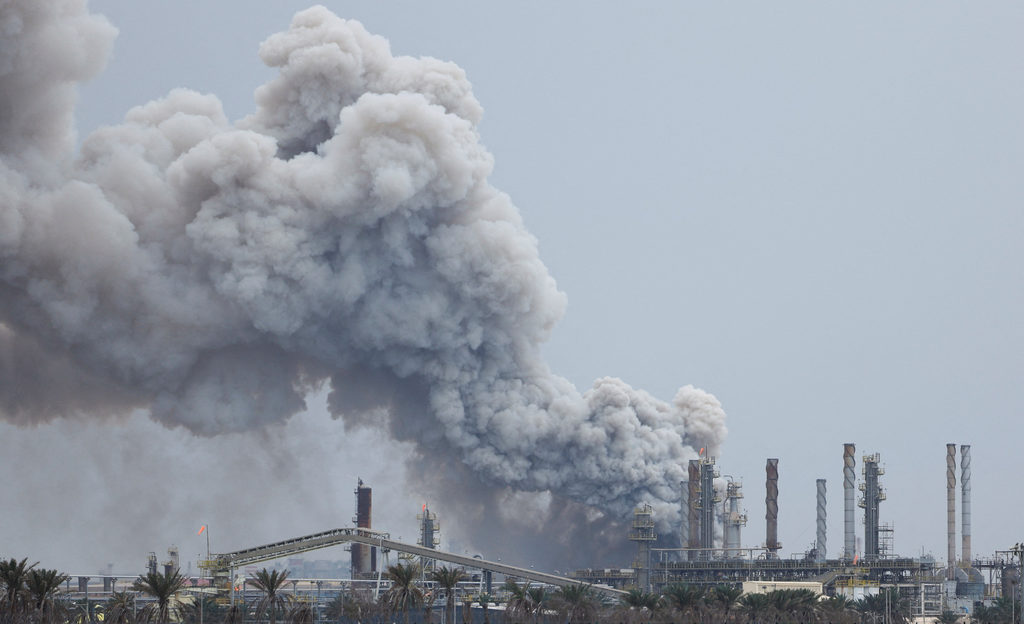
Smoke rises following a strike on the Bapco Oil Refinery, amid the US-Israeli conflict with Iran, on Sitra Island Bahrain, March 9, 2026. Rystad Energy estimated $US50 billion ($F110.91 billion) in Gulf infrastructure damage. Picture: REUTERS
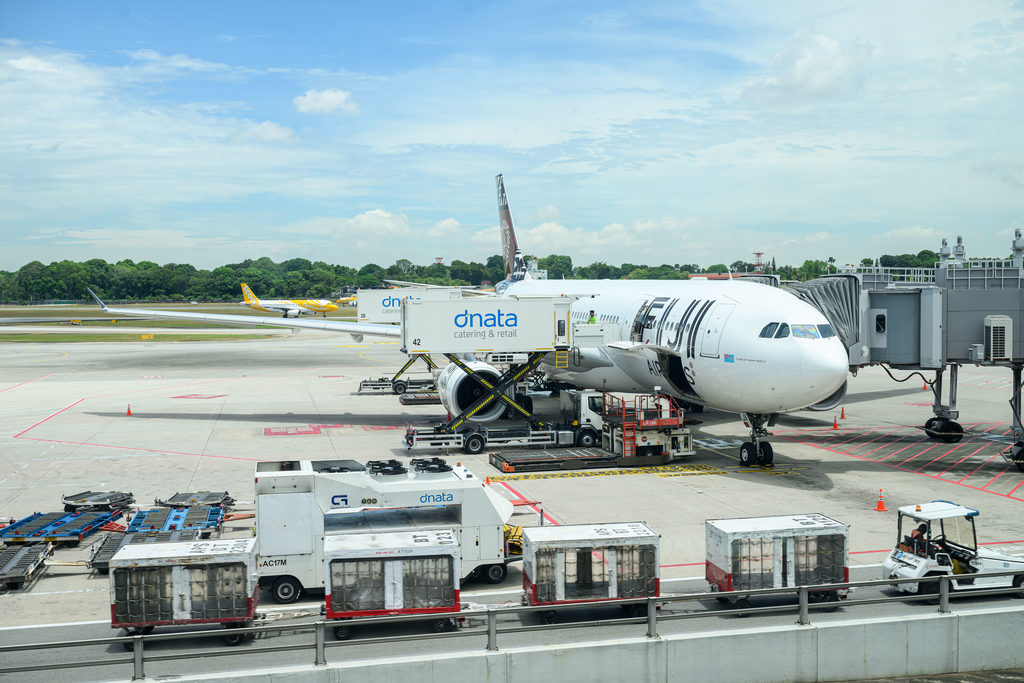
Fiji Airways, the government that owns it and the nation that depends on both must act with the urgency this moment demands, the author writes. Picture: FIJI AIRWAYS/FILE

