IN my previous opinion piece, I wrote about the exhausting, relentless weight of the hyphen. I wrote about the quiet humiliation of being constantly categorised as Indo-Fijian—of carrying an “Indo” prefix that felt like a tether to a ghost, constantly being asked to justify my belonging to a land that holds my only definition of home.
I claimed the “in between”—that messy, complex space of existing between an inherited Indian ethnicity and a lived Fijian nationality—not as a tragedy, but as a magnificent space of cultural reinvention born from the blood and sweat of our girmitiya ancestors. I argued, fiercely, that we are not provisional citizens waiting for an eviction notice. We are Fijian. Entirely.
But demanding that recognition from the world, and from the political frameworks of our country, is only half the battle. It is easy to look outward and demand that the hyphen be erased. It is infinitely more agonising to look inward and realise how fiercely we still cling to it ourselves.
There is a sentence we have repeated so often, so breathlessly, that it has begun to sound indistinguishable from the truth. We are one.
It rolls off tongues in soaring political speeches, echoes through the humid air of national celebrations, and is recited in classrooms across the islands. It is printed in bold lettering on campaign slogans, enshrined in the glossy preambles of policy documents, and performed in beautifully curated, fleeting moments of harmony during Fiji Day or Diwali. We drape ourselves in noble blue, we share a bowl of kava, we eat together, and we tell the world that we are the way the world should be.
But if we are honest — truly, uncomfortably, devastatingly honest — we must admit something far more difficult to swallow. We speak of unity, but we live in quiet segregation.
And the most unsettling part of this reality is this: it is not always a segregation imposed from the outside. It is not always legislated by a fractured parliament or enforced by a military checkpoint. It lives within us. It always has.
In my earliest memories growing up in Lautoka, before the winds of migration carried my family away in 2011, politics was never just about governance. It was never just about infrastructure, or taxes, or education. It was about us and them, even though we rarely had the courage to say it out loud.
We voted for those who looked like us. Those who carried names that sounded like ours. Those who we implicitly believed understood the granular weight of our specific struggles. From Mahendra Chaudhry to Jai Ram Reddy, from the towering legacy of A.D. Patel to the fierce advocacy of Irene Jai Narayan — our loyalties were shaped not merely by economic ideology, but by familiarity. By shared ancestry. By an unspoken, desperate alignment that felt less like civic duty and more like a mechanism for survival.
Let us not pretend otherwise. Let us not rewrite history to make ourselves look more enlightened than we were. For decades, many Indo-Fijians did not vote for an iTaukei leader. Not because we sat at our kitchen tables, meticulously analysed their manifestos, and disagreed with their fiscal policies. We withheld our votes because somewhere deep within the collective psychology of our people, we had drawn invisible, iron-clad lines of trust. We believed, through the trauma of history and the whispers of our elders, that only an Indo-Fijian could truly protect an Indo-Fijian.
It was not until figures like Voreqe Bainimarama emerged that those entrenched patterns began to violently, seismically shift. It happened slowly, then all at once — cautiously, and not without immense, bitter resistance. Many Indo-Fijians threw their weight behind him because the promise of a secular state, of equal citizenry under the 2013 Constitution, felt like a lifeline after decades of marginalisation.
But even then, we must ask ourselves: was the shift truly a personal reckoning, or was it merely political pragmatism? We changed our votes, yes. But the deeper, harder work — the quiet dismantling of the prejudices in our own hearts — remained largely untouched. Because this is not just about politics. It never was.
It is about the way we physically move through the world. It is about the way we have been socially conditioned to perceive one another on the street, in the market, in the dark.
How many times have we clutched our bags a little tighter when we saw an iTaukei man approach on a quiet road? How many times have we locked the car doors with a swift, panicked click? How many times have we sat cross-legged at family gatherings and whispered warnings, passing them down to our children like toxic heirlooms of fear?
How many times have we carried stories — half-truths, gross exaggerations, inherited anxieties born from the traumas of 1987 or 2000 — and allowed them to mutate, shaping our perception of an entire people?
We do not like to call it what it is. We mask it as “caution.” We justify it as “being sensible.” But it has a name. It is prejudice. And we must have the moral courage to admit that prejudice does not only flow in one direction.
There is a memory from my childhood that refuses to leave me. It is a memory that sits heavy in my chest, a ghost I have never been able to fully exorcise. The year was 2000. It is a year etched into the national consciousness for political turmoil, for hostages in parliament, for the fracturing of a nation under George Speight’s coup. But for me, the year 2000 is personal long before it was political.
It was the year my nana passed away. During the 13 days of Hindu prayer—the terahvi—we were meant to be mourning. We were meant to be remembering a man who had toiled, loved, and built a life from the soil. We were meant to be holding on to what was sacred. But while the scent of camphor burned and the pundit chanted ancient mantras, we were also quietly, frantically dismantling our home.
Not metaphorically. Literally. Packing. Folding. Sorting. Tying our lives up in cardboard boxes and frayed rope. Because our land lease had expired. The Agricultural Landlord and Tenant Act (ALTA) lease that gave us the right to farm, to sleep, to exist on that specific patch of earth had run out. And it was not being renewed. Grief and displacement arrived together on our doorstep — uninvited, unapologetic, and devastating.
It is a peculiar, suffocating kind of pain. To lose a loved one and a home at the exact same time. To feel the ground shift so violently beneath you, both emotionally and physically, that you forget how to stand. To realise, as you watch cane trucks rumble past for the last time, that the land your family nurtured, the soil that held your grandfather’s sweat, the space you called your own, was never truly yours to keep.
And in those agonising moments, resentment does not arrive dramatically with a shout. It seeps in. Quietly. Like water under a closed door. It sits heavy in your chest and whispers the questions you do not want to ask: Why us? Why again? But here is where the conversation must become deeply, uncomfortably reflective. Because pain, if left unexamined, hardens.
When trauma hardens, it loses its vulnerability and begins to justify its own bitterness. We carry these visceral experiences of displacement, and instead of processing them as the tragic consequence of complex, flawed political systems, we sometimes allow them to calcify into generalised hatred. We allow our grief to shape our biases. We use our historical wounds to justify our distance from one another today.
We begin to generalise. We begin to blame. We begin to forget that history is incredibly complex — that land tenure systems, colonial policies, and modern power structures are not the same as the individual iTaukei neighbour living down the road.
And slowly, almost imperceptibly over generations, we become the very thing we claim to stand against. There are other examples, too — less dramatic than an expiring lease, perhaps, but no less telling in how they shape our national psyche.
Think of the murmurs that have permeated the education system for decades. As a primary school teacher, I know intimately how the atmosphere of a staffroom or a parent-teacher meeting can hold the unsaid weight of a nation. Think of the quiet suspicions about the scaling of national exam marks. Think of the hushed, bitter conversations that took place in living rooms after the Fiji Seventh Form Examination or Fiji School Leaving Certificate results were released.
There was always a feeling, whether entirely real or fiercely perceived, that fairness was uneven. That opportunity was not equally distributed. That an Indo-Fijian child had to work twice as hard to go half as far.
These conversations lingered. They echoed. And whether or not they were always perfectly grounded in statistical fact, they shaped something far more powerful than data. They shaped perception. And perception, when repeated often enough by the people you trust most, becomes an absolute belief.
So, we arrive at a difficult, immovable truth.
We cannot aggressively demand unity if we are entirely unwilling to confront our own internal divisions. We cannot stand on the world stage and insist on being legally and socially recognised as “Fijian” if we are unwilling to recognise each other fully — without suspicion, without a racial hierarchy, without the heavy baggage of inherited fear.
Because what right do we have to claim a shared identity if we stubbornly continue to live separate emotional realities?
It is incredibly easy to point outward. It is easy to write articles highlighting the discrimination we have faced. It is easy to recount the undeniable ways in which Indo-Fijians have been marginalised, disenfranchised, and misunderstood. Those experiences are fiercely real. They are valid. They deserve acknowledgment, and they belong in the history books of the Pacific.
But there is another question — one that is much harder to ask, and infinitely harder to answer:
Where have we contributed to the divide? Where have we allowed vicious stereotypes to persist at our dinner tables? Where have we chosen the comfort of our own echo chambers over the confrontation of our own biases? Where have we remained conveniently silent when we should have questioned our own assumptions?
Unity is not a slogan. It is a practice.
And like any meaningful practice, it requires immense discipline, brutal reflection, and, most importantly, honesty. It requires us to finally sweep the dust out from under the rug — not because it is easy, but because it is vital for our survival. Ignoring the rot in the floorboards does not make the house stronger; it only allows the decay to settle deeper into the foundation.
We often speak of Fiji as a house. A beautiful, shared home. A vibrant place where different cultures, languages, and histories coexist under the same tropical sun. But what we rarely acknowledge is this: we have been living in completely different rooms. Sometimes, this was by colonial design. Sometimes, it is by modern habit. But mostly, it is by fear.
We visit each other’s rooms during the festivals. We exchange platters of mithai and plates of lovo. We share laughter and curated, photogenic moments of connection. But the moment the fireworks fade and the public holidays end, the doors close. We retreat to our separate spaces — carrying our own narratives, nursing our own specific grievances, guarding our own versions of the truth.
And then we look around, baffled, and wonder why the house does not feel whole.
If Part I of this conversation was about the righteous act of claiming identity — of screaming into the void that we are Fijian — then Part II must be about interrogating what that actually requires of us.
Because identity is not just about the name printed on your passport. It is about how you live. It is about how you see. It is about how you treat those who share the same land, even if they do not share the same history.
To be Fijian — truly, deeply, meaningfully — is not just about fighting for legal recognition under a secular constitution. It is about emotional citizenship.
It is about the willingness to sit with severe discomfort. To listen to the grievances of the iTaukei without immediate defensiveness. To acknowledge that pain, trauma, and a desperate desire for belonging exist on all sides of the racial divide. It is the realisation that national healing cannot possibly happen if we are only ever willing to tell our own stories.
Perhaps the most powerful, revolutionary thing we can do today is not to loudly declare unity on social media or in political rallies, but to practice it in small, deliberate, agonisingly quiet ways. To unlearn what we have been systematically taught to fear. To question what we have casually accepted as normal banter.
To look across the room and recognise that the “other” is not a monolith, not a political threat, but a collection of individuals — each carrying their own ancestral histories, their own profound wounds, and their own desperate hopes for their children.
Because if we are not united — truly, deeply united, beyond the performative smiles and the holiday greetings — then what is the actual use of fighting to be called Fijian? Is it just a label? A bureaucratic convenience? A political construct designed to make us feel less orphaned by history? Or is it something more?
I do not have all the answers. The resentment that took root in my chest when I was a boy in 2000 still flares up sometimes. The psychology of my identity is still a tangled web I am trying to unweave.
But I know this with absolute certainty: We cannot build a shared, unbreakable future on the foundation of unexamined pasts. We cannot demand empathy and recognition while tightly withholding it from others. We cannot ever hope to heal as a nation if we are terrified to confront the fractures within ourselves.
So perhaps the very next time we stand shoulder to shoulder, sing the anthem, and proudly declare that we are one, we should pause. We should stop the performance, look inward, and ask a genuine, terrifying question:
Are we? And if the honest answer is not yet — Then maybe, just maybe, the real work of becoming Fijian is only just beginning.
ASHNEEL JAYNESH PRASAD is a Fiji-born New Zealand citizen and currently works as a teacher in Tokyo, Japan. The views expressed in this article belong to the author and do not reflect the views of this newspaper.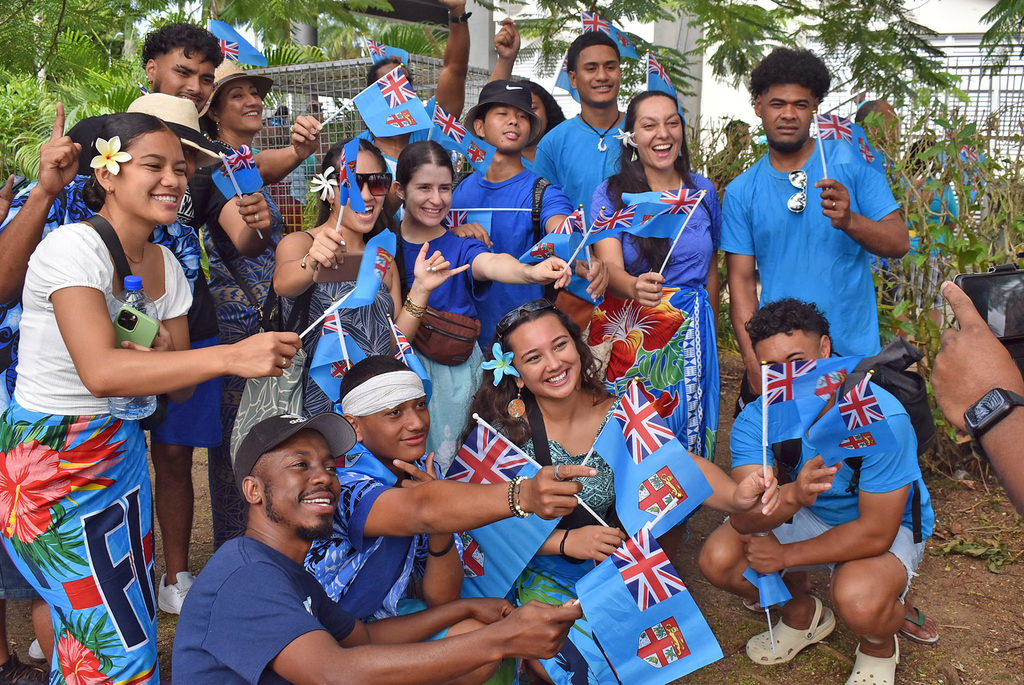
Youths with miniature Fiji flags during Fiji Day celebrations. Picture: FILE
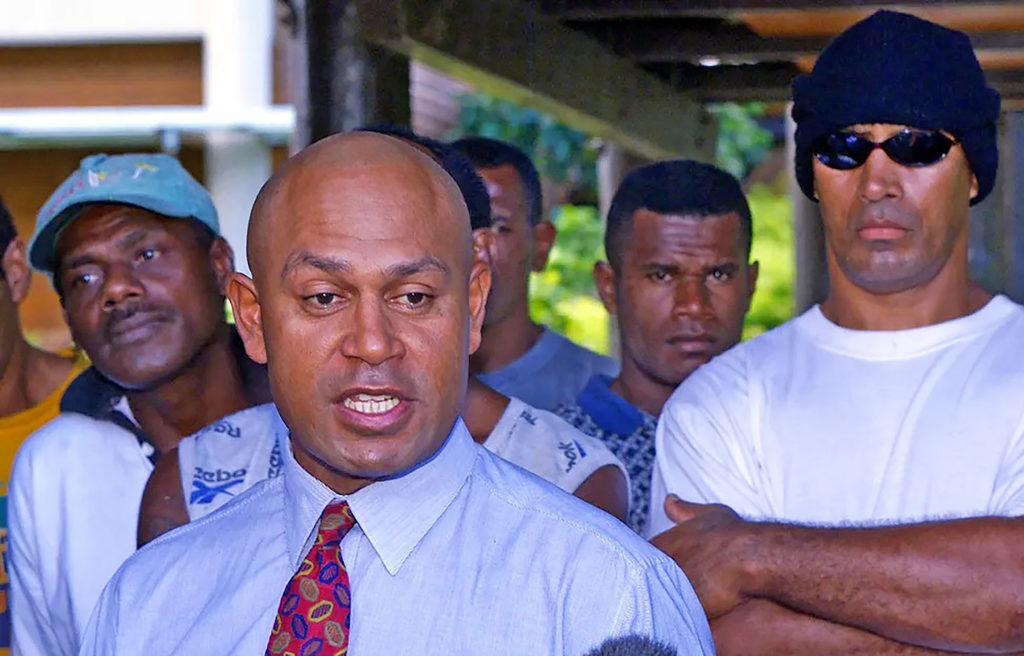
George Speight speaks to the media at the parliament complex in Veiuto during the 2000 coup. The author says the year 2000 is etched into the national consciousness for political turmoil, for hostages in parliament, for the fracturing of a nation under George Speight’s coup. Picture: FILE
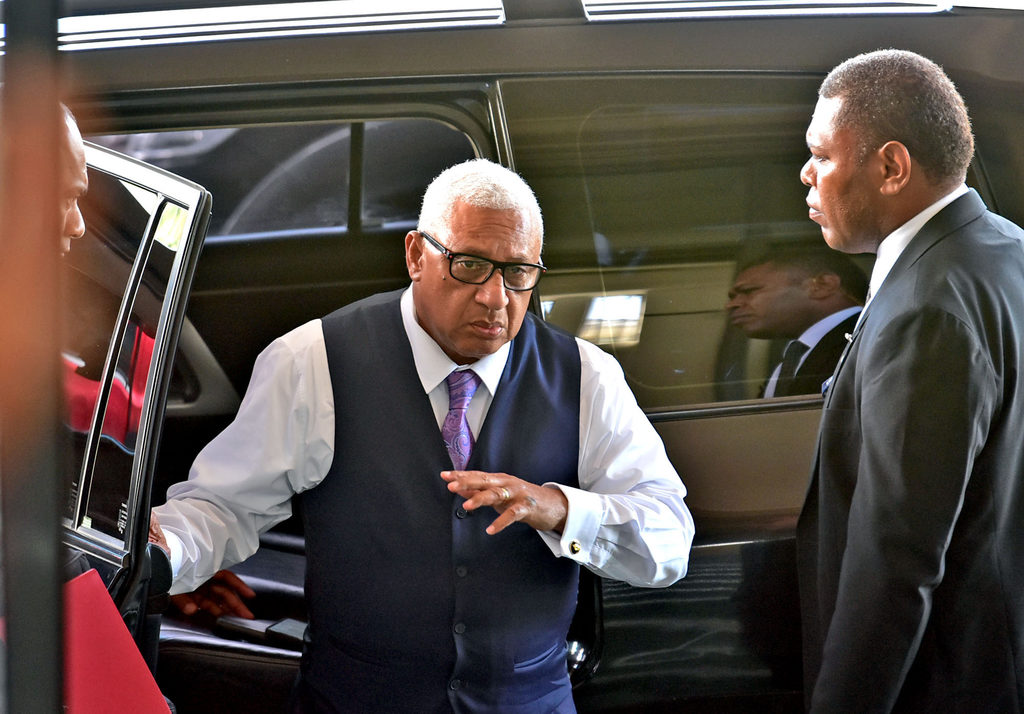
Voreqe Bainimarama during his term as Prime Minister in 2022. According to the author It was not until figures like Mr Bainimarama emerged that those entrenched patterns of prejudice began to violently, seismically shift. Picture: JONACANI LALAKOBAU
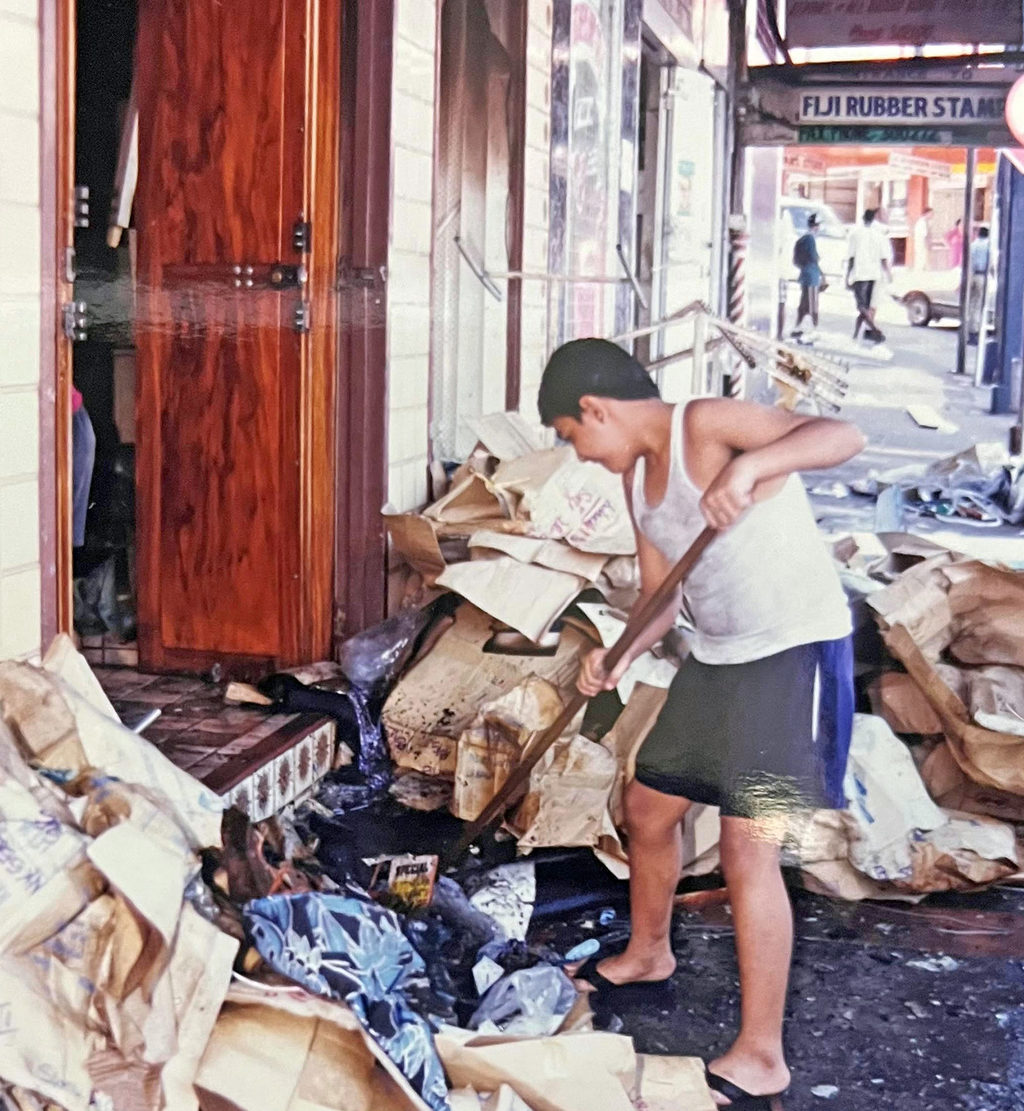
A boy cleans up debris from the looting in Suva following the aftermath of the May 19, 2000 coup. Picture: FT FILE
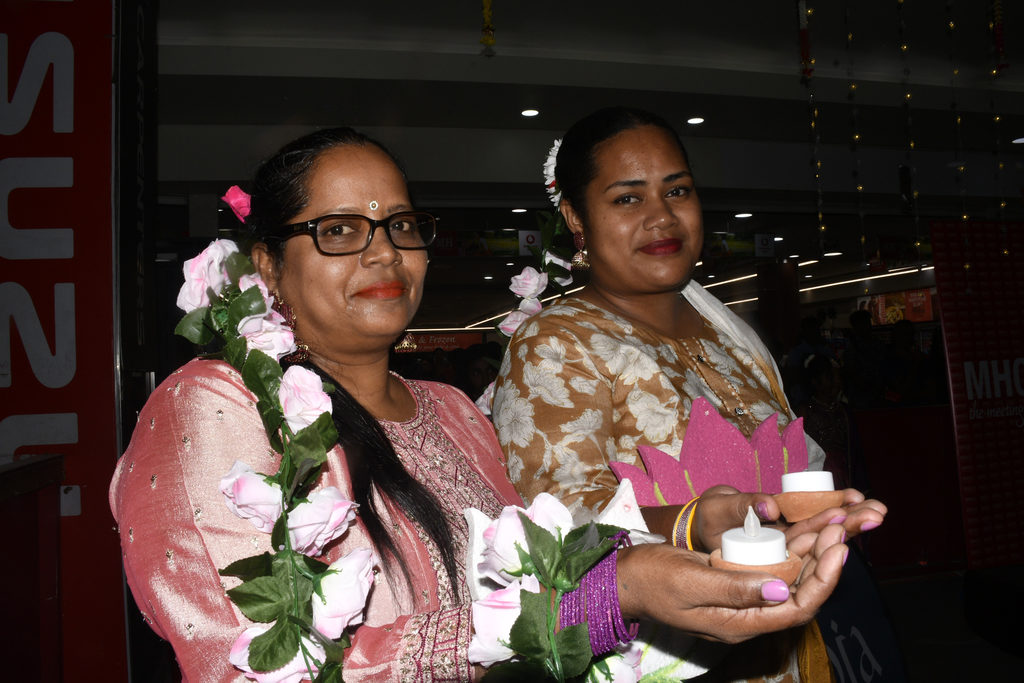
Reshmi Kumari, left, and Meresiana Nuku during the Razzle Dazzle Event Diwali celebrations at the MHCC foyer in Suva last year. Picture: JONACANI LALAKOBAU