
A German physicist named Wilhelm Conrad Roentgen is credited with the discovery of X-rays on November 8, 1895.
The discovery made by Roentgen transformed medical diagnosis and treatment, resulting in advances in radiology.
Radiographers play a vital role in the field of medicine by operating imaging equipment to produce diagnostic images.
This article will explore who radiographers are, the importance of their profession, and their essential roles together with shedding light on the mind behind the intervention of X-rays.
Who are radiographers or medical imaging technologists?
These are healthcare professionals who specialise in creating high-quality medical images using various imaging modalities.
They work in collaboration with radiologists, physicians, and other medical professionals to diagnose and treat patients accurately.
Medical imaging technologists (MIT) are extensively trained in the use of radiographic equipment and patient positioning techniques to obtain clear images that help in diagnosing medical conditions.
MIT’s play a crucial role in modern healthcare systems.
They provide essential support to physicians and surgeons by conducting diagnostic imaging examinations that guide medical decisions.
These examinations include X-rays, computed tomography (CT) scans, magnetic resonance imaging (MRI), ultrasound, mammogram, fluoroscopy, and more.
Radiographers skills and expertise contribute to early detection, accurate diagnosis, and effective treatment planning, leading to improved patient care.
Radiographers are extensively trained in radiation protection measures to minimise patient and staff exposure.
They follow established safety protocols, such as using lead shields and aprons, to protect both patients and them during examinations.
After capturing images, radiographers analyse the quality and clarity of the images produced.
They ensure that the images provide the necessary information for accurate diagnosis, taking additional images if required.
Oceania Hospitals is a leading healthcare facility that has invested heavily in advanced diagnostic equipment to ensure accurate and comprehensive radiological diagnosis.
These investments have greatly benefited both patients and medical imaging technologists (MIT) in providing efficient healthcare experience for all involved.
Oceania Hospitals’ commitment to enhancing patient care led them to acquire cutting-edge diagnostic equipment.
This includes highly sophisticated devices such as computed tomography (CT) scanners, magnetic resonance imaging (MRI) scanners, digital X-ray machines, digital mammograms, and more.
These machines have drastically improved the accuracy and efficiency of diagnosing various medical conditions.
The 256-slice HD CT scanners at Oceania Private Hospital provide detail in radiological diagnoses.
These advanced machines produce high-resolution images of the body, enabling physicians to detect even the smallest abnormalities.
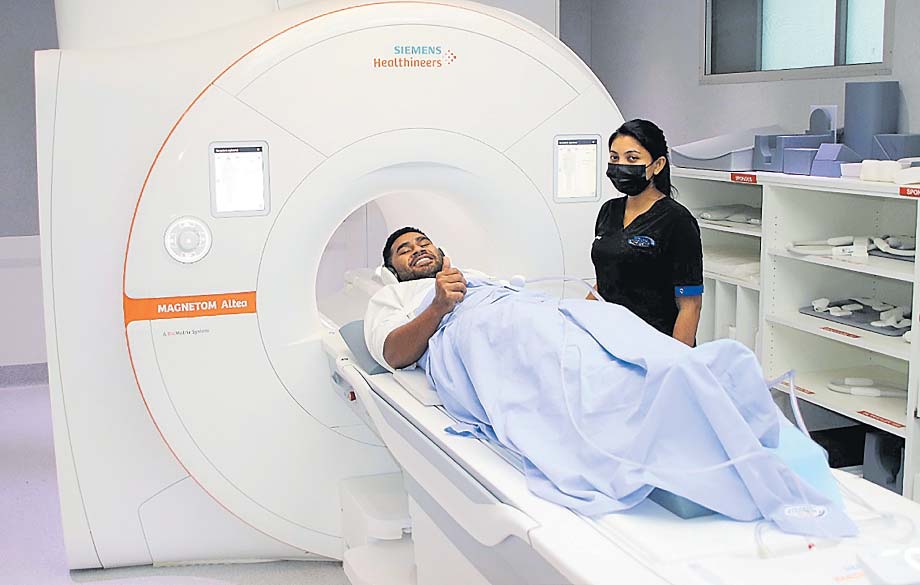
Oceania Hospitals’ 1.5T MRI offers comprehensive insights into different parts of the body.
This imaging modality is particularly useful in diagnosing conditions such as brain tumours, joint disorders, and cardiac abnormalities.
The hospital’s investment in 1.5T MRI has significantly reduced the need for invasive procedures and improved patient outcomes.
The hospital’s digital X-ray machines have streamlined the workflow for medical imaging technologists.
These machines provide quality images instantly, reducing patient waiting times and enabling faster diagnosis.
Additionally, digital X-ray technology minimises radiation exposure, ensuring the safety of both patients and technologists.
Moreover, the presence of advanced diagnostic equipment at Oceania Hospitals has empowered medical imaging technologists to deliver great patient care.
With access to picture archiving communications system (PACS) which stores all confidential patient information.
The hospital offers continual training and professional development opportunities to ensure technologists stay up to date with the latest imaging techniques and protocols.
Conclusion
With continued advancements in this field, Oceania Hospitals remains committed to providing excellent healthcare services to its patients.
• FARZANA BANO is the team leader radiology at the Oceania Hospital. The views expressed in this article are the author’s and not of this newspaper.

