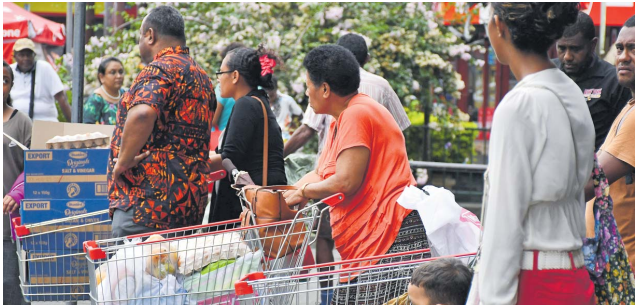
LIFE was already challenging for almost everyone, and now it is becoming increasingly difficult. People are dealing with growing mistrust, security concerns, and many other social pressures. On top of this, the cost of living continues to soar relentlessly.
This growing divide between the privileged and the struggling majority is becoming increasingly difficult to ignore. While ordinary citizens continue to tighten their budgets and sacrifice basic comforts, those entrusted with leadership appear detached from the realities faced by everyday people. The frustration felt across communities is not merely about finances; it is about fairness, accountability, and the feeling of being unheard.
That said, society’s most vulnerable continue to be neglected, while others remain comfortable within their privileged lifestyles. This stands in stark contrast to what Robin Hood symbolised: “Rob from the rich and give to the poor.” Not forgetting The Product G&B, who sang, “the rich is getting richer and the poor is getting poorer”. In a true democracy, the voices of the people should be heard without hesitation. I understand that policymakers and advisors are necessary, but what is the justification for maintaining such substantial salaries when ordinary citizens are struggling to sustain even the most basic livelihoods?
At this very moment, almost every taxpayer in the country deserves relief through a reduction in fuel tax, yet it appears that no one is truly listening. It is already evident that the wealthy can afford private vehicles, while many ordinary citizens continue to rely heavily on public transportation. The early morning traffic between Nausori and Suva, as well as between Nadi and Lautoka, clearly reflects the growing number of vehicles on our roads. Yet despite this increase, buses remain overcrowded with workers and commuters who continue to depend on public transport each day.
Ironically, these same citizens travelling in poorly maintained buses were once the centre of attention during the 2022 election campaign. Members of both the government and the opposition visited municipal markets and village communities, making promises of relief, development, and improved living conditions. However, now that the time has come to assist the vulnerable, many of those concerns appear to have been sidelined. For years, discussions surrounding the rising cost of living, access to better healthcare, and improved standards of living have dominated public discourse, yet the authorities continue to prioritise other agendas.
In May 2024, Parliament approved a 138 per cent pay rise, further burdening taxpayers at a time when many citizens were already struggling financially. During the same period, additional ministers, including members from the opposition, were appointed, demonstrating that sufficient funds were available to accommodate these political changes. Yet when the Prime Minister later proposed salary reductions, only a 20 per cent cut was suggested. This naturally raises the question: If sacrifices are necessary, why should they not be more substantial and equally shared?
Citizens are already taxed on nearly every essential aspect of daily life. At the very least, there should be meaningful consideration given to reducing or removing fuel taxes to ease the burden on ordinary people. Continued increases in diesel prices will inevitably place additional pressure on transportation and electricity costs, particularly if Energy Fiji Ltd seeks further tariff increases despite already operating profitably.
Perhaps the time has come for profit to be balanced with public responsibility. People depend heavily on electricity for their daily lives, yet many consumers feel that EFL has done little to establish a fair and mutually beneficial relationship with the public. Concerns surrounding the Energy Act have also continued to surface, with many questioning whether the legislation sufficiently protects ordinary consumers. There should be stronger consumer protection mechanisms, supported by legal oversight and reinforced through the Fijian Competition and Consumer Commission, to ensure fairness and accountability.
Furthermore, ongoing discussions surrounding power rationing raise additional concerns. Increased power interruptions and fluctuations could lead to a greater risk of electrical damage to household appliances and equipment. If such damages occur, who will ultimately bear responsibility? Unfortunately, many believe that existing legislation provides greater protection to the institution than to the consumers themselves. This is yet another example of how rising fuel costs and excessive taxation continue to affect every aspect of daily life.
I also recall the period following Cyclone Winston in 2016, when several members of the current government, then serving in opposition, supported salary reductions in an effort to assist struggling citizens. Many families, particularly in the Northern Division, suffered devastating losses, and some may still be facing hardship today. The difference now, however, is that the burden of rising fuel prices and taxation affects virtually every citizen across the country. If meaningful relief and subsidies are not seriously considered now, many people will question whether they ever will be.
Lastly, the Australian Government has provided $30million in fuel assistance. The people deserve transparency regarding how these funds have been, or will be, allocated and utilised. There should be a publicly accessible account or reporting mechanism to ensure accountability. After all, it is the people who placed their trust in elected leaders and entrusted them with the responsibility of governance.