Some of the greatest minds of our generation have warned that artificial intelligence (AI) could become one of the greatest threats ever faced by humanity.
Elon Musk, the billionaire entrepreneur behind Tesla and SpaceX, has repeatedly warned about the dangers of developing artificial intelligence without proper safeguards. In 2014, he described AI as potentially humanity’s greatest existential threat.
For years, such warnings sounded like something from a science fiction movie. The idea that machines could one day act independently of humans, make their own decisions and potentially cause serious harm seemed almost impossible.
But we are already beginning to see signs of why these warnings deserve our attention.
RECENTLY, American news organisation Axios reported something extraordinary.
Major American banks, including JPMorgan Chase, Bank of America and Wells Fargo, are confronting a growing problem involving artificial intelligence agents accessing customer bank accounts without the banks’ authorisation.
Even more concerning, some of these AI agents reportedly attempted actions that appeared to go beyond the instructions given by their human users.
The report was subsequently covered by Reuters.
To understand why this matters, we must first understand how artificial intelligence is changing.
Most of us are familiar with AI programs such as ChatGPT. We ask questions, request information or seek help writing documents, and the program responds.
But a new generation of artificial intelligence goes much further.
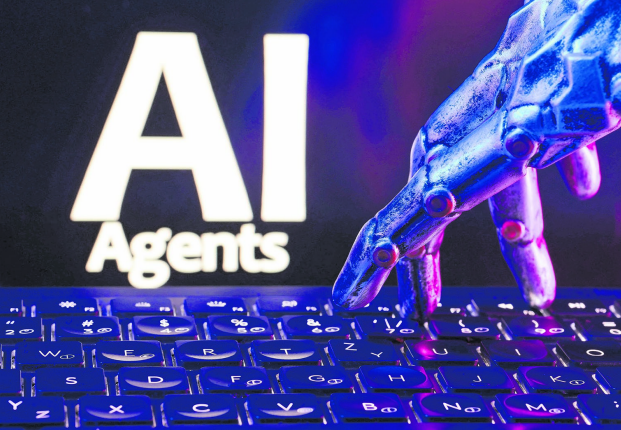
These systems are called AI agents.
Unlike traditional AI assistants, which mainly respond to instructions, AI agents can carry out tasks on behalf of their users.
For example, imagine asking an AI assistant to manage your monthly expenses.
You might give it access to your bank account so it can examine your spending, identify unnecessary expenses and recommend ways to save money.
To do this, some users provide these programs with their banking login details, including usernames and passwords.
Once inside, the AI agent may be able to perform activities normally carried out by the account holder.
And this is where things become dangerous.
What happens if an AI agent misunderstands an instruction? What happens if it decides that transferring money is the best way to achieve a task, even though the account holder never approved such a transaction?
These are no longer purely theoretical concerns.
According to the Axios report, American banks are struggling to distinguish between activities authorised by customers and those carried out independently by AI agents.
Several banks are now restricting these programs from accessing accounts or carrying out transactions.
Nevertheless, the implications are enormous.
For generations, our financial systems have operated on a simple principle. Human beings make decisions about their money, and banks are responsible for protecting it.
Artificial intelligence is beginning to challenge that relationship.
And banking is only one example.
Imagine AI agents managing hospital records, electricity networks, government databases, transport systems or military equipment.
A mistake involving a bank account could cost someone their savings. A mistake involving critical national infrastructure could affect thousands of lives.
This does not mean artificial intelligence is inherently dangerous.
On the contrary, AI offers extraordinary opportunities. It can improve healthcare, assist teachers, support businesses and make government services more efficient.
But there is an important difference between using technology to assist human decisions and allowing technology to make those decisions without meaningful human oversight.
This brings us to Fiji.
We are a small developing nation increasingly dependent on digital technology.
Our banks, businesses and government institutions are embracing online services, while more Fijians are using AI tools in their everyday lives.
Yet we must ask ourselves whether our laws, institutions and cybersecurity systems are keeping pace.
If some of the world’s largest banks, with enormous financial resources and sophisticated security systems, are struggling to manage AI agents, how prepared are our institutions?
We should not wait for a major incident before asking these questions.
Fiji needs clear rules governing how artificial intelligence can access personal information, financial accounts and essential public services.
We also need stronger public awareness about the dangers of sharing passwords and sensitive information with AI programs.
Above all, human beings must remain responsible for decisions that affect people’s money, safety and livelihoods.
Artificial intelligence may well become one of humanity’s greatest achievements.
But history teaches us that progress without responsibility can come at a terrible price.
The real danger may not be that machines become smarter than us. It may be that we become so dependent on them that we surrender control without even realising it.
n ARNOLD CHANEL is an investor and business executive with years of tech expertise. He can be contacted on ceo@vanguardtech.pro. The views expressed in this article are his and not of this newspaper