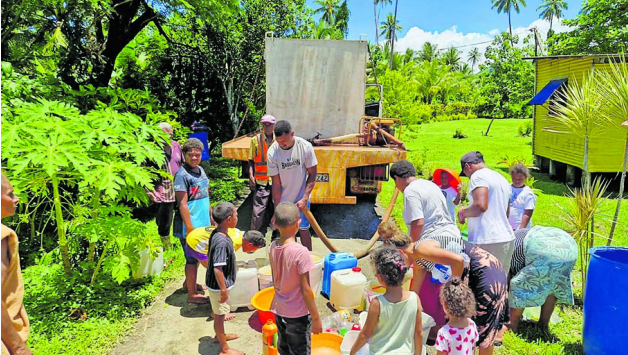
I grew up in Kashmir, Lautoka, where the arrival of a water truck could feel like the most important event of the day. After a cyclone, our taps could stay dry and the electricity disappear for days, sometimes weeks. We waited with bated breath, drums and buckets ready, listening for the engine that meant we could collect enough water to survive another stretch. I remember doing homework beneath streetlights when our house had no power, making do with whatever light was available. These are not charming stories of a simpler Fiji; they are memories of a child learning how quickly ordinary life can become a struggle.
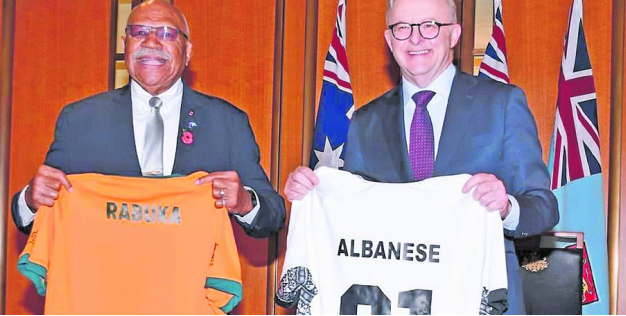
That is why I felt something difficult to describe when I read Prime Minister Sitiveni Rabuka’s response to concerns about El Niño, food shortages and rising prices. Asked whether he was worried, he reportedly replied: “Are people dying? No. We can manage.” He later explained that agencies were increasing assistance and that he did not believe an emergency declaration was necessary at that stage. Context matters when holding public figures accountable for their words. But to someone who has waited beside an empty drum, those words sound like an insult to the child I once was in Kashmir.
What a desperately low threshold for recognising suffering. A person can be alive and still be hungry, frightened, exhausted or unable to maintain basic hygiene. A family can survive a drought and emerge poorer, sicker and further in debt. A child can return to school carrying the shame of arriving unwashed or the fatigue of another interrupted night. Death is not the only measure of a disaster, and survival is not proof that people have been protected. How much suffering must become visible before it counts?
The warning signs are not abstract. On November 3, Parliament was told that 19 of the Water Authority of Fiji’s 44 operational water sources had reached critical levels by November 1. About 24,600 people were experiencing intermittent supply or relying on water deliveries, with the Western and Northern divisions at the crisis-response stage. These figures cannot explain every family’s circumstances, but they show the scale of the pressure. Behind each disruption is someone making decisions that people with dependable taps seldom have to consider.
I keep thinking about our elderly, particularly those who have spent a lifetime carrying burdens that the rest of us now describe in policy documents. Imagine being an older person whose knees ache and who must lift a heavy container just to have water inside the house. Imagine managing medication, bathing and meals while worrying whether the supply will last until tomorrow, too embarrassed to ask a neighbour for another bucket. Some live alone; others depend on relatives struggling with the same shortages. Asking them simply to endure is not respect for their generation; it is asking them to pay again for failures they did not create.
Then there are our farmers, whose losses often begin long before anyone notices a change at the market. I grew up in the West, where cane fields were never merely scenery along the road. They represented wages, school expenses and family obligations, all exposed to the weather. Recent reports describe depleted boreholes, difficulties preparing land and crops withering before harvest. For a farmer watching the soil crack, reassurance cannot replace rain, a working water source or income already slipping away.
A failed planting season does not end when the skies finally open. It can mean borrowing to buy seeds again, delaying repairs, selling livestock or telling a child that something must wait. By the time shortages reach supermarket shelves, growers may already have absorbed months of losses. We have a habit of calling farmers hardworking while treating their insecurity as an unavoidable feature of rural life, as though their sacrifice belongs to the national economy, but their suffering belongs to them alone. Their livelihoods need practical protection, not gratitude offered after the damage is done.
And what of the poor, for whom every crisis arrives at a house already struggling to stand? A household with savings can buy a storage tank, arrange transport or stock up when supplies are available. A family surviving from one pay to the next may have no such choice. Water shortages can mean missed shifts, extra expenses and hours spent waiting instead of earning. Conserving water is necessary, but pretending everyone has equal capacity to withstand scarcity is profoundly unfair.
We cannot ignore the health consequences either. In September, the Ministry of Health reported increased diarrhoea cases on Batiki Island amid severe water shortages and sent an emergency team to protect residents, including children at the boarding school. That response recognised the risks before they became even worse. Illness linked to unsafe water does not need to become a fatality before it deserves urgency. Prevention should be our standard of success, not the absence of funerals.
To be fair, the government and frontline workers are not sitting idle. Officials have described water deliveries by road and sea, dozens of trucks deployed and plans for worsening conditions. I am grateful to those driving the trucks, repairing pipes and carrying supplies in punishing heat. Acknowledging their work does not weaken criticism; it makes that criticism more precise. If emergency assistance is already being mobilised, national leadership should speak with the seriousness its frontline response demonstrates.
Nor can El Niño be switched off by political will. Fiji cannot command the clouds to open, but it can strengthen storage, repair leaks, publicise delivery schedules and fund support before households reach desperation. Authorities can prioritise older people, those with disabilities, schools, clinics, farmers and families without transport. They can report honestly what is working and where assistance has not arrived. People should know who to contact when a promised truck does not come, rather than being left to wait in uncertainty.
A declaration of emergency is a legal and administrative decision, not a slogan. It deserves assessment against actual conditions, operational needs and available resources, rather than against whether anyone has died. Citizens deserve a clear response plan, transparent reasons for decisions and evidence that vulnerable households are being reached. We need assistance that arrives before suffering becomes irreversible. That is the purpose of preparedness: to prevent the worst rather than count the casualties afterwards.
I still carry the uneasy pride we were taught to take in hardship. We were told to be patient, grateful and tough because other people had it worse. We learned to celebrate small reliefs, like a light coming back on or water finally reaching a drum. But adulthood has taught me something that child beneath the streetlight could not yet articulate. Honouring people’s resilience must never become an excuse for leaving them to endure conditions they should not have to face.
Perhaps the prime minister meant to reassure the nation, not diminish its hardship. I can accept that possibility and still say the words fell painfully short. Leadership sounds different to someone with a reliable tap and someone waiting beside empty containers. The latter do not need to be told they can manage; they have been managing for years. They need to know their struggle matters before it becomes a tragedy.
Sometimes I think of that little boy in Kashmir, his homework open beneath a streetlight, hoping the water truck would come soon. He did not know the language of climate resilience, infrastructure deficits or emergency preparedness. He knew his family needed water, that darkness made studying harder and that waiting could swallow an evening. He was alive, yes, and he survived those days. Prime Minister, that was never the point.
n ASHNEEL JAYNESH PRASAD is a Fiji-born New Zealand citizen currently working as a teacher in Tokyo, Japan. The views expressed in this article are his and do not reflect the views of this newspaper.