
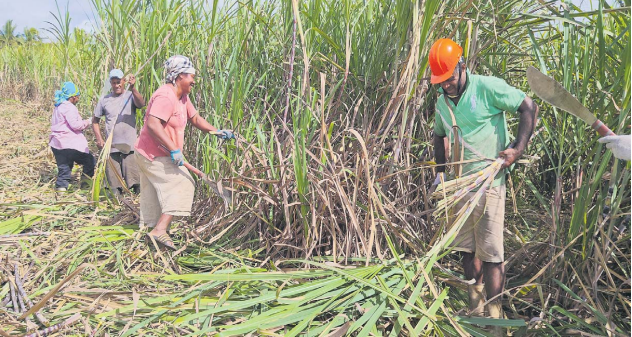
THE debate over Fiji’s sugar industry has reached a watershed moment. It is no longer defined merely by declining cane production or ageing infrastructure, but by a profound crisis of institutional legitimacy. As public concern intensifies, the FSC has increasingly contested fundamental data points — including capital injection figures and executive remuneration packages — while growers remain locked in a system that many argue has ceased to prioritise their livelihoods.
These widening gaps in institutional transparency and official public records confirm that we have reached an impasse. The only mechanism capable of transcending these competing narratives is an independent, legally empowered Commission of Enquiry (CoE). Such a commission would not merely act as an arbitrator of conflicting data; it would provide the forensic, statutory rigour required to reconcile these institutional discrepancies and establish a factual foundation for the industry’s future.
The Arithmetic of Bankruptcy vs. The Need for Truth
The industry is currently defined by conflicting financial realities. On one hand, growers face a “bankruptcy-by-design” cost structure: with mechanical harvesting and cartage costs now dominating the profit margin, the guaranteed price of $85 per tonne frequently fails to cover the basic costs of production. On the other hand, debates regarding state support — such as the reportedly $1.7million grant previously attributed to the Lautoka-Tavua rail line reactivation — remain a point of intense public and legal contention. The FSC has formally contested the receipt and allocation of such funds, despite media reports. Rather than weakening the case for an inquiry, this contest strengthens it. A CoE is specifically empowered to subpoena internal financial ledgers, audit trails, and government transfer records to definitively clarify whether these funds were allocated, where they were directed, and why, if they were received, the infrastructure failed to remain operational. The public deserves to know if this was a failure of management, a diversion of funds, or a miscommunication in government reporting.
The institutional capture
of the cane belt
The collapse of the industry is fundamentally a story of governance capture. For decades, the Sugar Cane Growers Council (SCGC) served as the primary check on FSC power, ensuring grower participation in policy and pricing. However, with no elections held since 2004, the council has been rendered effectively impotent.
In its absence, the FSC has operated with unilateral authority — having great influence as the miller, the price-setter, the transport-mode arbiter, and the ultimate judge of its own performance. The CEO of FSC, Bhan Pratap Singh, has now floated the idea of closing the Lautoka mill and gravitating towards one single mill. Most likely the Rarawai Mill, in Viti Levu to the Parliamentary select committee. This concentration of power has allowed for questionable strategic choices, such as the pursuit of uneconomic ethanol plants and the centralisation of juice extraction, while FSC debt reportedly amounted to $443million. Perhaps most galling to the public is the disparity between executive remuneration and industry reality: some senior executives have earned $840,000 annually, complemented by $10,000 in monthly accommodation costs at Denarau, while growers waited 18 months for full payment of their crops, with the fourth payment amounting to mere $0.84 per tonne, paid recently this year for the 2025 crop.
It must be clarified that the present CEO of FSC Bhan Pratap Singh reportedly receives much less than the former CEO Abdul Khan and no insinuation was ever made that he was getting a ‘rocket scientist’ level of pay. The FSC legal officer has requested the author to clarify this point. However, the specific salary of one individual is not the singular issue. The more critical governance question pertains to the structure of executive roles and the history of appointments. The CoE must investigate systemic issues, including reports regarding the consolidation of multiple high-level positions by former executive Abdul Khan. The goal of the CoE is not to target individuals, but to evaluate the governance framework that allows such concentrations of power, which may lead to unilateral decisions being made impacting the entire industry, without effective board oversight or transparency.
The strategic failure of transport
The dismantling of the rail network serves as a case study in failed public administration. The argument that rail was “retired” due to commercial obsolescence is increasingly contradicted by the logistical and economic reality: rail transport historically provided a cost-effective, high-volume delivery mechanism.
The systematic degradation of this infrastructure — exemplified by the case of Terry Hulme, who documented the encroachment of car parks, fencing, and private construction over vital tramlines — is not an accidental byproduct of time, but a result of failed stewardship. By allegedly failing to file reports with the police or assert property rights over freehold land, the FSC effectively presided over the liquidation of a national asset. A CoE must examine whether this degradation was the result of a calculated “strategic transfer” of costs onto the grower, effectively forcing the transition to lorry transport to benefit private contractors at the expense of long-term industry sustainability. By allowing the rail infrastructure to vanish — with tramlines being paved over for car parks or fenced off by commercial interests — the FSC effectively transferred the entire cost of transport onto the grower. This shift alone explains why farmers have abandoned their fields; when cartage costs reach $37.62 per tonne, compared to the near-zero cost of the rail era, the economics of cane farming collapse. An independent investigation must treat this not as an accidental decay but investigate if it was a deliberate and damaging strategic transfer of costs.
Formal Terms of Reference (TOR)
The commission shall be mandated to perform the following with full statutory powers to compel evidence:
1. Verification of Financial Injections: To perform a comprehensive audit of all government grants, debt-restructuring funds, and state-backed guarantees provided to the FSC since 2006, specifically investigating discrepancies between public government disclosures and internal FSC financial records.
2. Forensic Review of Remuneration Structures: To evaluate the history of executive remuneration packages, including the consolidation of concurrent roles, secondary benefits, and the use of external consultants, to determine their alignment with corporate governance standards and the FSC’s financial performance.
3. Investigation into Infrastructure Degradation: To investigate the decision-making process—or lack thereof—that permitted the systemic loss of the rail network, including an assessment of whether FSC executives failed in their fiduciary duty to protect corporation-owned assets from private encroachment.
4. Audit of Institutional Oversight: To review the current governance framework, including the appointment processes for the FSC Board and the efficacy of the Sugar Cane Growers Council and the Sugar Cane Growers Fund, specifically addressing why the democratic representation of growers has remained suspended for over two decades.
5. Economic Impact Assessment: To compare the total lifecycle costs of the current road-haulage model against the historical rail-haulage model, accounting for national fuel consumption, foreign reserve depletion, and the direct cost burden imposed on individual growers.
6. Institutional Restoration and Governance Reform: To develop a comprehensive recovery plan aimed at reinstating the independence of the industry’s original governing bodies. This includes recommending the removal of government-appointed positions and the restoration of a traditional, autonomous Sugar Board structure.
7. Democratization of Grower Representation: To establish a clear legal and procedural framework for the immediate reinstatement of free, fair, and transparent democratic elections for the Sugar Cane Growers Council, ensuring that the industry’s leadership is directly accountable to the growers whose livelihoods it serves.
A path toward rebuilding
Fiji’s sugar industry is currently being managed through a series of conflicting assertions, legal threats, public frustration and grower discontentment. This is not a sustainable path. By demanding a Commission of Enquiry, we are not asking for a post-mortem; we are demanding the diagnostic tools required to perform a legitimate recovery.
If the FSC and its leadership are confident in their financial stewardship and operational decisions, they should be the first to welcome an independent, transparent, and legally binding review. A CoE will finally allow the industry to move beyond the blame game, resolve the factual discrepancies, and focus on the singular, shared goal: ensuring that the sugar industry remains a viable, dignified, and productive sector for 300,000 Fijians who still depend on it.
Dr Sushil K Sharma BA MA MEng (RMIT) PhD (Melbourne) — World Meteorological Organisation (WMO) Accredited Class 1 Professional Meteorologist. Former British Aerospace, The Royal Saudi Air Force and Bahrain Air Navigation Directorate Aviation Meteorologist. Former Associate Professor of Meteorology, Fiji National University, and Operational Meteorologist and Manager, Climate Research and Services Division, Fiji Meteorological Services.

