
I USED to think I had stopped going back to Fiji because life simply became busy. There was always another school term to finish, another country to move to, and another flight to book. I told myself I would go next year, treating it like a familiar promise that I almost grew to believe. But the older I become, the more I realise that excuse was never the real reason. The truth is far quieter than that, and it is simply that I slowly ran out of doors to knock on. When I was younger, Fiji was never just a country; it was a collection of people waiting with open arms.
One by one, those voices turned into memories while life kept moving forward around us. Funerals happened quietly, photographs replaced conversations, and birthdays slowly transformed into painful anniversaries. The chairs they once occupied remained empty, but the people who filled them were gone. Nobody prepares you for the day when you realise that you have quietly become the generation you once looked up to. As children, we thought our grandparents had always been old, never imagining we would carry the family stories ourselves.
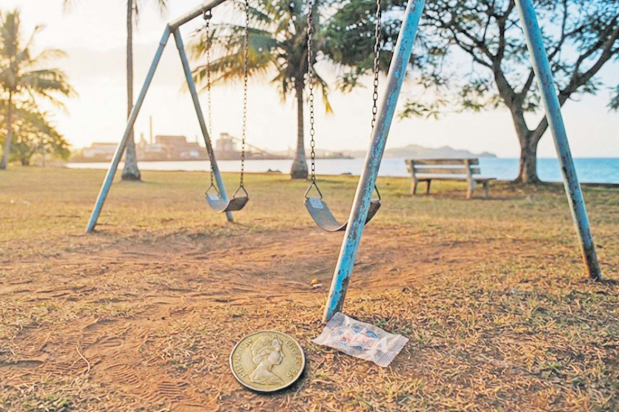
Change is life doing exactly what it has always promised to do by making children adults and grandparents photographs. Streets grow busier, shops disappear, new ones open, and homes change hands with the rhythm of every family. Recognising that truth doesn’t make it hurt any less, though, because it simply leaves a quiet emptiness behind. Sometimes I close my eyes and I can still see our family van pulling up beside Children’s Park in Lautoka. My brother and I would race towards the swings while Mum reminded us not to wander too far, ordinary afternoons that now feel priceless.
Nobody tells you that the ordinary moments are the ones you will spend the rest of your life trying to remember. My childhood was never extravagant, built instead on simple things like polishing my black Bata school shoes on a Sunday evening. It was listening to the radio top countdowns, walking through Kashmir, and trading a twenty-cent coin for sweet barfi. Those moments were never remarkable to anyone else, but they quietly became the foundational bricks of who I am today. At the time, I never stopped to appreciate any of it because children don’t know they are living memories.
Only adulthood teaches you that last times almost never announce themselves before they slip away from your grasp. You experience the final bedtime story, the last family photo, and the last meal cooked by your grandmother without knowing they are endings. Then one day you spend years wishing you had recognised those fleeting moments for what they truly were. Perhaps that is why memory is so strange, because it never arrives when you ask for it and instead ambushes you. A familiar smell or the taste of condensed milk instantly transports you back to when everyone was still alive.
As migrants, we often say we miss our homeland, but I have begun to wonder whether we actually miss the country at all. Countries continue without us as roads are resurfaced, buildings are painted, and children are born into a new rhythm. Perhaps what we truly miss are the versions of ourselves that only existed back then under that specific sun. I miss the little boy who had no idea how quickly childhood could disappear or that his parents would ever age. That is the hardest part about growing older, because you don’t just lose people, you lose entire versions of yourself.
Sometimes people ask me why I don’t visit Fiji anymore, and I usually just smile and say life is busy. It is much easier than explaining the truth, which is that every visit only reminds me of who is missing. Aaja, aaji, nana, nani, mama, mami, fua — all have gone. Whose door should I knock on now? The homes still stand and the sugarcane still bends with the wind, but the people who made those places home are gone. You can return to an address, but you can never truly return to a moment in time. That is the quiet grief of growing older, where you still laugh and celebrate while a room inside remains furnished with ghosts.
I have come to realise that this bittersweet ache is not unique to me, as every family eventually reaches this exact point. Every generation inherits the stories of the one before it and eventually becomes the adult they once admired. Perhaps that is why I find myself paying closer attention these days to ordinary conversations and routine family dinners. One day, these exact moments will be all that remain of our shared lives, preserved only in the amber of our minds. Life has become a collection of unexpected reminders like an old photograph tucked inside a dusty drawer.
And maybe that is what home truly becomes in the end, far beyond a country, a street, or a physical house. It is the quiet realisation that the geography of our youth was just a beautiful backdrop for the people we loved. Home becomes the family who loved you so completely that, decades later, you can still feel them walking right beside you. They stay with you, guiding your steps, even after every door they once opened for you has quietly and permanently closed.

