
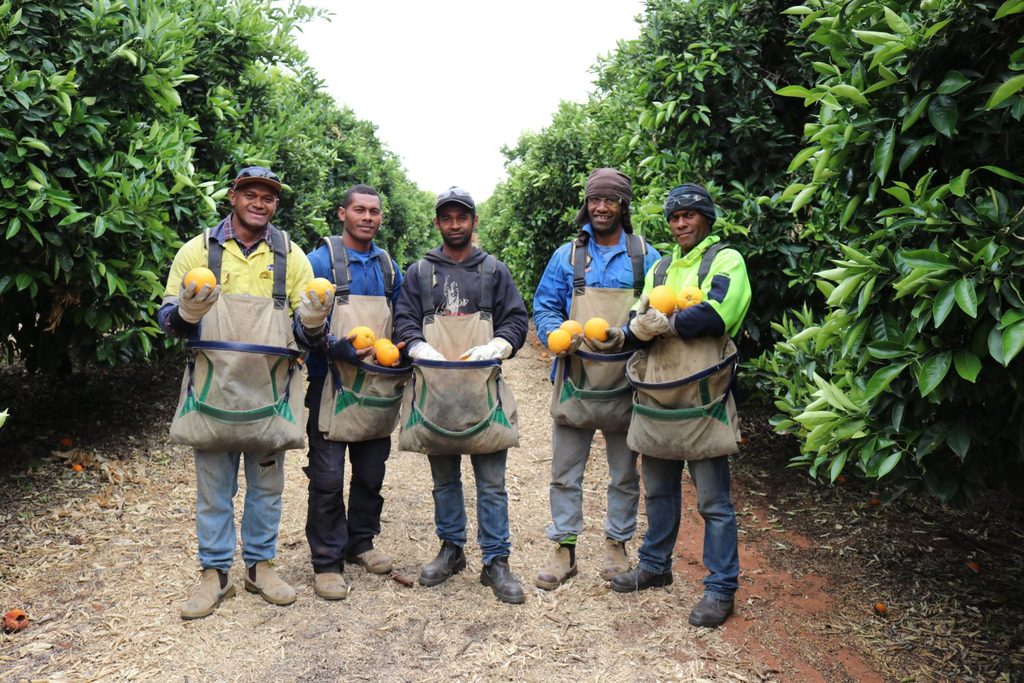
THE recent comments by Fiji’s Minister for Employment (FV 05/07/26) regarding workers who abscond under the Pacific Australia Labour Mobility (PALM) scheme have reignited discussion on one of Fiji’s most important labour mobility arrangements.
The Minister’s warning that workers who breach conditions may be barred from future participation reflects a compliance-focused approach to labour management.
However, the issue extends far beyond enforcement mechanisms. PALM has evolved into a structural pillar of Fiji’s labour market and household economy, shaping income distribution, family life, and long-term development pathways.
A deeper examination reveals that the scheme is not merely about worker compliance, but about economic dependency, social transformation, and the sustainability of remittance-driven development.
Regional labour mobility framework
The PALM scheme is part of a broader Australia-Pacific labour mobility framework designed to address structural labour shortages in agriculture, meat processing, hospitality, and aged care.
Australia faces persistent demographic pressures, including an ageing workforce and regional labour deficits. Fiji, meanwhile, benefits from access to overseas employment opportunities that generate foreign exchange and household income.
According to Australian Department of Employment data, Pacific labour mobility has expanded significantly since 2019, with Fiji consistently among the largest participants.
Remittances and economic dependence
Remittances from overseas workers have become one of Fiji’s most significant external income streams, exceeding $1 billion annually in recent years according to Reserve Bank estimates.
These inflows support household consumption, education, housing construction, and small business activity.
However, economists have long noted the risk of dependency effects, where remittances substitute rather than supplement domestic economic activity. In some communities, labour participation rates decline as households rely on overseas income streams.
While remittances reduce poverty in the short term, they may also distort local labour incentives and create long-term structural dependence on external earnings. The economic question is therefore not volume alone, but sustainability and productivity impact.
Why workers abscond
Worker absconding under PALM is frequently framed as rule-breaking, but international labour studies suggest a more complex set of drivers.
These include wage differentials across employers, poor working conditions, housing concerns, lack of workplace flexibility, family pressures, and misinformation during recruitment.
The Australian Fair Work Ombudsman has previously identified cases of exploitation within segments of temporary labour programs, which can influence worker decisions to leave approved employment. In most cases, absconding is not random but linked to economic rationality or unmet expectations.
A purely punitive response therefore risks addressing symptoms rather than causes.
Enforcement limitations
The Minister’s position that absconding workers may be barred from future participation reflects standard compliance policy.
However, its practical effectiveness is limited once a worker has already entered Australia and left their designated employment.
At that point, exclusion from future participation offers little immediate deterrent effect.
Enforcement becomes administratively difficult, particularly when individuals transition into informal employment or move between sectors.
Labour mobility research suggests that preventive measures—such as stronger onboarding processes, improved employer monitoring, and worker support systems—are more effective than retrospective sanctions.
Family and social strain
Long-term overseas employment under schemes such as PALM has documented social consequences, particularly relating to family separation.
Extended absence of one or both parents can place strain on marital relationships, child development, and household stability.
Academic studies in Pacific labour mobility contexts have noted increased emotional stress within families and shifting caregiving structures.
While not universal, these risks are structurally embedded in long-duration migration programs.
In some cases, reintegration challenges arise when workers return after extended absence, requiring social and psychological adjustment.
Gender and relationship dynamics
A further dimension of overseas labour mobility relates to gender and relationship dynamics.
Research across multiple Pacific migration programs has identified instances of relationship disruption associated with prolonged separation.
While outcomes vary widely across individuals, structural conditions such as distance, isolation, and social disconnection can influence personal relationships.
These issues are not unique to PALM but are characteristic of temporary labour migration systems globally.
A balanced analysis must therefore acknowledge both economic benefits and relational costs without generalisation or exaggeration.
Labour market distortion risks
An emerging concern in Fiji is whether large-scale labour migration may be influencing domestic labour market participation.
As overseas wages become significantly higher than local earnings, there is increasing incentive for workers to seek external employment pathways.
While this improves income flows, it may also contribute to domestic skill shortages in key sectors.
Over time, this can create structural imbalances between domestic workforce availability and external labour demand, requiring careful policy calibration.
Institutional capacity and oversight
Effective management of the PALM scheme requires strong institutional coordination between Fiji and Australia. Fiji’s liaison officers in Australia play a critical role in monitoring worker welfare and addressing employment issues.
However, the scale of participation—now involving thousands of workers annually—places significant pressure on monitoring systems.
Ensuring compliance, tracking mobility, and supporting workers across dispersed geographic locations remains a logistical challenge.
Strengthening data systems, employer accountability, and bilateral coordination mechanisms will be essential to improving program integrity and reducing instances of non-compliance.
Long term structural outlook
The long-term trajectory of the PALM scheme raises broader questions about Fiji’s development model.
While remittances provide substantial short-term economic support, reliance on external labour income can create vulnerability to policy changes in host countries.
Australia’s labour needs may evolve with automation, migration policy shifts, or economic cycles.
Fiji’s challenge is therefore to balance immediate income benefits with long-term domestic economic development.
Policy balance
The PALM scheme remains one of Fiji’s most significant economic linkages with Australia, delivering substantial benefits in income, employment, and foreign exchange.
However, it also generates complex social and structural effects that extend beyond labour mobility.
Issues such as worker absconding, family separation, dependency risks, and domestic labour market distortion require careful policy attention.
A more comprehensive approach focusing on worker welfare, institutional strength, and domestic economic resilience is required.
The future of PALM will depend not only on compliance mechanisms but on its ability to remain socially sustainable and economically balanced for both Fiji and Australia.
Dr Sushil K Sharma BA MA MEng (RMIT) PhD (Melbourne) is a former World Meteorological Organisation (WMO) Accredited Class 1 Professional Meteorologist. Former British Aerospace, The Royal Saudi Air Force and Bahrain Air Navigation Directorate Aviation Meteorologist. Former Associate Professor of Meteorology, Fiji National University, and Operational Meteorologist and Manager, Climate Research and Services Division, Fiji Meteorological Services. The views expressed in this article are those of the author alone and do not represent the views of this newspaper.

