
FIJI seems to be facing a growing crisis that can no longer be ignored.
Across the country, residential fires are increasing at an alarming rate, destroying homes, livelihoods, and in some cases, entire families.
From Nausori and Lautoka to Nadi and Labasa, fires are spawning headlines in the news. What was once considered an occasional tragedy is now slowly developing into a serious national concern.
The painful truth is that many of these fires are preventable.
Recent reports from the National Fire Authority (NFA) continue to identify unattended cooking, faulty electrical wiring, overloaded power outlets, unsafe use of gas and kerosene stoves, and general carelessness as major causes of residential fires in Fiji. Despite repeated warnings and awareness campaigns, the number of fires continues to rise.
One of the greatest concerns is the structure of many homes in Fiji, particularly in villages and informal settlements. A large number of houses are built closely together using timber and pine materials. Once a fire starts, it spreads rapidly from one home to another. Within minutes, years of hard work, sacrifice, and memories can disappear forever.
I came to understand this harsh reality only recently when my own family experienced the trauma firsthand.
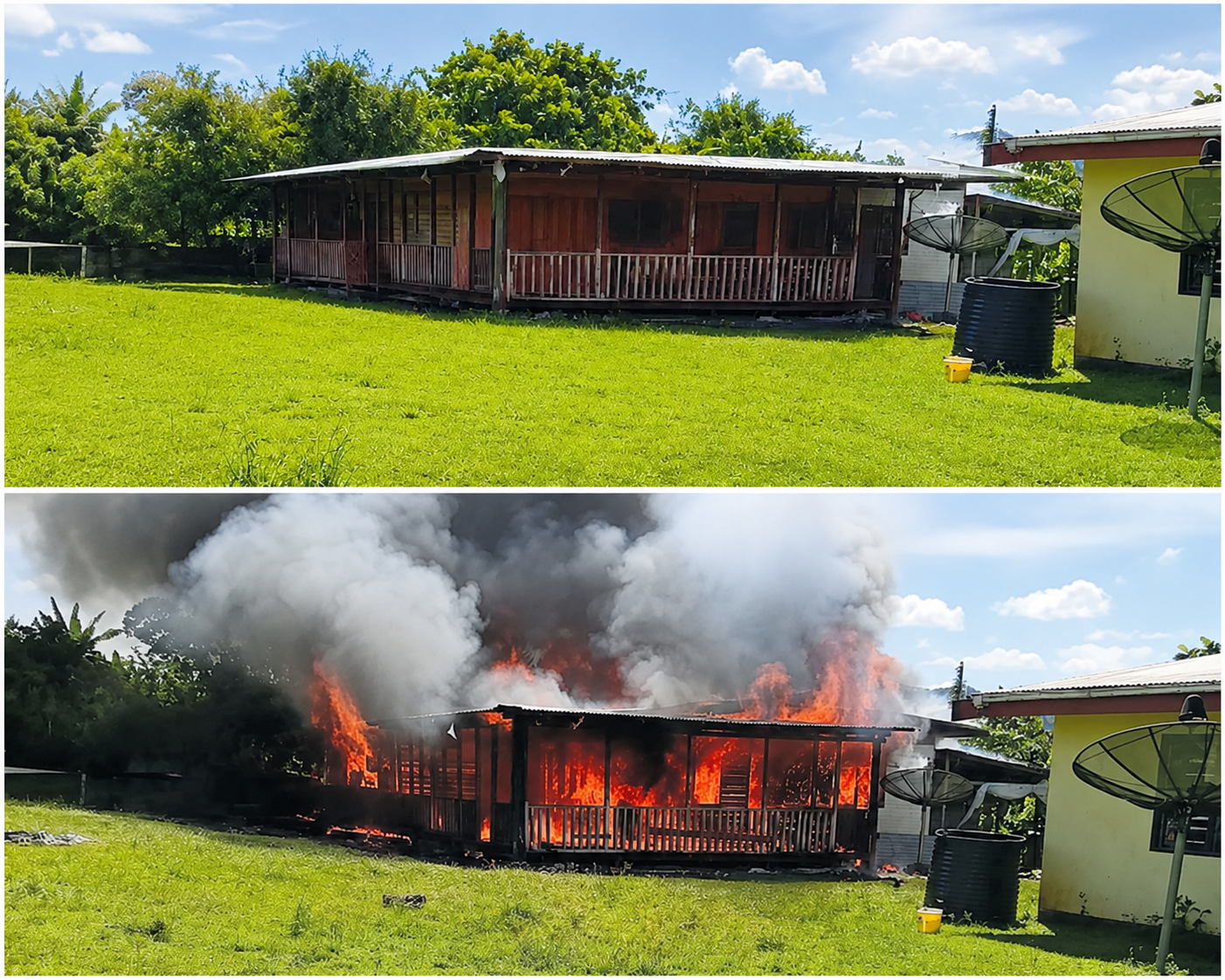
On May 12, my cousin’s three-bedroom falekau (Prefabricated homes) in Nabukelevu Village caught fire. At first, the flames seemed small, but within minutes they spread aggressively through the pine timber walls and roof. Family members rushed outside in confusion and panic as the fire quickly swallowed everything inside the home.
The scene was heartbreaking.
Children stood crying in fear while adults watched helplessly as years of hard work vanished before their eyes. Important documents, clothes, furniture, family photographs, school books, and personal belongings were all destroyed. Nothing could be saved. The emotional pain on my brother’s face that day was something I would never forget.
At that moment, it became clear to me that fires does not only destroy property. It could destroy peace, security, stability, and sometimes hope itself.
We often watch house fires through Facebook videos or hear about them in the news and feel sympathy for the victims. But when it happens to your own family, the experience becomes completely different. The pain becomes personal. You begin to understand the emotional trauma that families carry long after the flames are gone.
This is the hidden side of Fiji’s growing fire crisis that statistics often fail to capture.
Behind every fire report is a family struggling to rebuild their life from nothing. Some lose homes they spent decades building. Others lose loved ones. Many are left traumatised, financially devastated, and emotionally broken.
Recent incidents across Fiji show how serious the situation is becoming. In Baulevu near Nausori, five lives were tragically lost after a house fire reportedly caused by unattended cooking.
In another incident in Nadi, multiple families were left homeless after fires destroyed their homes within minutes. These stories repeat across the country.
The question Fiji must now ask is simple: Are we doing enough to prevent these tragedies before they happen?
If the current trend continues, Fiji could face even greater challenges in the coming years.
Rapid urban growth, overcrowded settlements, illegal electrical connections, aging wiring systems, and increasing pressure on infrastructure may contribute to even more dangerous fire situations. Climate conditions such as hotter temperatures and strong winds may also worsen the spread of fires, especially in communities where homes are built close together.
At the same time, firefighters continue facing major challenges while responding to emergencies.
In many areas, poor water pressure in hydrants limits the ability of firefighters to control large fires effectively. Narrow roads and congested settlements make it difficult for emergency vehicles to gain quick access. Traffic congestion in urban centres can also delay response times during critical moments. By the time firefighters arrive at some scenes, entire homes may already be reduced to ashes.
Despite these difficulties, firefighters continue risking their lives daily to save others. Their commitment deserves recognition and stronger support.
However, fire prevention cannot rest entirely on the shoulders of the NFA alone. Fire safety must become a shared national responsibility involving households, communities, schools, religious organisations, and government agencies.
Families must take greater responsibility by regularly checking electrical wiring, avoiding overloaded sockets, supervising cooking, and safely using gas and electrical appliances. Parents should teach children about fire risks and emergency procedures from an early age.
Communities, schools, and churches can also play a stronger role in promoting fire safety awareness. Awareness programs should not only happen after a tragedy occurs. Education and prevention must become continuous efforts throughout the year.
At the government level, stronger action is also necessary. Authorities should strengthen building inspections, improve electrical safety regulations, upgrade water infrastructure systems, and ensure firefighters are equipped with the resources and support needed to respond effectively to emergencies.
Too often, people only begin taking fire safety seriously after experiencing tragedy themselves. Unfortunately, by then it is already too late.
The increasing number of fires across Fiji should serve as a national wake-up call. These are no longer isolated incidents affecting only a few families. Residential fires are becoming a broader social and public safety issue that threatens communities across the country.
My family’s experience in Nabukelevu taught me one painful lesson: life can change within minutes. One small mistake, one electrical fault, or one unattended flame can destroy everything a family spent years building.
Fiji cannot afford to ignore this growing problem any longer.
Greater awareness, stronger prevention measures, improved infrastructure, and shared responsibility are urgently needed if we want to protect lives, homes, and communities in the future.
Because in the end, fire safety is not only the responsibility of the National Fire Authority.
It is everyone’s responsibility.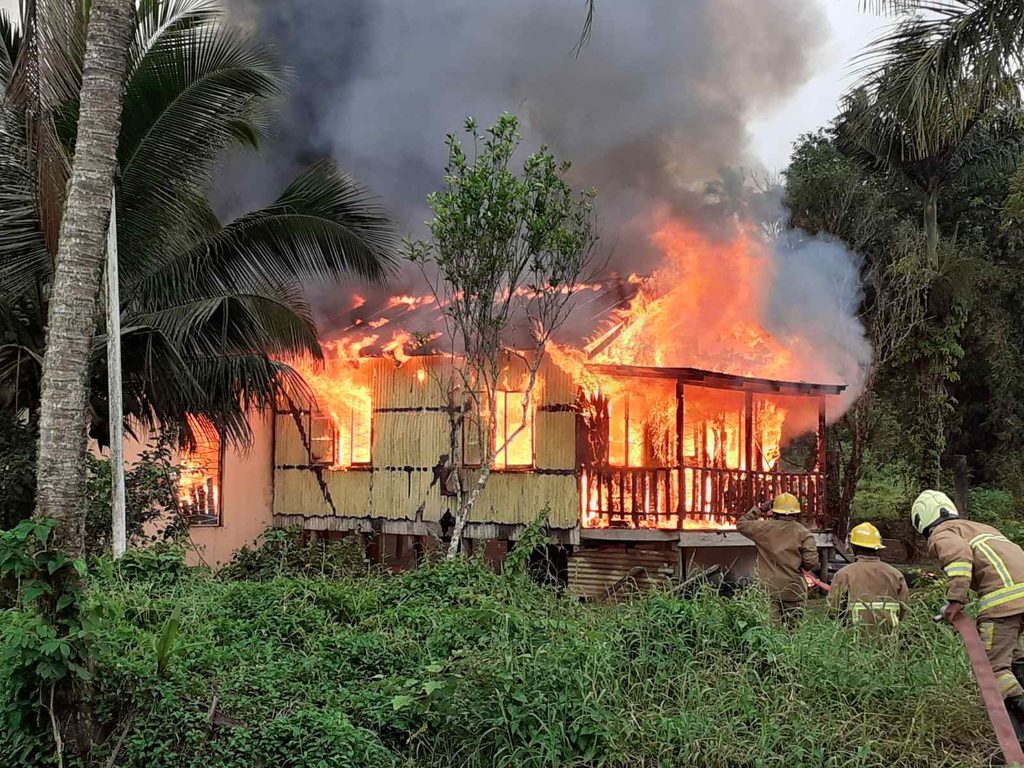
National Fire Authority firefighters attend to the house fire in Nausori. Picture: FILE/NFA

