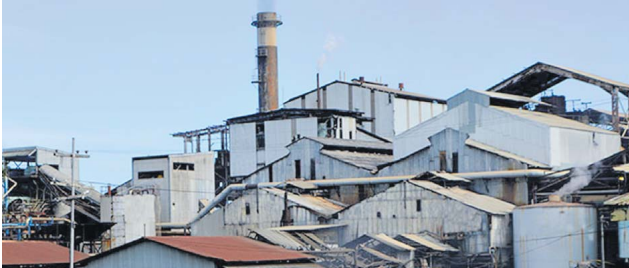
Fiji’s sugar industry is in structural freefall. Growers, contractors and taxpayers have repeatedly borne the costs of declining production, ageing infrastructure and financial instability — yet the governance failures driving that decline have attracted almost no public scrutiny. As Fiji moves toward the general election, one question must become a platform priority: Should an incoming government commit to an independent Commission of Enquiry into FSC and the systematic dismantling of the farmer institutions that once governed this industry?
On June 12, 2026, Sugar Cane Growers Council (SCGC) chief executive officer Vimal Dutt told the Parliamentary Standing Committee on Economic Affairs that farmers have no say in the industry they built and subsidised for four generations.
That admission answers the question before it is even asked.
An inheritance squandered
Between 1879 and 1916 the British colonial administration shipped 60,553 indentured labourers from India to Fiji under the girmit system to build what became Fiji’s most significant industry.
At its peak in 1996 it produced 4.38 million tonnes of cane from 74,388 hectares, supporting 22,807 registered farmers and 200,000 stakeholders.
By 2023 production stood at 1.566 million tonnes — less than forty per cent of that peak — falling a further 1.3 million tonnes in 2024 alone (Ministry of Sugar 2024). Each grower subsidises the industry with free labour worth $15,000 per season, never paid or accounted for, keeping the industry afloat.
The Girmitiya farmed this land for four generations. FSC has presided over its retreat for four decades.
How farmer democracy was abolished
The Sugar Cane Growers Council was established under the Sugar Industry Act 1984 as a fully elected umbrella body with 111 members across 37 sectors, with the Sugar Commission and Sugar Board providing independent oversight and institutional checks on FSC. The last democratic SCGC election was held in 2004 — twenty-two years ago.
In 2010 the Bainimarama administration dismissed the elected council, repealed the election provision in 2011, and abolished all 38 elected positions. The Sugar Board was abolished. The Sugar Commission was captured. FSC became simultaneously miller, price setter, first payment arbiter and transport decision maker — with no independent institution remaining to challenge any decision it made. The Minister for Sugar appointed the SCGC CEO and directed industry policy unilaterally, delivering piecemeal solutions while FSC consolidated total control. Mahendra Chaudhry also confirmed in 2024 that farmers have not had a voice since 2010 (FT 27/10/24).
30% shareholding, 100% control
FSC’s economic interest represents approximately 30 per cent of the total stakeholder equation. The growers who deliver every tonne of cane hold 70 per cent. Yet FSC has operated since 2010 as though its 30 per cent confers a hundred per cent mandate.
When FSC CEO Bhan Pratap Singh told the Parliamentary Standing Committee on June 12, 2026 that FSC is considering making Rarawai Mill the sole Viti Levu crushing facility, he presented a structural industry decision affecting 80 per cent of national cane production as a management prerogative (FT 13/06/26). It is not.
National Farmers Union general secretary Mahendra Chaudhry warned publicly that Lautoka cannot absorb the Rarawai load and farmers in Tavua and Ra would suffer severely (Fijivillage 18/05/25).
That warning was never sought. It is the pattern of an institution that has confused administrative authority with democratic mandate for 15 consecutive years.
The Rarawai gamble and the real solution
Viti Levu produces over 80 per cent of Fiji’s total cane output. Concentrating all milling into Rarawai creates a single point of catastrophic failure.
Rarawai sits on the Ba River bank and has flooded since 1886, including in 1917 and 1931.
This writer inspected the mill after 2009 and 2012 floods and argued in 2018 it must be relocated — an argument FSC never answered (FT 07/04/18). In 2025, Rarawai suffered a major fire with mechanical works at 50 per cent completion as of October 2025 (FBC 07/11/25).
Bhan Pratap Singh confirmed major boiler defects at the mill costing $150 million investment to upgrade (FT 13/06/26).
If Rarawai is abandoned for Lautoka instead, the problem is identical — one mill, one point of failure, 80 per cent of production at risk. The answer is not fewer mills. It is more, distributed mills on the India model — crushing centres at Rakiraki, Nadi and Sigatoka — closer to cane fields, eliminating flood risk concentration and drawing farmers back into an industry built to exclude them.
The rail betrayal, the debt and the price
The Master Award required FSC to transport harvested cane at no cost to the farmer. FSC abandoned that legal obligation. The rail network that once carried 70 per cent of all cane now carries less than 5 per cent. Green Rail Conversion modelling — shifting 70 per cent of the crushing season back to rail — delivers an economy-wide saving of $53m a season (FT 13/06/26), flowing directly into farmer profitability without one additional cent of government subsidy.
Meanwhile, FSC chief financial officer Anjay Sharma described the corporation’s financial position to the Standing Committee on June 12, 2026 as a “bottomless pit” — debt at $310 million after a $200.2 million write-off, operating at 27.5 per cent capacity, requesting $66 million in further government guarantees (FS 13/06/26). The SCGC CEO has not filed annual reports for four years, cannot explain an $85,000 management fee discrepancy, and holds a 70 per cent stake in a Lautoka commercial building generating zero dividends. On the farm, the $85 guaranteed price set by Bainimarama in 2018 — when diesel cost $1.54 a litre — has not moved. Today diesel stands at $4.63 a litre (FCCC 01/06/26). Against a conservative production cost of $115 a tonne, the guaranteed price is wholly inadequate.
What the next Government must do
Fiji has seen enough commissions— CRC, COI, and the FHRLC among them. This is not a call for another unenforceable process. It is a call for any party seeking a mandate at the General Election to commit within its first hundred days to:
1. A Commission of Enquiry into FSC governance, financial management, and executive conduct — independent commissioners, binding recommendations within four months, enacted within two months.
2. Restoring the SCGC election provision and convening elections for all 38 farmer representative positions within six months, with genuine board voting rights.
3. Mandating Green Rail Conversion to 70 per cent of cane throughput within three crushing seasons, funded through Australian bilateral aid and Green Climate Fund access.
4. Resetting the guaranteed price to $115 a tonne immediately, indexed to rural diesel and fertiliser prices, with FSC executive remuneration benchmarked against the Fiji Public Service Commission scale.
5. Mandating all sugar industry statutory bodies to file audited annual accounts within six months of each financial year end and table them before Parliament.
6. Directing FICAC to provide Parliament with a public timeline for the Abdul Khan investigation within ninety days.
The sugar industry is not beyond saving. The Girmitiya who built it across four generations deserved better than a frozen price, a broken rail, an unelected council and the FSC that mistakes a 30 per cent shareholding for a hundred per cent mandate. The green fields are still there. The question is whether any party seeking power at the general election has the honesty to make this a platform commitment — and the will to honour it when they win.
n Dr Sushil K Sharma is a World Meteorological Organisation (WMO) Accredited Class 1 Professional Meteorologist and former Associate Professor of Meteorology, Fiji National University, and Operational Meteorologist and Manager, Climate Research and Services Division, Fiji Meteorological Services. The views expressed are those of the author alone and do not represent the views of this newspaper.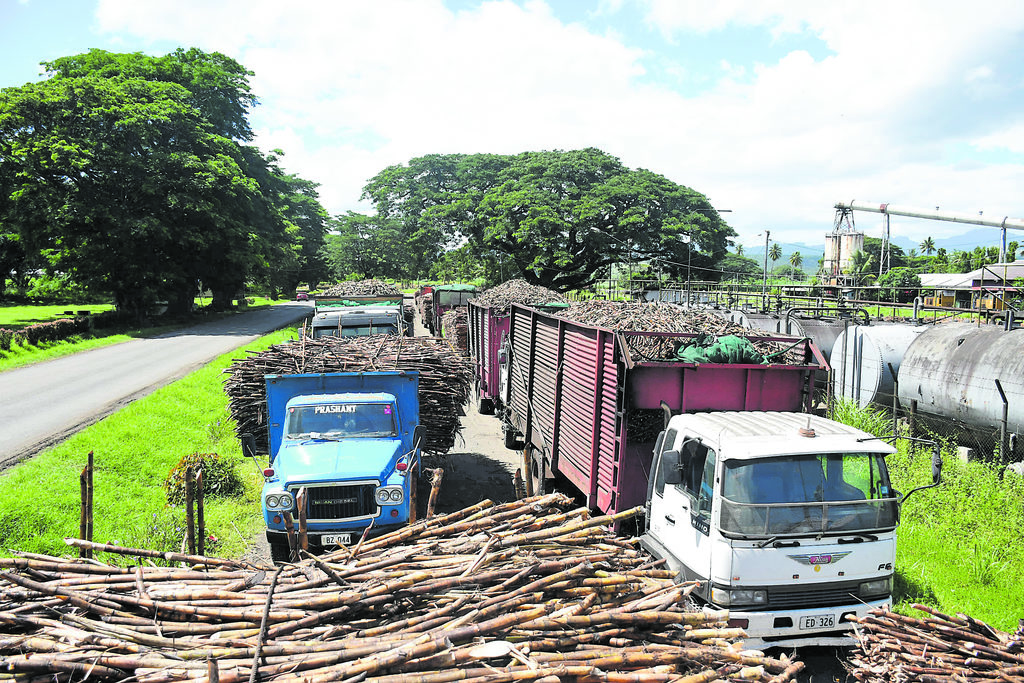
Cane trucks outside the FSC Rarawai Mill in Ba. Picture: FILE
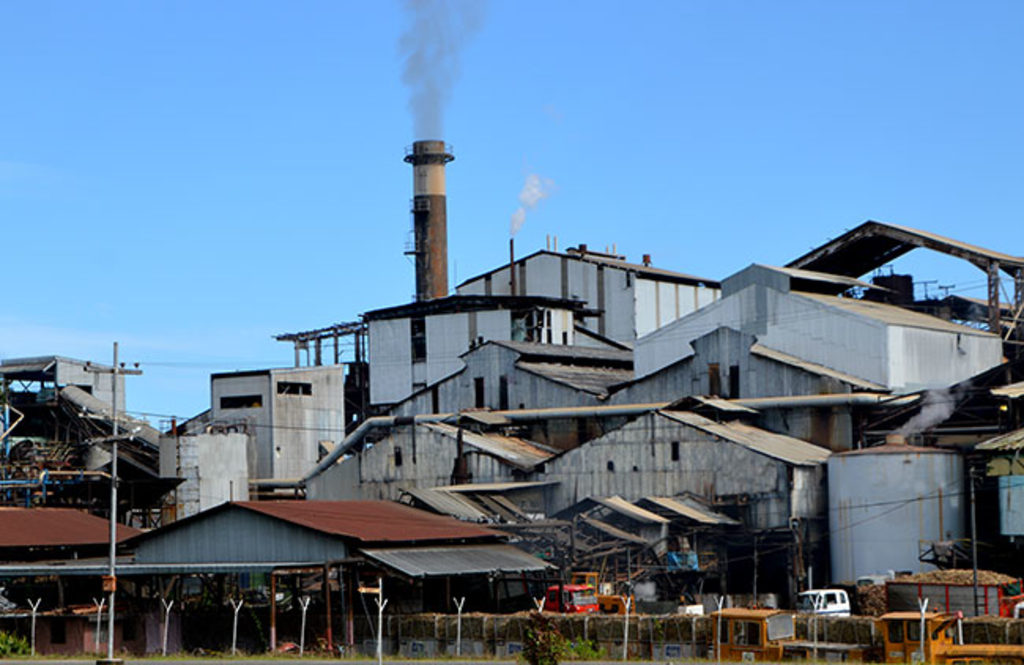
FSC’s Lautoka Mill. Picture: FSC