
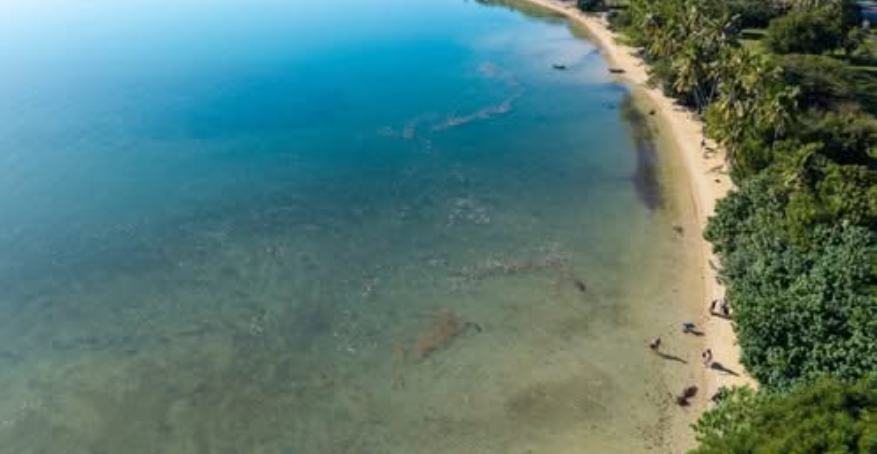
Before any major project that claims to serve the public good — especially one that burns waste near future homes, beaches, playing fields and tourism zones — there is a sacred duty. That duty is due diligence.
Due diligence is not a buzzword. It is not a box-ticking exercise. It means:
l Researching every factual data point, not just the promoter’s glossy brochure.
l Collating independent scientific analysis from multiple sources.
l Conducting fact-finding missions to real communities where identical projects have already been built.
l Making honest comparisons with countries that launched waste-to-energy incinerators — then tracking what actually happened versus what was promised.
Too often, governments and developers skip this hard work. They rely on a narrow Environmental Impact Assessment (EIA) that ignores opportunity costs.
They assume that because a technology works in a wealthy, cold-climate city with strict enforcement, it will work just the same in tropical Vuda with different waste composition, weaker oversight, and a tourism-dependent economy.
Some of the devastating effects if the proposed Waste-to-Energy incinerator is built in Vuda, Nadi, would trigger:
1. Economic devastation and lost opportunities (The “fatal flaw”)
l Kills major tourism and sports projects: The incinerator would directly block a planned 100-plus room Sofitel resort on Saweni Beach, a Fiji Rugby Union 30,000-seat stadium (with a gym, training pool, and 5-star hotel), a FIFA-backed 15,000-seat football stadium in Lomolomo, and a proposed ARL rugby league stadium.
l Destroys hundreds of high-quality jobs: Instead of 30–40 waste truck jobs, the region loses hundreds of construction, hospitality, tourism, and sports sector jobs — including leadership roles for women in rugby, football, and league.
l Turns beachfront into a “Dead Duck”: The Sofitel resort would be commercially unviable next to an incinerator, killing any chance of high-end tourism along that corridor.
2. Environmental and health impacts
l Emissions and pollution: The incinerator would release toxins (dioxins, heavy metals, particulates) into the air, affecting nearby communities, beaches, and future resorts.
l Truck traffic and noise: Increased waste-hauling trucks will degrade road safety, air quality, and the peaceful character expected of a tourism zone.
l Contradicts “Clean” branding: Fiji markets itself as a pristine destination. An incinerator near beaches and stadiums undermines that image permanently.
3. Reputational and sovereignty harm
l Becoming a dumping ground: Approving this would signal that Fiji accepts waste from Australia, NZ, and the Pacific, reversing the nation’s stance against being a regional dumping site.
l Loss of international matches: Without proper stadiums, Fiji continues to miss hosting international rugby and football games — losing revenue, pride, and development opportunities.
4. The hidden price (Opportunity Cost)
The Environmental Impact Assessment (EIA) will never show the true cost: a vibrant future of sports tourism, beachfront resorts, and thousands of sustainable jobs sacrificed for a polluting facility that serves foreign waste interests.
Call to action: The community must unite, protest vehemently, and block this venture — protect Vuda’s potential as a sports and tourism hub, not a waste corridor.
But the evidence is already out there. From Detroit to Dublin, from Taranto to Curtis Bay, communities that welcomed incinerators with hope have been left with asthma, collapsed property values, broken promises of jobs, and toxic ash they cannot get rid of.
The question for Fiji is not: “Can we build an incinerator-waste-to-energy project” ?
The real question is: “What happened everywhere else that tried?”
If we fail to compare, we fail to learn. And if we fail to learn, we condemn Vuda — and all of Fiji — to repeat the same mistakes.
1. Property value collapse – The “not in my backyard” penalty
Example: Detroit, USA
A proposed gasification incinerator in a mixed-use neighbourhood caused property values within a two-mile radius to drop by an estimated 15–25 per cent before construction even began. Homeowners couldn’t sell, banks refused mortgages, and a planned nearby housing revival collapsed. In Vuda, the Sofitel resort and stadium precinct would become unsellable to investors — no international brand wants guests breathing incinerator plume.
2. Chronic health complaints – The Curtis Bay, Maryland story
Example: Curtis Bay, USA (Wheelabrator incinerator)
Residents near this Baltimore incinerator reported asthma rates triple the national average. A community health survey found chronic coughing, nosebleeds, and headaches directly correlated with emission spikes. Despite claims of “clean burning”, the facility repeatedly violated air permits. For Vuda, imagine children at Lomolomo or Saweni villages developing lifelong respiratory illness — while tourists cancel bookings.
3. Destruction of tourism – The Taranto, Italy caution
Example: Taranto steel plant & incinerator (Ilva)
Though primarily a steel plant, its waste incineration line caused such severe pollution that beaches within 10 km were closed for years. Cruise lines removed Taranto from itineraries. A planned seaside resort was abandoned mid-construction. Saweni Beach is far more pristine—but once an incinerator is visible or smells, Fiji’s “clean green” brand evaporates.
4. Toxic ash disposal – The Copenhagen trap
Example: Amager Bakke incinerator, Copenhagen
Even Denmark’s most advanced “ski slope” incinerator produces fly ash so toxic it must be landfilled in special cells. That ash contains heavy metals and dioxins. In Fiji, where groundwater is shallow and cyclones frequent, where would that ash go? Into Vuda’s water table? Washed into the sea? No EIA answers this.
5. Community betrayal – The Oswego, New York fight
Example: Oswego County incinerator (1990s)
Promised 50 jobs and “clean energy.” Instead, neighbors reported a constant sour smell, soot on laundry, and a spike in livestock deaths. The operator went bankrupt, leaving taxpayers with cleanup costs. The jobs never materialized. Vuda’s 30–40 waste truck jobs are similarly fragile — one breakdown, one protest, and the foreign operator walks away, leaving a concrete carcass.
6. Sporting precinct killed – The Dublin lesson
Example: Poolbeg incinerator, Dublin (planned near stadium)
When Dublin proposed an incinerator just 2 km from the Aviva Stadium (rugby/soccer), the Irish Rugby Football Union threatened to relocate international matches. The incinerator was eventually built elsewhere after a decade of legal battles. Vuda’s Fiji Rugby Union has already stated: “If incinerator is established, our stadium will not go ahead.” That is a direct, irreversible loss.
7. Women and children hit hardest – The global pattern
Example: Multiple incinerators in low-income communities
Women are typically home more often (childcare, domestic work), so they bear the brunt of chronic air pollution. Children exposed to incinerator emissions show higher rates of asthma, reduced lung function, and even cognitive effects from heavy metals. In Vuda, the promised “jobs for women” in tourism (hotels, stadium hospitality, retail) would vanish — replaced by nothing but polluted air.
“We are not anti-energy. We are anti-bad choice. Every incinerator community before us has the same story: broken promises, sick children, and a future stolen. Vuda can be sports, sand, and five-star tourism — or it can be Fiji’s first waste sacrifice zone. Choose wisely”.
SEVECI TORA is former Head of Postal Services of Post Fiji Ltd and a regular contributor to this newspaper. The opinions in this piece are his personal views.

