
Fiji’s epidemic no business plan mentions: A young worker in Suva clocks in at a hotel, a mother in Nadi drops her children at school, a bus driver on the Queens Rd starts his shift. None of them appear in the health statistics, but all of them are part of the story. Fiji recorded 2016 new HIV diagnoses in 2025 — the highest annual total since surveillance began in 1989 — up from just 245 in 2022, a 723 per cent increase in three years. An estimated 8900 to 9000 people are now living with HIV, with 1.6 per cent prevalence among adults aged 15 to 49. This is no longer marginal: 67 per cent of diagnoses occur in young adults aged 20–34, the core workforce. Unless Fiji treats this as an economic emergency, it will erode productivity, swell public spending, and undermine diversification beyond tourism. The boardrooms and budget papers have been slow to notice, but the virus does not wait for policy to catch up.
The numbers: How fast is “fastest growing”?
The data is stark. New HIV infections have risen 12-fold since 2010, from fewer than 500 people living with HIV in 2014 to over 6000 a decade later. In 2024, 1583 new cases were reported; in the first six months of 2025 alone, 1226 new diagnoses were recorded. UNAIDS modelled estimates suggest the total number of people living with HIV rose from around 2000 in 2020 to an estimated 6100 in 2024, now reaching 8900–9000 in 2025–26. Around 48 per cent of people starting HIV treatment in 2024 were people who inject drugs. Compare this with the Western Pacific region, where most countries still have low, stable epidemics. Fiji is an outlier: a middle-income Pacific nation suddenly on the front line of a generalised epidemic.
Meth, needles, and the new transmission map
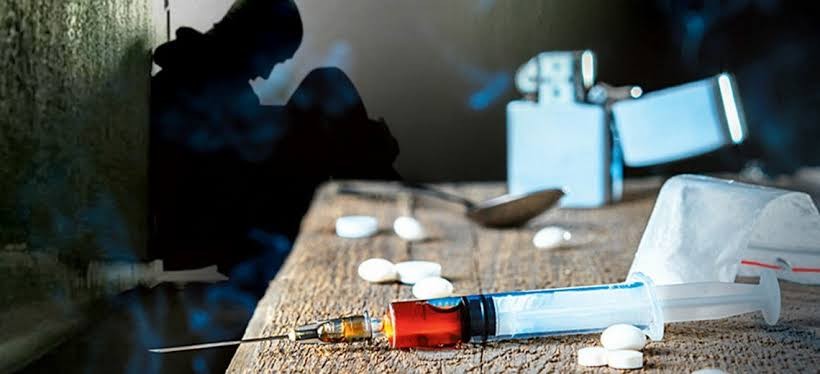
The transmission map has changed. Historically, HIV in the Pacific was framed around sexual transmission in key populations. Now, injecting methamphetamine is the dominant driver. International criminal syndicates use Fiji as a transshipment point for drugs from Southeast Asia and Latin America, feeding local markets. Risky injecting is concentrated in urban and peri-urban areas but spreading to smaller towns. Contrast this with neighbours like Samoa and Tonga, where injecting drug use remains limited and HIV cases are far lower. Fiji’s epidemic is structurally different from most of the Pacific, demanding a different response. This is not a moral failing; it is a public health and economic challenge that requires evidence-based interventions, not denial or stigma.
From clinic to balance sheet: the economic costs
The health crisis is an economic crisis. Non-communicable diseases already cost Fiji around $US263million ($F582m) a year; HIV adds a new, growing burden to a donor-reliant system. The Reserve Bank of Fiji has warned that travel advisories linked to the HIV outbreak — including from Australia’s DFAT — may impact visitor arrivals and place downward pressure on the projected 3.0 per cent economic growth rate for the year. Lost workdays and reduced productivity among young adults compound the problem. Long-term treatment costs for a chronic condition in a small population add pressure to health budgets. Potential impacts on tourism branding and investor perception emerge as international media run stories about “meth and HIV in paradise”. Compare this with Papua New Guinea, which declared HIV a national crisis in 2026 due to rising infections among women and children. Fiji is at a similar tipping point, but with a smaller economy and less fiscal space to absorb the shock.
Stigma, silence, and the hidden workforce
Stigma keeps the epidemic underground. Many workers hide their status or drug use for fear of losing jobs, housing, or family support. This drives people away from testing and treatment, worsening outcomes and increasing transmission. All participants in a WHO/UNDP rapid assessment reported reusing needles due to lack of access to sterile equipment. Contrast Fiji’s situation with global best practice: countries that have normalised HIV testing and harm reduction in workplaces see better health outcomes and lower long-term costs. Stigma is not just a moral issue; it is an economic inefficiency. When employees fear disclosure, they delay treatment, become sicker, miss more work, and infect others. Breaking the silence is not just compassionate; it is cost-effective.
Regional view: Fiji among Pacific neighbours
WHO warns of spillover risk from Fiji to other island countries via travel, labour mobility, and drug routes. Papua New Guinea has a larger epidemic, now declared a national crisis, with significant vertical transmission (mother-to-child). Solomon Islands, Vanuatu, and Samoa still have low HIV prevalence, but are vulnerable due to limited health systems and growing drug concerns. Fiji is the first Pacific nation to face a large-scale, injection-driven HIV surge. This gives it a chance to lead regionally—if it acts decisively. If it doesn’t, it risks becoming a regional warning sign: the island where denial and delay turned a manageable outbreak into a structural crisis.
Global parallels: What other small states did differently
Small island and middle-income states have faced similar shocks. Mauritius, Estonia, and parts of the Caribbean scaled up harm reduction—needle and syringe programs, opioid substitution therapy, community-based testing. Where governments framed these measures as public health and economic investments, they bent the epidemic curve and reduced long-term costs. Places that treated drug use purely as a law-and-order issue saw entrenched epidemics and higher fiscal burdens. Fiji can choose which playbook to follow. The evidence is clear: harm reduction works. It saves lives, reduces transmission, and is cheaper than treating advanced disease.
Policy and business: A practical response agenda
Concrete recommendations exist. Scale up harm reduction (needle/syringe programs, substitution therapy) as an economic investment, with clear targets and budgets. The Ministry of Health is working to rapidly introduce a needle and syringe program as part of its urgent public health response. Integrate HIV and drug-use policies in large employers (tourism, logistics, BPO): confidential testing, treatment linkage, anti-stigma training. Align donor funding, private-sector CSR, and government budgets around a costed national response that tracks economic outcomes (workdays lost, treatment retention). The Assistant Health Minister has said: “When we invest in the health and wellbeing of our young people, we are investing directly in Fiji’s human capital, productive resilience and national development.” This is a national productivity strategy, not just a health program.
The business case: Why employers should care
Employers have a direct stake. A growing share of the 15–34 age group is affected, which directly hits the core working-age population and future skills pipeline. Tourism, transport, and BPO sectors rely on young, healthy workers. HIV and drug use reduce attendance, performance, and retention. Companies that adopt workplace policies—confidential testing, treatment support, anti-stigma training—see better outcomes. British American Tobacco Fiji’s $1.5million solar investment shows businesses can lead on national priorities; similar leadership is needed on HIV. This is not charity; it is risk management. A healthy workforce is a productive workforce. The cost of inaction—absenteeism, recruitment, training, lost customers—exceeds the cost of prevention.
Choosing Fiji’s next chapter
Return to the young worker in Suva, the mother in Nadi, the bus driver on the Queens Road. They are not statistics; they are the economy. Fiji stands at a crossroads: it can be the Pacific country that confronted its HIV–meth crisis early and protected its workforce, or the one that let a health emergency become a long-term economic drag. Business leaders, unions, and policymakers must treat HIV and drug use as core economic issues, not marginal social problems. The “paradise” brand will survive only if the people who power the economy are healthy, employed, and supported. The choice is clear: invest now or pay far more later.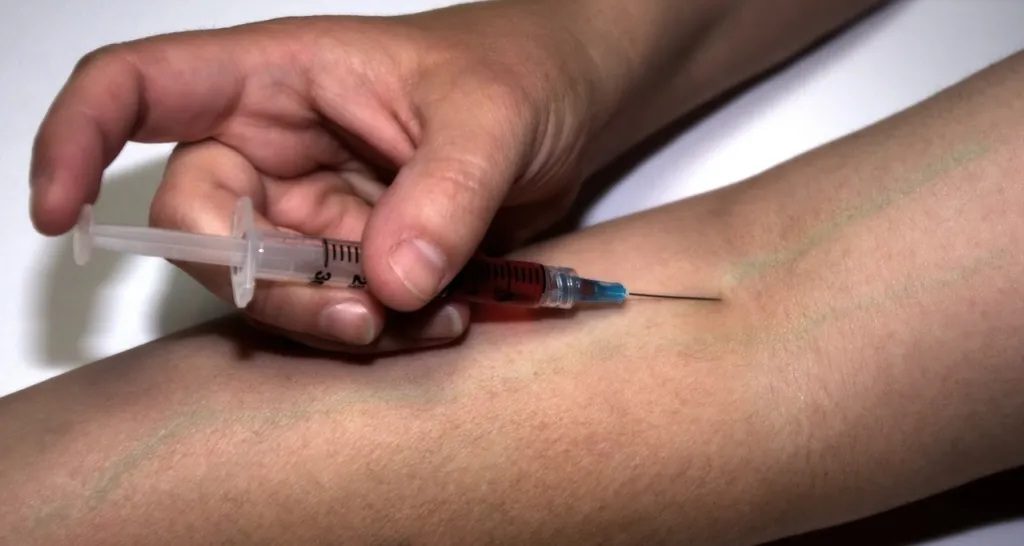
Mixture of blood and meth can be seen injected into a youth. Picture: SUPPLIED

