
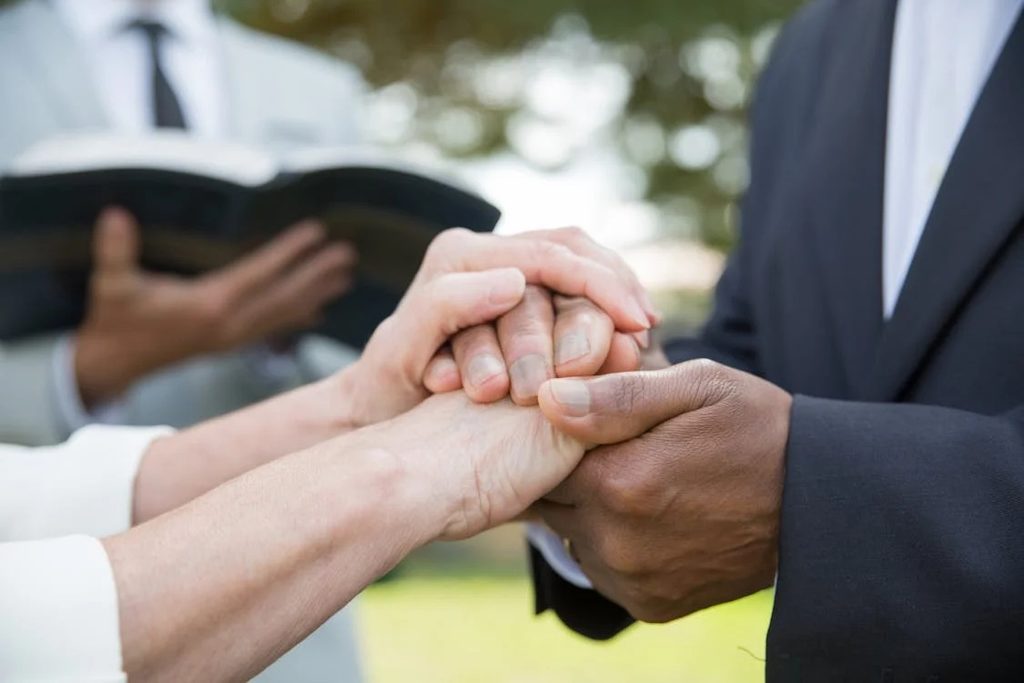
I vividly recall a time in the ’50s, ’60s, and ’70s when interracial and interfaith marriages weren’t just frowned upon; they were taboo.
Loving outside your race or religion wasn’t just a bold choice – it was a dangerous one. If you dared to cross those invisible lines, you weren’t merely judged; you were ostracised, shunned, and sometimes violently punished.
Young women bore the brunt of it. A daughter caught dating someone from the “wrong” side of the tracks could face more than just family disapproval. Physical abuse was a very real consequence. Even love between social classes wasn’t immune. A commoner falling for someone of chiefly lineage could expect the same backlash. Families turned their backs. Communities whispered. And heaven help you if the wrong people found out. The punishment wasn’t just swift; it was often a life sentence of exile.
When my wife and I started dating in the early ’70s, we felt the full force of that resistance firsthand. The criticism and cynicism didn’t just come from strangers. It came from within our own extended families. It simply wasn’t “the done thing.” People questioned us, doubted us, even tried to talk us out of it. But we weren’t the first to defy the norm, and we certainly weren’t about to back down.
We had to be creative just to exist. My best mate, a part-European, was dating an Indo-Fijian girl, while I was seeing a part-European girl. To avoid trouble, we swapped pick-up duties. He’d collect my girlfriend from her home, and I’d pick up his. Looking back, it seems absurd, almost laughable. But at the time, those small acts of defiance were necessary to navigate the minefield of prejudice and racism.
This wasn’t new to my family either. My father had shattered convention in the 1950s when, after his first marriage ended, he fell in love with an Australian woman. The price for their love was brutal. My father was expelled from the Rotary Club. My stepmother was banned from attending cocktail parties at Government House. Society made sure they felt the full brunt of their “transgression.” And in a way, they became pariahs.
But love, real love, doesn’t break. And neither did they.
Neither did we.
My wife and I have now been joyfully married for 52 years, raising two incredible sons, now men in their 40s and 50s.
But here’s the thing about time: it changes everything.
What was once unthinkable is now unremarkable and normal if you could call it that. Today, interracial and interfaith marriages barely raise an eyebrow. The battles that once required extraordinary courage are, thankfully, no battles at all.
But that shift didn’t happen on its own.
It took generations of people like my father, my stepmother, my wife, and me – who refused to conform. Who challenged outdated traditions that served no one. Who stood firm in the face of opposition, proving that love is always greater than fear and fabricated barriers.
This led me to a deeper question: Who truly pioneered the human rights movement?
A dive into history (with a little help from Google) reminded me that justice and equality aren’t modern inventions. Ancient civilisations like Babylon, China and India had early concepts of fairness and human dignity. But the real turning point came after the horrors of World War II, when the world could no longer ignore the urgent need for change. In 1948, the United Nations adopted the Universal Declaration of Human Rights, laying the foundation for the freedoms so many take for granted today.
It’s a powerful reminder that barriers, whether social, cultural, religious, political, or institutional – only hold sway if we allow them to.
We’re not bound by outdated obnoxious customs.
We’re not prisoners of racial prejudice or oppressive traditions.
We’re not shackled by the bigoted stereotyping of those who came before us.
And sometimes, all it takes to break those barriers is the courage to stand firm, love boldly, and refuse to be silenced by the venomous voices of the past.
Because dismantling oppression isn’t just a global responsibility – it starts in our own backyard.
So stand strong.
Reject every form of racism, prejudice, and discrimination.
Because real change doesn’t begin with governments or institutions.
It begins with us – you and me.

