
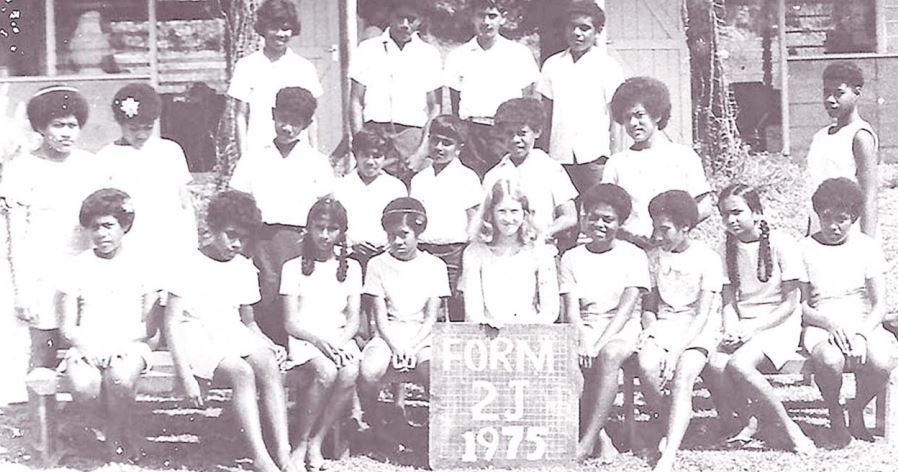
THE last article in this series on Across the divide focused on parents as our first teachers and how parental involvement in their children’s education leads to better results at school. I shared my own experiences as a Class Six student who moved schools and faced an alien and hostile environment to the
extent that I was on the verge of falling off the radar in education.
And I highlighted how my parents played a pivotal role in hauling me back on track as every concerned and responsible parent should do. Some of you have asked me either via email or in person whether the type of parents that I had highlighted was the norm or the exception at the time. I will try to answer this very pertinent question before moving further on this topic here.
Types of parent-tutors
WE need to break down the analysis to a number of socio-economic as well as ethnic categories of parents before attempting to answer the question on different categories of parents.
At the outset, it needs to be noted that the girmitiya, Indian and later Indo-Fijian viewed education
as his/her passport to success in life. This was linked to his/her origins in Fiji. The girmit background, the absolute grind to move along the path of life amid great difficulties and the realisation that they were particularly disadvantaged when it came to contracts – girmit, cane, work – gave birth to a singleminded determination to get educated as a way of overcoming the continued adversities, disadvantages and
outrages being faced in life. The various schools that the girmitiya established bear irrevocable testimony to this. Great sacrifices were made, especially before 1970, to get at least one child educated abroad – those stories are part of legend now.
There is also a little-acknowledged religious/spiritual dimension to the Indian focus on education.
This is seen in the fact that the Hindu religion that the overwhelming number of Indo-Fijians follow, is a religion of the book. In fact, it has a number of philosophically profound epics as well as shorter treatises that are read regularly and adhered to in rituals as well as in everyday life.
Those who have read these books will attest to the fact that they are not easy to read. Moreover, it is even more difficult to interpret them. Tremendous time and effort goes into becoming one who can both read and interpret these Hindu texts. Right there is found the first practical step in introducing a scholarly orientation among Hindus.
The importance placed on education from this religious perspective is clearly seen in the fact
that there is a deity (Saraswati Mata) who is especially allocated as the Goddess of Education (Music and Arts). And she enjoys a particularly elevated status because she is the consort of one of the three godheads of Hinduism – Brahma. The other two are Vishnu and Shiva. This centralisation and elevation of education in Hinduism is caught well in another episode in the epics. One day, the other two goddesses (Parvati and Lakshmi) approached Lord Vishnu to determine who was the most important of thethree. He singled out Saraswati without any hesitation. When asked to explain, he said that wealth, fortune, power, beauty, fertility and prosperity as personifi ed by Lakshmi, were in your hand one day and lost the other.
On the other hand, power, energy, nourishment, harmony, love, beauty, devotion, and motherhood as embodied in Parvati werealso ephemeral. It was only education and knowledge that stayed with us forever.
Thus, on the Indian side, there was great stock put on education as part of religious duty as well as source of security in life. However, within this category there were those who cherished and revered education and those who could not and did not for various reasons. This category left behind a generation that is still struggling with the intricacies of climbing the rungs of education as well as life. On the other hand, the ethnic Fijian did not view education in the same manner. To them it appeared more
like a privilege that was reserved for the chiefs and chosen commoners. This is why in 1970 there were so few ethnic Fijians who were ready to take up the rapidly opening civil service positions.
A second factor at play was the communal nature of life, the legal link to land and its promises and the security offered therein for simply being Fijian. Education, in comparative terms, did not need to be a priority.
Given that historical background, the parents of 1970-1990 did have different orientations on their roles in their children’s education. Indo-Fijian parents like mine were driven by a desire to succeed in life through education. This, however, was tempered by the circumstances of their existence and the sociocultural norms that guided their lives. I saw this firsthand among the children of copra plantation
labourers. Only those whose parents were educated or knew about the importance of education were
able to appreciate its significance and render appropriate parent-tutor support to their children.
The others simply resigned themselves to adding to the pool of plantation labourers through their offspring.
On the other side, ethnic Fijians preferred to get their children enrolled into boarding schools. They went through great difficulties and sacrifices to see them through the system, but enough prevailed. Their choice of boarding schools was also closely linked to their circumstances of existence and the prevailing
socio-cultural norms around them. I remember how a number of Fijian parents from our village (Vuna) used to hand me money on Friday mornings to give to their boarding children so that they could come over to the village for the upcoming weekend. Many others from both within Taveuni and from across the bay never got to visit their parents until the end of the term. There are many interesting stories about school boarding life at Wairiki!
I mentioned earlier how I used to leave home for school at 6am and arrive back at 6pm because those were the times that the bus did its runs. The rides were dusty because of the dirt road and in the evening, in particular, I used to have hair that stuck up like steel wool. The inevitable bath was a chore on its own. Then there was homework or parent-set studying to be done. The boarders had an even harder time
because of the mandated gardening after school followed by basic meals, then study, then bed. They also had to look after themselves as well as their surroundings.
These hardships forged a disciplined and focused orientation that has served us all our lives.
After all, discipline, perseverance and focused effort are key prerequisites for success in life.
It is no secret that it is in schools that these invaluable nuggets are learnt/refined and internalised at
a different level from the family umbrella.
Thus education, that produced local eminent Professors like Brij Lal, Vijay Naidu, Wadan Narsey, Steven Ratuva and Tupeni Baba, would not have come about without the personal involvement, focused effort and huge sacrifices of concerned and savvy parents.
I will develop this further next week.
DR SUBHASH APPANNA is a senior USP academic who has been writing on issues of historical and national significance. The views expressed here are his alone and not necessarily shared by this newspaper or his employers.
subhash.appana@usp.ac.fj

