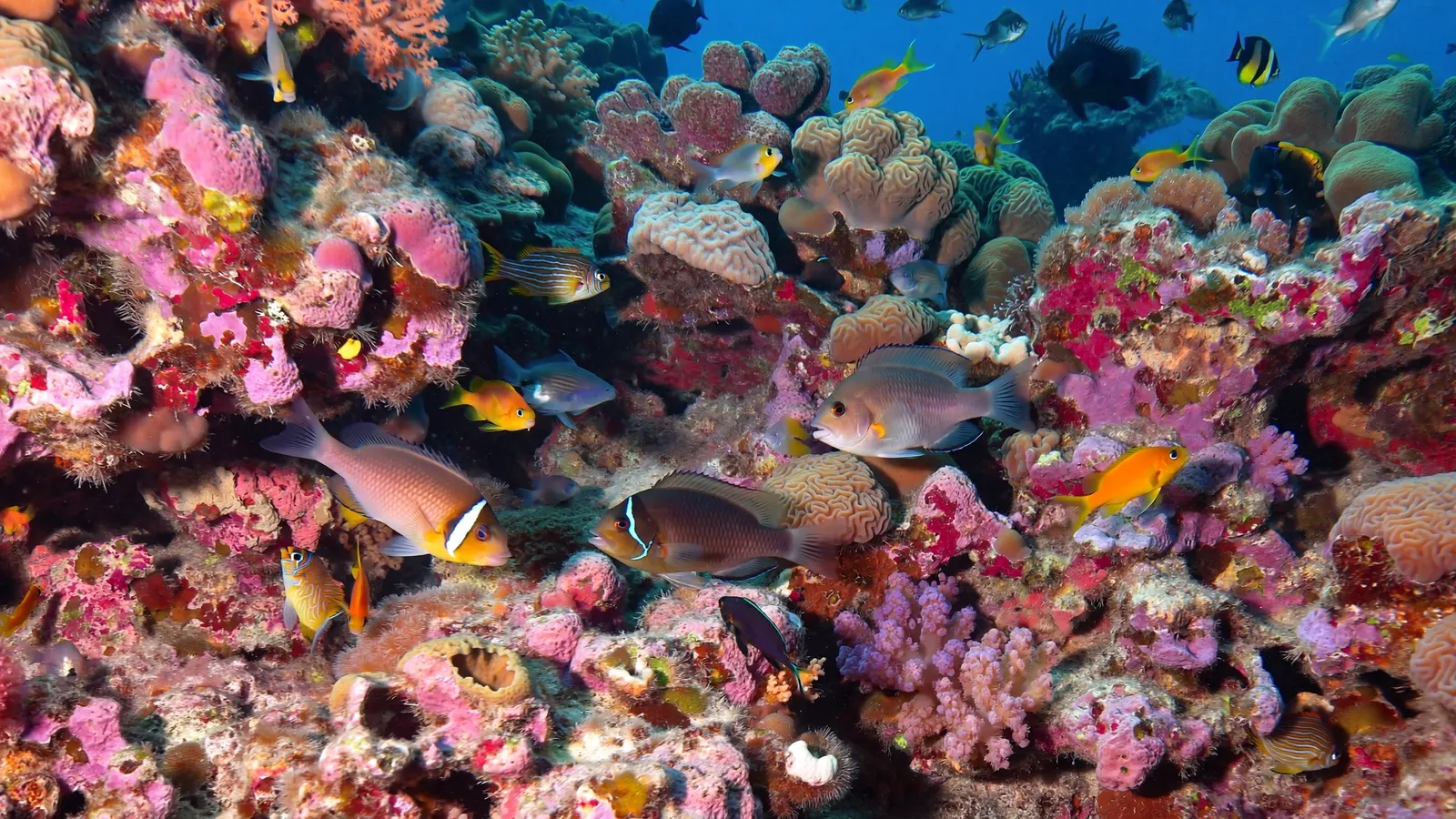
CORAL reefs are facing an unprecedented existential threat that demands immediate, coordinated global attention and financial assistance before it is too late.
In the Pacific, these vital marine ecosystems are the cornerstone of culture, identity, food security, and coastal protection. Yet rising global temperatures and severe heat waves are driving reefs toward catastrophic collapse. Further delay in climate action will carry an unbearable cost for island communities and the entire global community.
Living links: Culture,
identity, and navigation
Speaking at a plenary discussion on coral reefs, Opposition Leader and Pacific Ocean Envoy Inia Seruiratu relayed his personal experience living in a small coastal village in Fiji and their deep connection to coral reefs.
He said reefs were inextricably woven into the daily existence, heritage, and history of Pacific Islanders, with traditional naming conventions holding profound historical meaning.
Mr Seruiratu said in maritime navigation, reefs served as crucial physical landmarks when fishermen were occasionally lost at sea because of erratic weather, divers submerge to examine underwater layouts and recognise specific reef formations, enabling them to navigate their bearings safely back to the mainland.
“Beyond cultural heritage, reefs form the absolute cornerstone of food and nutrition security,” he said.
Mr Seruiratu highlighted grassroots initiative in Nadroga where their efforts to protect their reef system — which gained global attention — stemmed from witnessing the shrinking size of fish caught from the marine ecosystem.
“Because marine resources represent the primary source of dietary protein for Pacific Islanders, protecting these habitats is vital for health and nutrition.
“Furthermore, with limited economic alternatives, local livelihoods remain heavily dependent on these fragile marine ecosystems.”
Nature’s barrier and
economic lifeline
Coral reefs also serve as vital natural shields protecting coastal communities from destructive ocean forces.
Mr Seruiratu recalled witnessing firsthand how severely coastal communities were affected during Tropical Cyclone Winston in 2016.
“During the storm, reefs sustained heavy damage, and violent storm surges hurled massive boulders onto dry land.
“When reefs degrade, communities lose their frontline defence against extreme weather events.”
The Pacific Ocean Envoy also reiterated the importance of the system to the fisheries sector underpinning the dependency of national economies of numerous Small Island Developing States on these systems making the potential loss of coral reefs an existential economic crisis.
The statistical reality
and bleaching crises
Providing broader regional and scientific context, SPREP director of Biodiversity and Conservation Amena Yauvoli highlighted stark statistics defining the crisis.
He said globally, coral reefs covered less than 1 percent of the ocean floor, yet the Pacific region harbors approximately 25 to 27 per cent of this vital coral.
Mr Yauvoli said this immense concentration illustrated how profoundly Pacific communities relied on coral for sustainable living.
However, ecological margins are dangerously thin.
Mr Yauvoli warned that global warming of 1.5 Degrees Celsius will cause over 70 per cent of coral to vanish, while a two-degree increase will obliterate 99 per cent. He said climate change impacts are actively invading coral species, triggering severe bleaching events.
Having already endured four major bleaching events, the region now faces the onset of a fifth as ocean heat waves intensify.
“Under SPREP leadership, member countries are implementing a Coral Reef Action Plan, but international cooperation is urgently required,” said Mr Yauvoli.
The price of delay
Rounding up the region’s sense of urgency for a more legitimate and global focus on coral reefs, Mr Seruiratu delivered a strong and uncompromising warning, declaring delayed action will be costly.
“Any further delay is going to cost us more and we cannot afford it,” he said.
Mr Seruiratu said effective action must start with responsible global citizenship, noting that responding to the call for immediate action must start in the region and strong collaboration.
“Let’s take that responsibility seriously
“There are local communities there that have the local knowledge, but they need the science. They need the finances.
“No one is going to do this alone.”