For journalists working across Vanua Levu, finding a story is only half the assignment. Sometimes, the harder part is finding a signal strong enough to send it.
After hours of travelling to a rural village, attending a community meeting, interviewing residents and taking photographs, the reporter faces one final question: where can I get connectivity to file the story?
Fiji Broadcasting Corporation staff member Peceli Naviticoko described that reality during the eighth Pacific Media Summit in Savusavu yesterday.
“Where can the story be filed and where can the photographs be sent?” he asked.
For journalists working in the North, the answer can depend on geography.
“Sometimes the answer is a hill, the roadside and bus stop and sometimes it is the roof of a building.”
The unusual routine has become part of everyday reporting for journalists who cover remote communities.
A reporter may leave a village with a notebook full of interviews and a phone containing photographs and videos, only to discover that the network is too weak to transmit them.
So they climb.
“You will be seeing me walking up a hill with a phone in hand, looking for a stronger signal,” Naviticoko shared.
“Another may stand beside a road, waiting for the network to connect.”
He shared how journalists would climb onto rooftops in search of the few precious bars needed to send a story, photograph or video.
For those outside journalism, it may seem like an odd picture of modern reporting.
Newsrooms today expect stories, photographs and video to be filed quickly. Reporters are equipped with smartphones, laptops and digital cameras, and audiences expect news almost immediately.
Yet in parts of Vanua Levu, the technology that enables fast reporting can also be the biggest obstacle.
“A written story may be manageable. A high-resolution photograph can take longer and a video can be even more difficult,” he shared.
“The problem becomes more pressing during breaking news, when delays in transmission can mean that information gathered in the field does not reach the newsroom when it is most needed.
“The reporter may have completed the work, but the newsroom cannot receive it until the signal is strong enough.”
Over time, journalists have developed their own unofficial connectivity maps.
They remember where they managed to send a story during a previous assignment and return to those locations when they need a reliable connection.
For experienced Northern reporters, knowing where to find a signal can be almost as important as knowing where to find a government office, police station or community leader.
That shared knowledge has also strengthened cooperation among journalists.
“We have learnt to share resources and our data. We have learnt to notify each other on events and interview people together.”
The challenge reflects a wider reality across the Pacific, where journalists frequently work across large distances, difficult terrain and communities separated by sea and limited infrastructure.
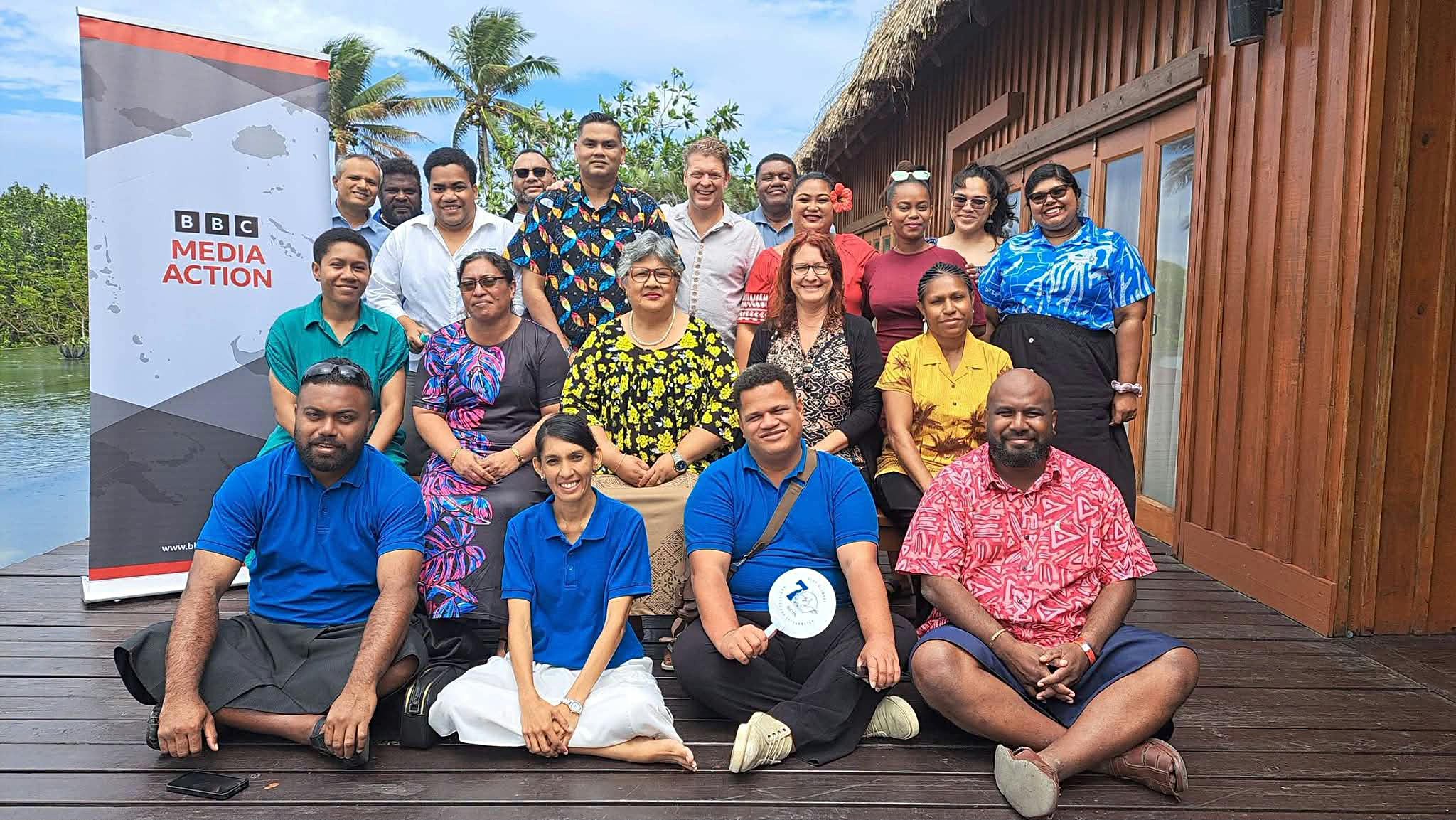
This year’s Pacific Media Summit, held from September 21 to 25 is meeting under the theme, ‘Reaching the Remote: Media and Digital Innovation for a Connected Blue Pacific’.
The summit brought together almost 200 media professionals and stakeholders to discuss issues including digital innovation, media sustainability, press freedom and climate reporting.
For Northern journalists, however, connectivity was not simply a topic for discussion.
It was part of their daily working reality.
Fiji Sun journalist Shratika Naidu said the summit gave her an opportunity to meet media professionals from across the region and view the challenges faced by journalists in the North within a broader Pacific context.
“I am happy to be given an opportunity by the Fiji Media Association to be part of the summit,” she said.
Much of the conversation surrounding the future of journalism focuses on artificial intelligence, social media and new digital platforms.
Those technologies are transforming the way stories are produced and consumed.
But for a reporter standing on a hill with a phone raised towards the sky, the most important technology may still be something much more basic: a dependable internet connection.
“We will make a request now on whether anyone can sponsor us a Starlink would be best,” Naviticoko said.
The request captures the practical gap between the ambitions of digital journalism and the infrastructure available to journalists working outside major urban centres.
For communities in remote parts of Vanua Levu, the consequences extend beyond the inconvenience faced by reporters.
Connectivity affects how quickly their concerns, achievements and experiences can reach the wider public.
A story delayed by several hours may mean an issue receives attention later than it otherwise might. A photograph that cannot be transmitted may not accompany the story. A developing event may have changed by the time the newsroom receives the report.
Yet the journalists continue to travel.
They cross long distances, attend village meetings, listen to residents and document issues that might otherwise receive little attention.
Then, when the interviews are finished and the notebook is full, another part of the assignment begins.