
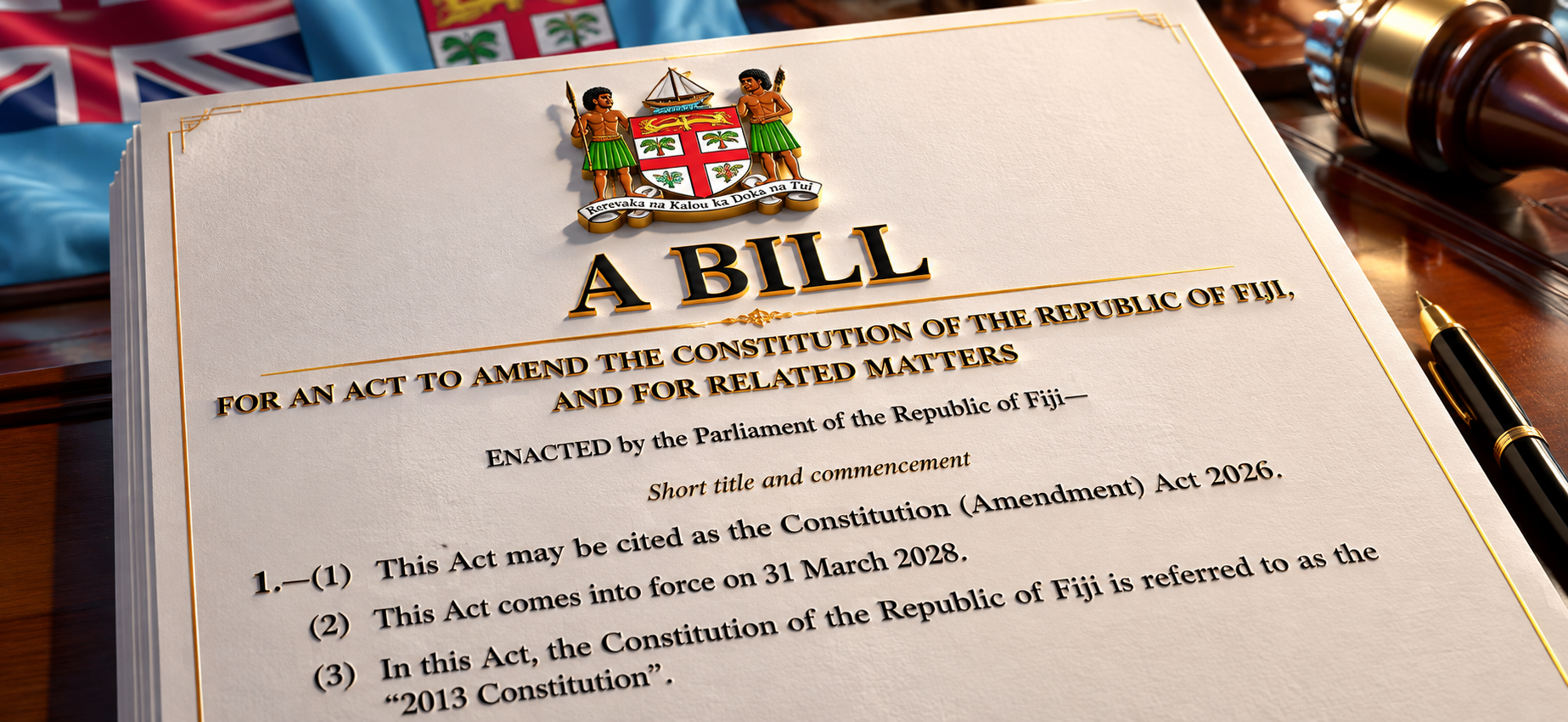
The Constitution (Amendment) Bill 2026 does not set an age or term limit for Fiji’s Prime Minister, meaning a person could continue to hold the country’s top government position as long as they meet the constitutional requirements and retain the necessary parliamentary support.
Under section 112, the principal eligibility requirement specified for the office is that the Prime Minister must be a member of the House of Representatives.
The provisions supplied do not prescribe a maximum age for the Prime Minister or restrict the number of terms a person may serve.
This contrasts with the proposed provisions for the President and Vice-President, who would serve four-year terms and be limited to two terms.
The Bill provides that where a political party wins more than 50 per cent of the seats following a general election, that party has the right to name the Prime Minister.
Where no party commands more than 50 per cent, the Prime Minister would be selected through a vote in the House.
A candidate would need the support of more than 50 per cent of House members. Up to three votes could be conducted, with each subsequent vote held within 24 hours.
If no candidate secures the required support after the third vote, the Speaker would notify the President, who would then be required to dissolve Parliament within 24 hours and issue a writ for another general election.
The Prime Minister’s position would become vacant through resignation, loss of membership or qualification to sit in the House, dismissal through a motion of no confidence, or death.

