
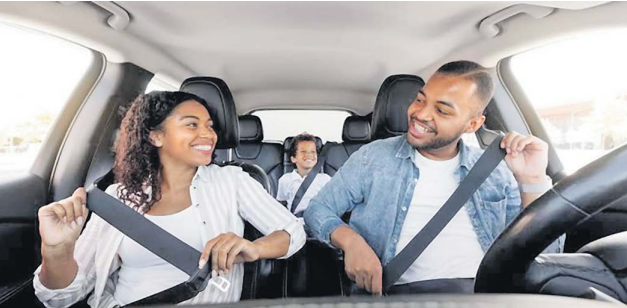
WEARING a seat belt is one of the simplest and most effective ways to protect yourself while traveling in a vehicle.
Whether you are driving or riding as a passenger, buckling up significantly reduces the risk of serious injury or death in the event of a crash.
Seat belts are designed to keep occupants securely inside the vehicle, preventing ejection, which is often fatal.
One important fact to remember is that seat belts and air bags work together. Air bags are not meant to replace seat belts.
Instead, they provide additional protection during a collision.
Without a seat belt, a person can be thrown into a rapidly deploying air bag with tremendous force, increasing the risk of severe injuries.
To wear a seat belt correctly, always position the shoulder belt across the middle of your chest and away from your neck.
The lap belt should fit snugly across your hips and pelvis, not across your stomach.
Never place the shoulder belt behind your back or under your arm, as this reduces its effectiveness and increases the risk of injury during a crash.
A properly fitting seat belt is essential for maximum protection. When purchasing a new vehicle, check that the seat belts fit comfortably and securely.
If necessary, ask the dealer about seat belt adjusters or extenders.
Drivers of older vehicles equipped only with lap belts should contact the vehicle manufacturer to learn about upgrading to safer lap-and-shoulder belt systems.
Seat belt safety is especially important for pregnant women. Medical experts strongly recommend wearing a seat belt throughout every stage of pregnancy.
Proper seat belt use protects both the mother and the unborn baby in the event of a collision.
The shoulder belt should rest across the chest, between the breasts, and away from the neck, while the lap belt should be placed below the belly, fitting snugly across the hips and pelvic bone.
Pregnant women should never place the shoulder belt under the arm or behind the back, and the lap belt should never be worn over or on top of the belly.
Children also require special attention when using seat belts.
They should remain in an appropriate child safety seat or booster seat until an adult seat belt fits correctly across the chest and hips.
Buckling up every time you travel is a simple habit that saves lives.
By wearing your seat belt properly and ensuring it fits correctly, you can greatly reduce the risk of injury and help protect everyone in the vehicle.

