
THE Dayaram family sold their ancestral home for 15,000 rupees in 1964, an amount that would be equivalent to only about $3560 Fijian dollars today.
However, for Meridian Store managing director Champak Lal Dayaram, the property was worth far more than its financial value.
It was a place filled with memories, family history and the beginnings of a legacy that would later stretch across the ocean to Fiji.
The house, where Dayaram Fakir and his wife Diwari Ben lived, remained a treasured connection to the family’s roots in India and the early years before their journey to build a new life overseas.
When the decision was made to sell the property in 1964, the amount received was shared among the owners, with the money divided by three because Diwari Ben’s sisters were also shareholders.
For the Dayaram family, the sale marked the end of an important chapter, but the memories attached to the home continued to live on through generations. Mr Dayaram said the value of the home could not only be measured by the amount it was sold for.
“A house is not only about bricks and walls. It is about the people who lived there, the memories created there and the history it carries,” he said.
“It was a place that connected our family to our roots in Navsari.”
The property was jointly owned by Diwari Ben and her cousins, who held shares in the house. Over the years, it became a place where family members gathered and where generations shared their lives before circumstances led to its sale. Mr Dayaram said selling a family home was always an emotional decision because it represented more than just a physical structure.
“Whenever a family has to let go of a home, there are many feelings involved because you are not only selling a building.
“You are letting go of a place that holds memories. There are stories, celebrations and moments that took place there.”
The Navsari home remains an important part of the Dayaram family story because it represents the foundation from which their journey began.
While later generations would establish themselves in Fiji and in other countries through business and community service, the family’s connection to India remained strong.
He said understanding family history helped younger generations appreciate the sacrifices made by those who came before them.
“When we look back at our history, we understand the struggles and sacrifices made by our ancestors. They built the foundation for us, and it is our responsibility to remember and respect that.”
The old house near Golwad Gate continues to stand as a reminder of a different era.
Although it was sold more than six decades ago, the memories created inside its walls remain part of the family’s heritage.
Mr Dayaram said preserving these stories was important because they connected the past with the present.
“Old photographs, documents and stories are important because they tell us where we came from,” he said.
“They help the younger generation understand their family history.”
The reason behind the sale of the house remains unknown, although it is believed the family may have already made Fiji their permanent home by that time.
At the time, Fiji was still a British colony, and starting a new life in an unfamiliar country required courage, determination and sacrifice.
He said his grandfather’s early years in Fiji were a test of endurance.
“He came to Fiji first without his wife and son because he had to establish himself.
“He had to find a place, start working and create some stability before bringing his family.”
After arriving in Taveuni, Dayaram Fakir first operated near the current location of Meridian Store.
The area was a sub-lease held by a Girmitiya named Mathura Prasad.
After establishing himself, he later secured a lease from the Mataitoga Clan at Navarada, Wairiki, Taveuni.
It was there that he established Dayaram Store, which would later become known as Meridian Store.
Mr Dayaram said the early business was built from humble beginnings.
“He started small, but he had a vision. He wanted to create something that could support his family and become part of the community.
For almost four years, Dayaram Fakir lived and worked in Fiji without his wife, Diwari Ben Fakir, and their only son, Ambaram Dayaram. The family remained in India until he was settled and ready for them to join him.
In early 1929, Diwari Ben and Ambaram finally made the long journey to Fiji. Ambaram Dayaram, born on December 13, 1919, in Navsari, India, was only 12 years old when he travelled with his mother on a two-month voyage from the Port of Madras.
His arrival marked the beginning of a new chapter for the family in Fiji. Ambaram Dayaram (1919–2003) later became an important part of the family’s history and continued the business legacy started by his father.
Mr Dayaram said the sacrifices made by earlier generations should never be forgotten.
“When we look at where we are today, we must remember the people who built the foundation. They came with challenges, but they had determination. They worked hard because they wanted a better future for their children,” he said.
The old Navsari home and the Meridian Store story are connected by the same values family, perseverance and commitment.
Although the house was eventually sold, the memories it carried continued through photographs, stories and family records.
Mr Dayaram said preserving family history was important because it helped younger generations understand their journey.
“Our history tells us who we are. If we forget our past, we lose an important part of ourselves. Those stories teach us about sacrifice, respect and the importance of family.”
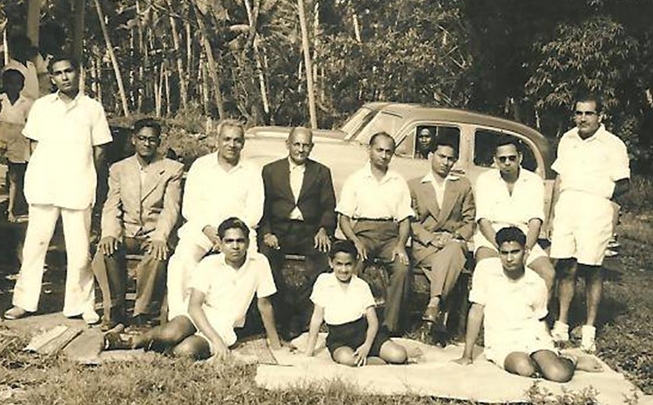
The Dayaram family has continued to maintain its connection with history through the preservation of old photographs and records, including those collected by Ambaram Dayaram.
Those photographs have become valuable reminders of a changing Fiji and the people who shaped communities over the years. Mr Dayaram said the lessons from the past continue to guide the family today.
“The older generation taught us that success does not come overnight. It comes through patience, hard work and dedication.
“They built something for the next generation, and we have a responsibility to continue that legacy.”
The sale of the Navsari home for 15,000 rupees in 1964 closed one chapter of the Dayaram family story. But the memories created within those walls travelled far beyond India.
They became part of a larger story. A story of migration, family, business and a lasting connection between India and Fiji.
For the Dayaram family, the home may no longer belong to them, but its place in their history remains. It is a reminder that while buildings can change ownership, the memories and values created inside them can last forever.

