
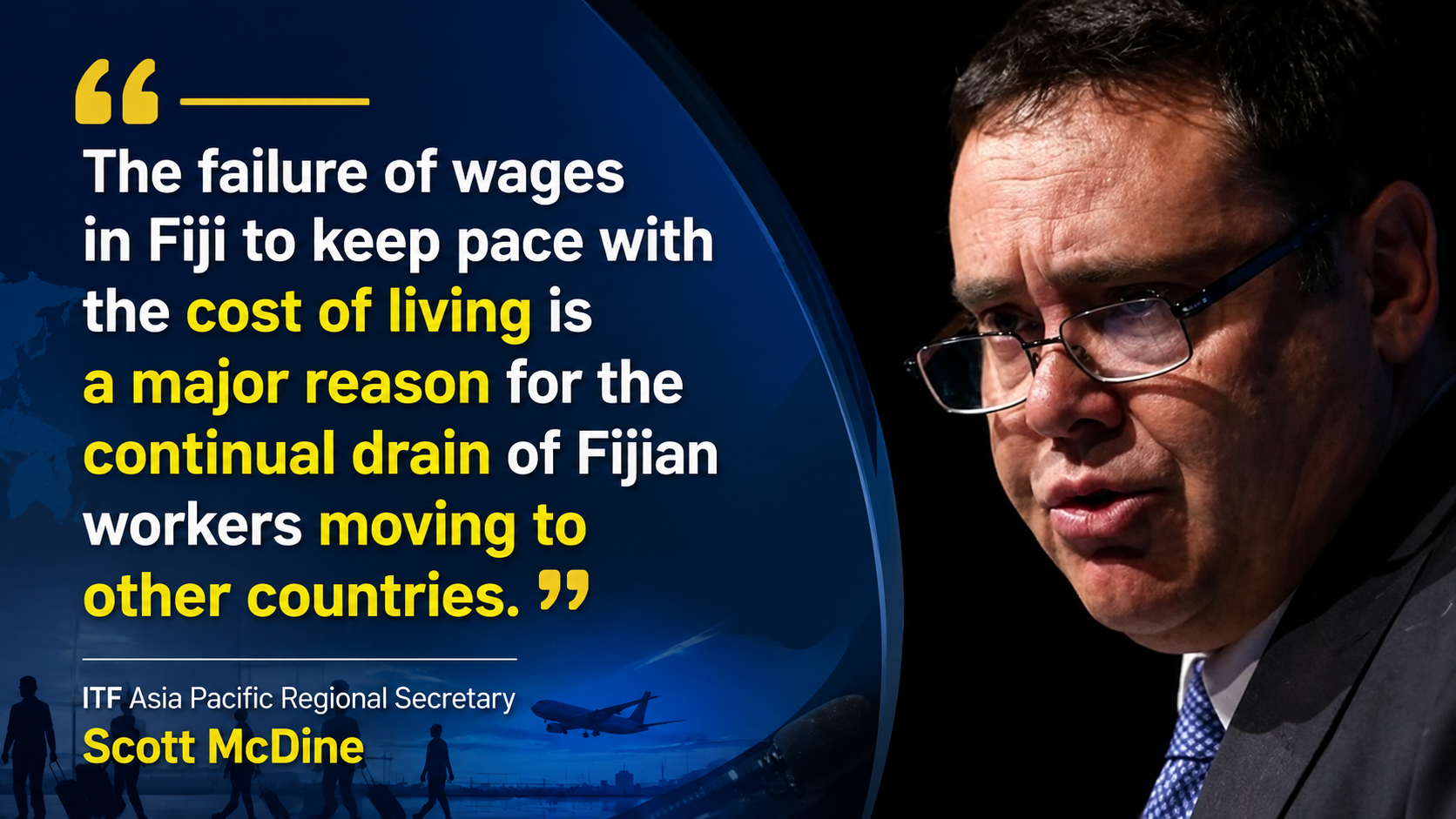
International Transport Workers’ Federation Asia Pacific Regional Secretary Scott McDine has described Fiji’s $5-an-hour minimum wage as “government-mandated exploitation”, as trade unions intensify their campaign for a living wage.
Fijian trade unions will hold signature-collecting events for petitions in Suva, Nadi and Lautoka tomorrow as part of a campaign calling for workers to receive wages that allow them to meet basic living costs and live with dignity.
McDine said transport workers throughout the Asia-Pacific region were supporting the campaign and argued that Fiji’s current minimum wage was keeping workers in poverty.
“Continuing to suppress the minimum wage at such a low level is government-mandated exploitation, locking people into poverty,” McDine said.
Fiji’s national minimum wage currently stands at $5 an hour.
McDine said the failure of wages to keep pace with rising living costs was also contributing to the continued departure of Fijian workers for employment opportunities overseas.
“The failure of wages in Fiji to keep pace with the cost of living is a major reason for the continual drain of Fijian workers moving to other countries,” he said.
“It is essential that Fijian workers are able to earn a living wage that enables them to meet the basic cost of living, and to live with dignity.”
McDine urged people to support the Fiji Trades Union Congress petition as the campaign steps up its public signature drive.
“I urge all Fijians to get behind the campaign and sign the FTUC petition,” he said.
McDine also accused multinational employers of using concerns about the impact of wage increases on small businesses as a shield against demands for improved wages and employment conditions.
He argued that increasing the wage floor would not only benefit workers but could also support local businesses by giving households greater spending power.
“Raising the safety net level of pay to a living wage will enable more Fijians to spend money on essential goods and services, and will ultimately be a positive boost for the Fijian economy and for local businesses,” McDine said.
The campaign is seeking a living wage rather than simply an increase to the existing minimum wage, arguing workers should earn enough to cover essential living expenses and maintain a decent standard of living.
McDine said the time had come for action on wages.
“The time for excuses is over. The time for a Living Wage in Fiji is now.”

