Cane without justice
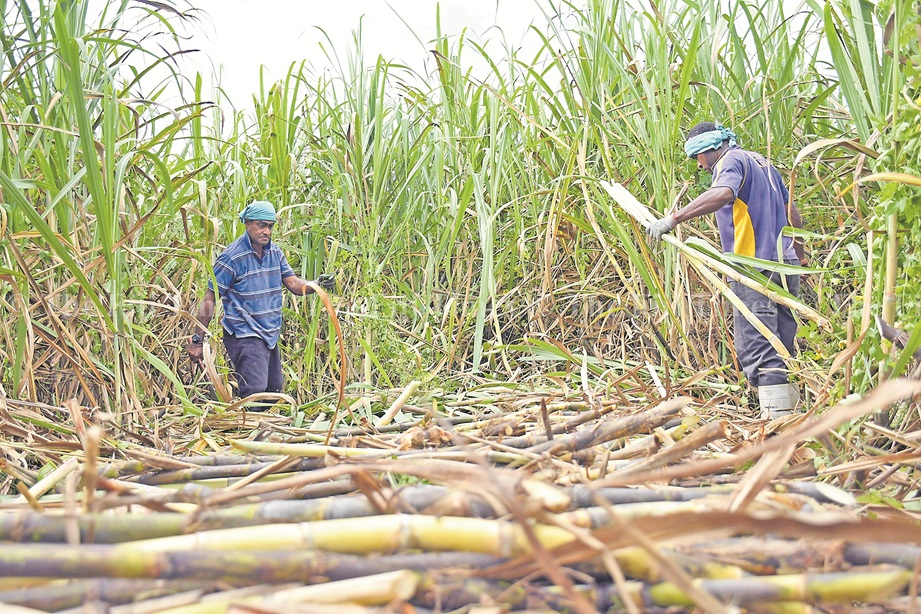
My great-grandfather came to Fiji in the hold of a ship. He did not choose the cane fields — he was delivered to them. But he stayed, and he planted, and he built a life from soil that was not his own on land he could not own, under a sun that did not care whether he lived or died. Four generations later, his descendants are still in those fields. Still planting. Still delivering. Still waiting to be paid what they are owed. I grew up in Gang 68, Drasa, Lautoka. I know what a cane field smells like before dawn. I know the weight of a bill for fertiliser when the payment from FSC has not arrived. I know what it means to raise production from 80 tonnes to 325 tonnes through sheer human will — and then watch an institution that was supposed to protect you pay eighty-four cents per tonne as its third instalment on a certified proceeds pool of $F71million. Eighty-four cents! Fiji’s sugar industry was built by people who had nothing and gave everything. It once contributed 22 per cent of this nation’s GDP. Today it struggles to reach 2 per cent. The corporation that mills our cane accumulated $F443million in debt while independent oversight was abolished and farmer elections were banned by decree. The taxpayer wrote off $F200million of that debt in July 2024. The farmers — who under the Master Award are entitled to approximately 70 per cent of cane proceeds — hold not a single elected seat on the FSC Board. Not one. The Sugar Cane Growers Council has not held a democratic election in 22 years. The men who led it thanked prime ministers on retirement — not the farmers whose compulsory levies paid their salaries. My great-grandfather survived the girmit. His great-grandchildren should not have to survive the institutions that replaced it. The cane is still growing. Someone in Suva needs to start listening. DR SUSHIL K SHARMA Lautoka
Power rationing
In a press statement issued earlier this week, Energy Fiji Limited stated that the power rationing previously planned for June has merely been “deferred till further notice”. In other words, the possibility of power rationing has not been eliminated altogether; it simply remains waiting patiently in the background, much like consumers waiting for stable electricity supply. Meanwhile, unplanned power outages continue to affect residents, and when such outages occur over weekends, technical repairs and power restoration are often carried out during normal working hours on Mondays. This naturally raises serious concerns regarding emergency response efficiency and service reliability. Can EFL provide a clear explanation to the public as to why consumers are expected to pay increasingly higher utility costs while still being left at the mercy of darkness and uncertainty? DINESH KUMAR Ba
Headsmust roll
After my retirement in 2015, on week days when I returned from town, I would visit my earlier retired colleague, a school teacher to chat over a cup of tea. One day he inadvertently mentioned that his pension had been reduced to $250 and with a small flat on rent, he was left with only $550 income per month. My colleague developed hypertension and suffered a stroke. He was bedridden for two months before passing away a little more than year ago. Ronnie Chang’s pain and agony is understandable. The $140million Denarau Westin Resort blow out is inexcusable. Heads must roll. Rakesh Chand Sharma Nadi
Denarau disaster
I refer to “Betrayed senior FNPF pensioner” Ronnie Chang’s letter regarding “The Denarau Westin Resort blowout to the reported tune in excess of $140million” which he contends “could be the tip of Fiji’s iceberg” (FT29/5/26). What I find mind boggling is how the FNPF (the owning parent entity) with all the expertise at its disposal managed to get into such a shambolic situation? That certainly calls for a proper investigation. Rajend Naidu Sydney, Australia
Tiny thing to carry
This may sound a little unusual and, to some, even weird. But please bear with me. Today, yes, today, not tomorrow, buy a packet of aspirin and keep a sachet with you at all times. Men can carry it in their wallet or pocket, and ladies in their purse or handbag. Why? Because one day, somewhere, someone near you may suddenly suffer a heart attack. In those critical moments before medical help arrives, placing an aspirin under the person’s tongue or having them chew it could help save their life by slowing blood clotting and improving blood flow. Such a tiny thing to carry. Yet such a massive difference it could make to someone’s life and to someone’s family and future. We often walk around thinking emergencies happen only to “other” people. Until one day it happens to someone close to you or, God forbid, even you. Make it a priority purchase. Today. Now. Colin Deoki Australia
Tough battle in Valladolid
The Fiji Airways Fiji men’s national 7s side has prepared well for the Valladolid 7s. On paper, we have a solid mix. Fiji will face Spain, France and the USA in pool C and the boys must prepare well to win a tournament after our last win in Singapore. South Africa and Argentina and the likes will be coming out strong and we must be ready. With Jerry Tuwai joining the coaching mix, our downfalls from the last tournament must be addressed! I’m banking on the boys to deliver a solid mix. Tovolea mada! Rajnesh Ishwar Lingam Nadawa, Nasinu
Matter of fact
The Minister for Defence claims the Mega-Port proposal of Quad countries (Japan, India, Australia, and China) had nothing to do with ‘geopolitical rivalry’ or some other country’ (FT 28/5). The PM said it has ‘no military purpose’ (FT 28/5). Except only a day earlier The Australian newspaper (27/5) reported Foreign Minister, Penny Wong, declare her country’s job “would never be done” with combating China’s influence in the Pacific; telling the Quad on Tuesday, in India, her government was steadfast in support of Indo-Pacific countries’ right to choose their own security partners. Christopher Griffin Perth, Australia
Give it back!
After reading Ronnie Chang’s letter about the $140 million blowout of the Denarau Westin hotel, I would like the FNPF to reply to his letter. I know the 25 per cent pension was reduced to 12 per cent but later on the 25 per cent was reinstated. Please FNPF, give them back whatever you owe them. The Westin Hotel blowout might be 10 times more than what you took away from these elderly pensioners. Please note I am not a pensioner. Sukha Singh Labasa
Weird dream
The other night I dreamt that my better half, Aralai, was passionately serenading me and it resonated like the heaven sweet melodies of the skies and ripple pool of the sea. Only to pause and whisper: “Taki Baby.” Sobo! Wise Muavono Balawa, Lautoka
Bills passed
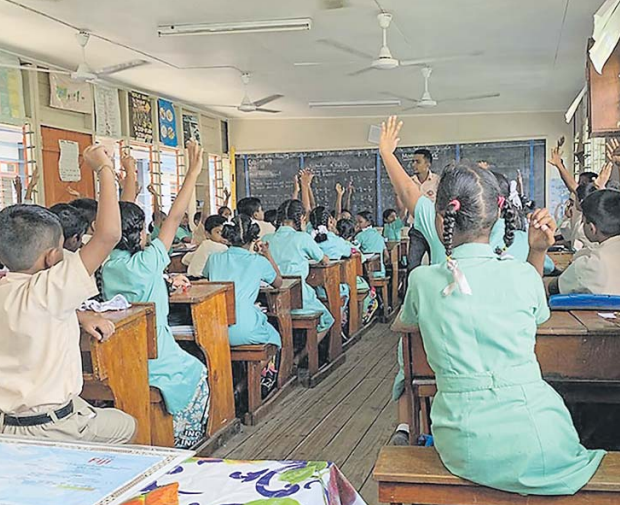
Quite a number of controversial bills were passed in Parliament this week, including the Education Bill 2025. One can only hope the required protocols were properly followed and meaningful public submissions sought before they were tabled in the august house. Then again, in modern governance, urgency often appears to outrank consultation. DINESH KUMAR Ba
Outlook for 2027
What does the future look like for our Swire Shipping Fijian Drua in 2027? Will history repeat itself or will our favourite side finally find a formula for consistency? For now, fans await the naming of our final Flying Fijians squad, in particular, the number of Drua team members who make the final cut. Floyd Robinson Micronesia
Development opportunity
Utilise the properties
The District Officer in Nadi must take immediate and proactive steps to tackle the current state of underutilised government properties, beginning with the land adjacent to the Nadi Post Office. This plot of land hosts three aging and crumbling buildings, estimated to be over 60 years old. While one of these structures is occupied by the Fiji Red Cross despite being in a deteriorating and unsafe state, the other two remain completely idle, offering no functional value. This scenario presents a remarkable opportunity for redevelopment into a revenue-generating project that could bring substantial benefits to Nadi Town and the nation as a whole. This property’s prime location in the heart of Nadi Town makes it particularly valuable. Situated in a thriving real estate area, it holds immense potential for driving commercial growth or serving public needs. However, the lack of initiative and strategic direction from government leaders has left such properties neglected, hindering the country’s economic progress. As it stands, this piece of land reflects a broader issue of idle government assets that, if thoughtfully developed, could create jobs, stimulate local business activity, and enhance tourism prospects. Reflecting on leadership decisions of the past reveals an evident disparity. Previous leaders exhibited greater foresight, efficiency, and commitment to managing public resources effectively. Their focus on development and national interest ensured that government properties were either well-maintained or repurposed for maximum utility. In contrast, the apparent lack of vision today has led to missed opportunities that demand urgent intervention and resolution. To address this pressing issue, the District Officer must spearhead efforts to collaborate with relevant authorities and outline a comprehensive plan to unlock the land’s potential. Whether this involves transforming the area into retail spaces, office buildings, community hubs, or other ventures that balance public interest with revenue generation, swift and well-considered action is essential. Bringing together local governments, urban planners, and private investors can spark innovative solutions, enabling this vision to become a reality. Resolving these challenges goes beyond economic gains — it sets a vital example of responsible governance and the strategic management of national assets. Government officials must recognise the far-reaching consequences of neglecting public properties and prioritise their development to contribute meaningfully to social and economic well-being. Timely action in revitalising these valuable resources would demonstrate leadership’s commitment to overcoming present challenges with practicality, resilience, and a focus on sustainable progress. Suresh Chand Nadi